We have so many different subjects in our sessions that we often start pictures but don’t get around to finishing them.
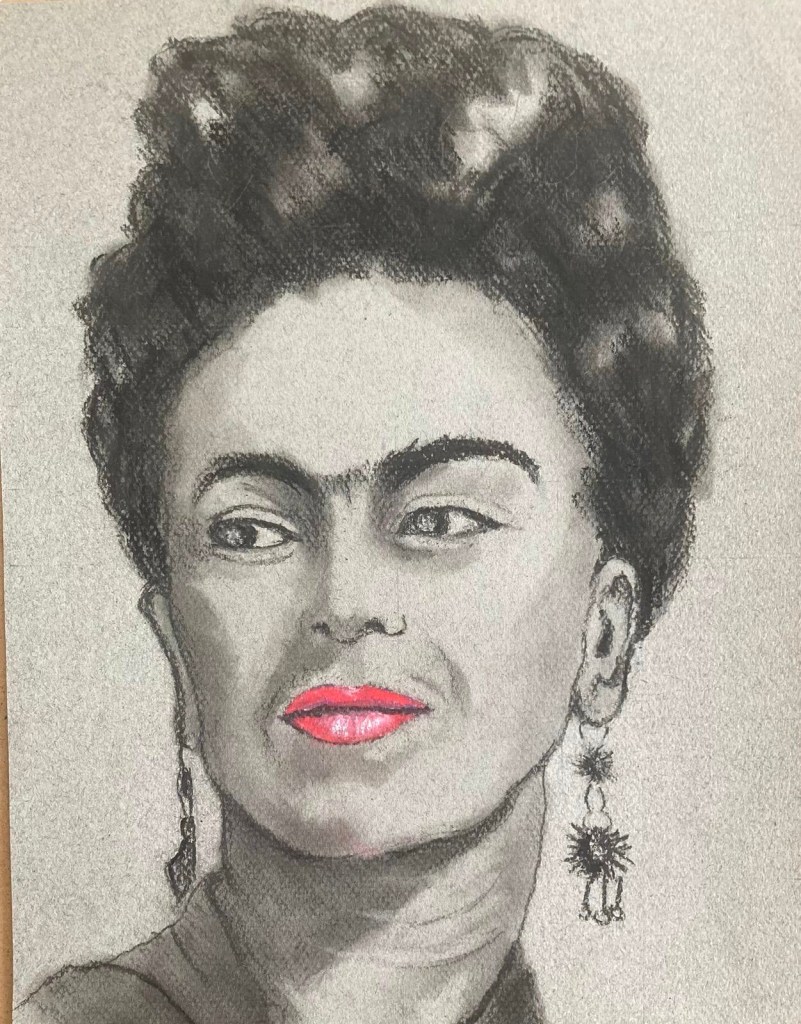
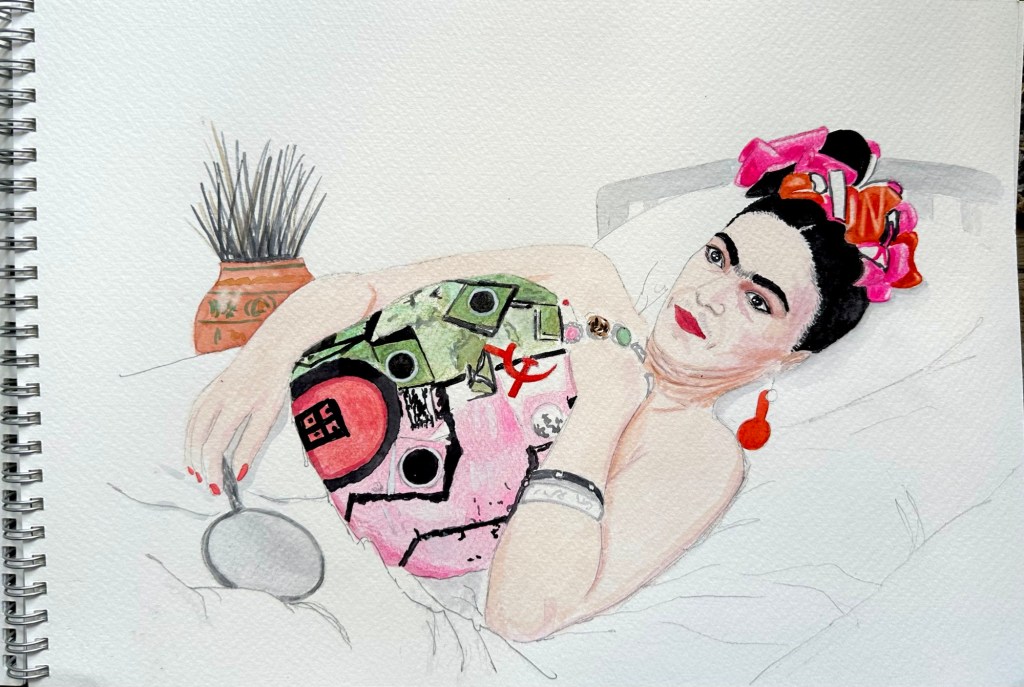
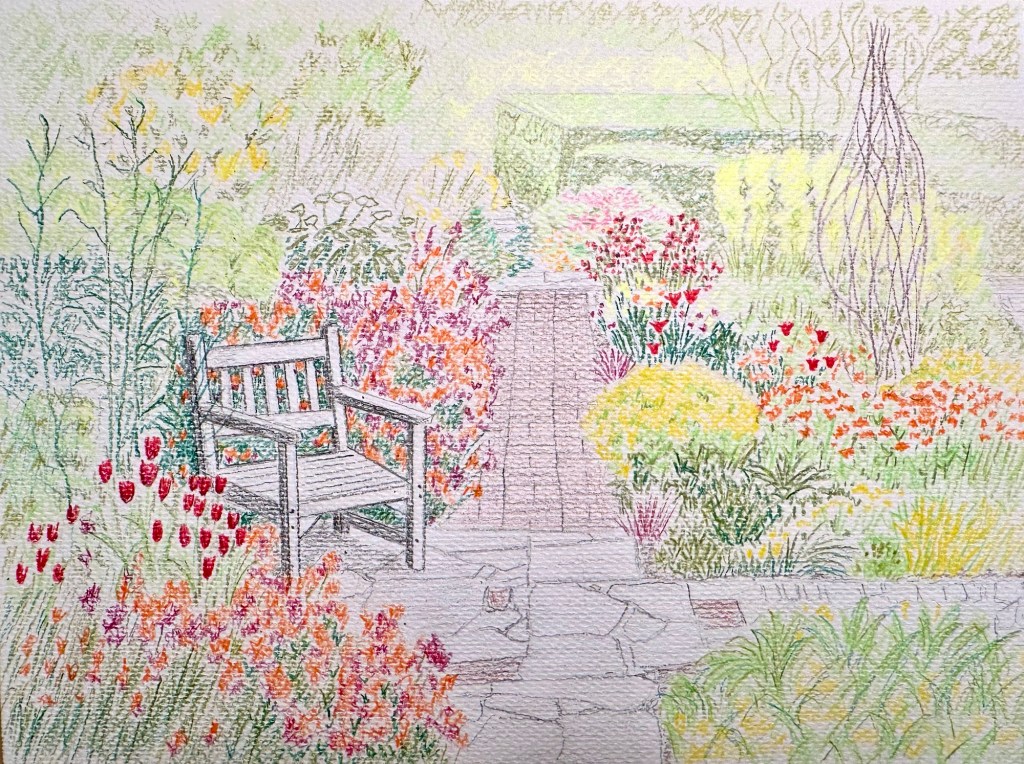
Here are several pictures that were finished at home from sessions on Frida Kahlo, painting on a book page, Underwater Life, In an English Country Garden, and Chalk Church.
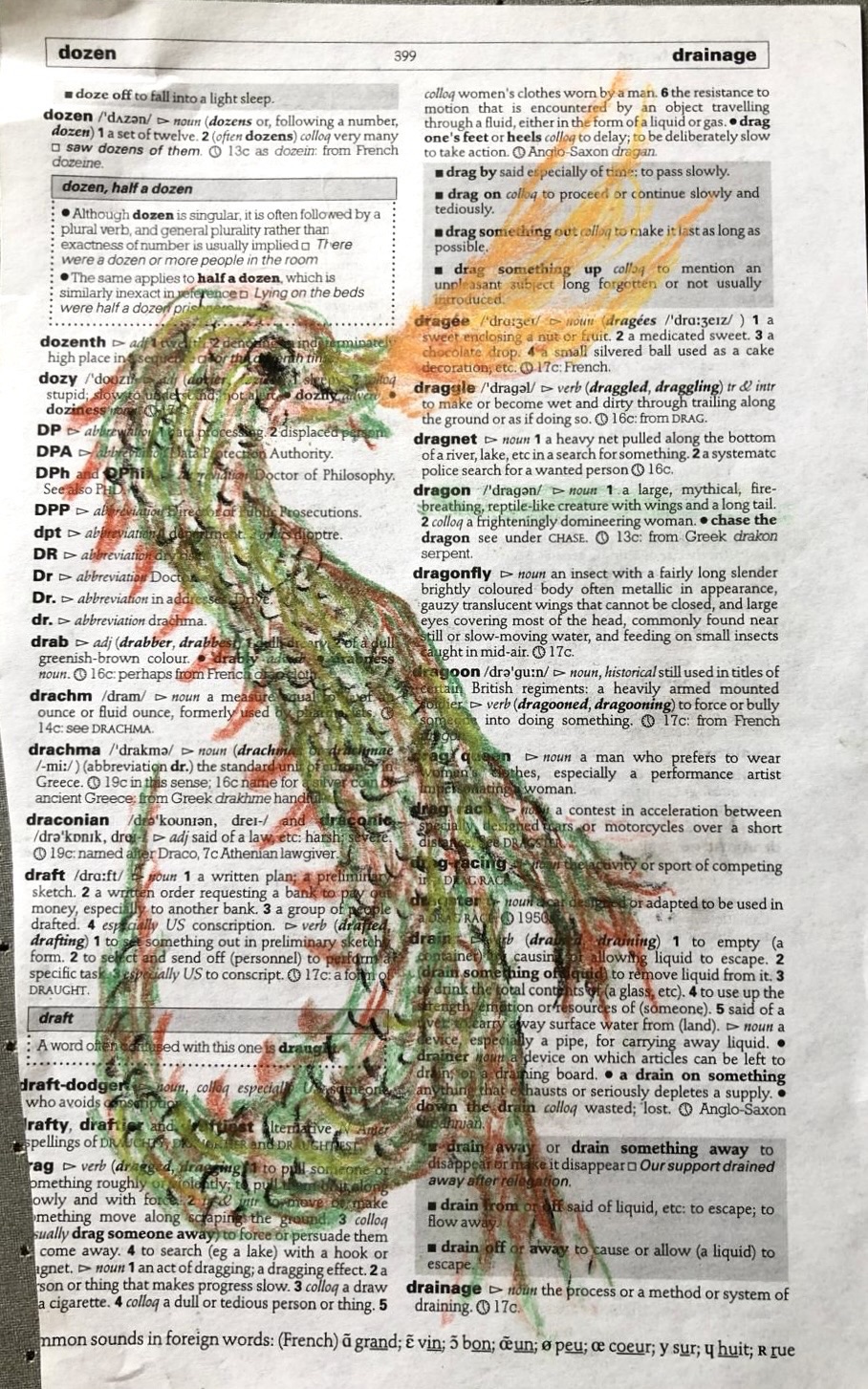
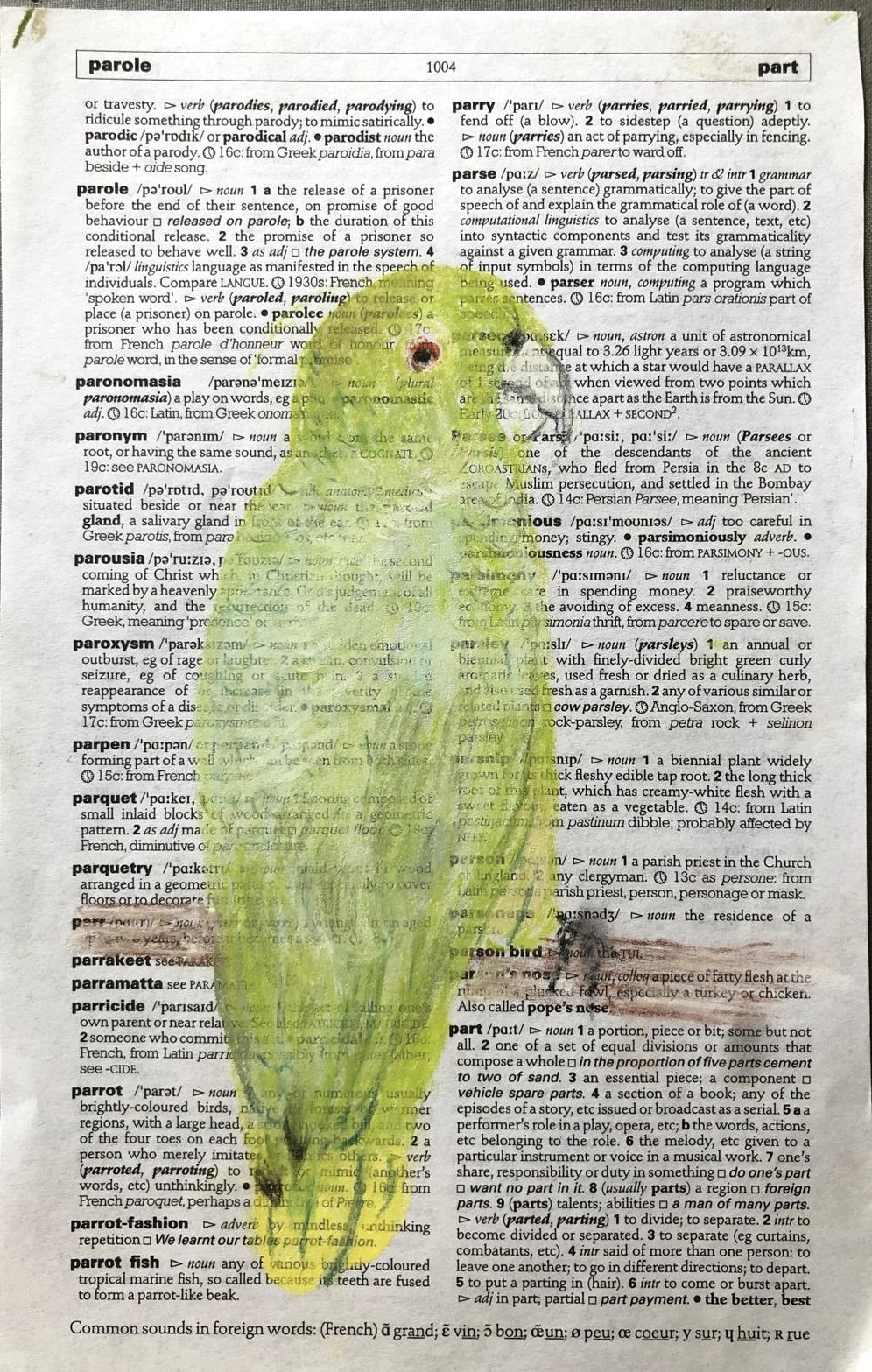
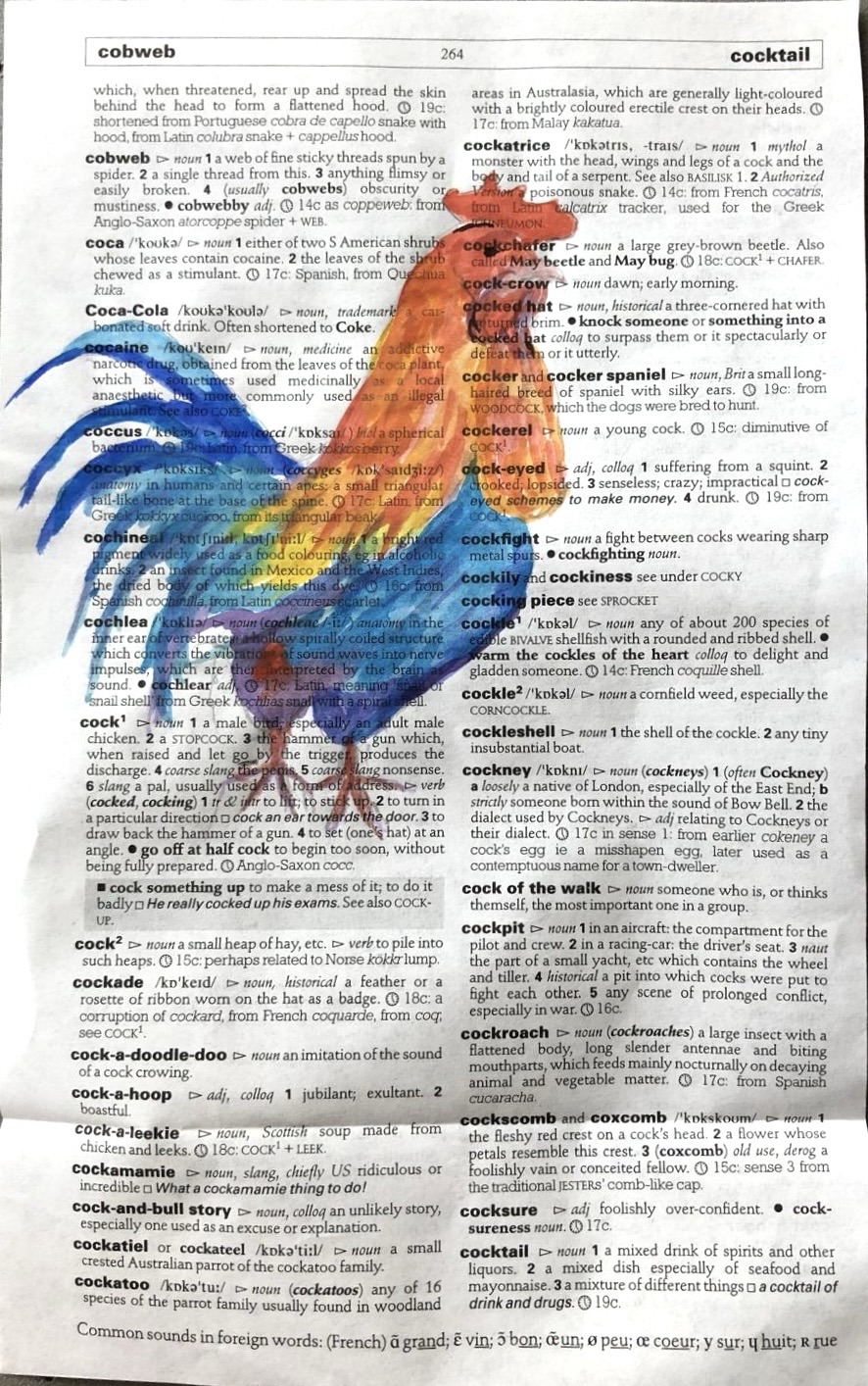
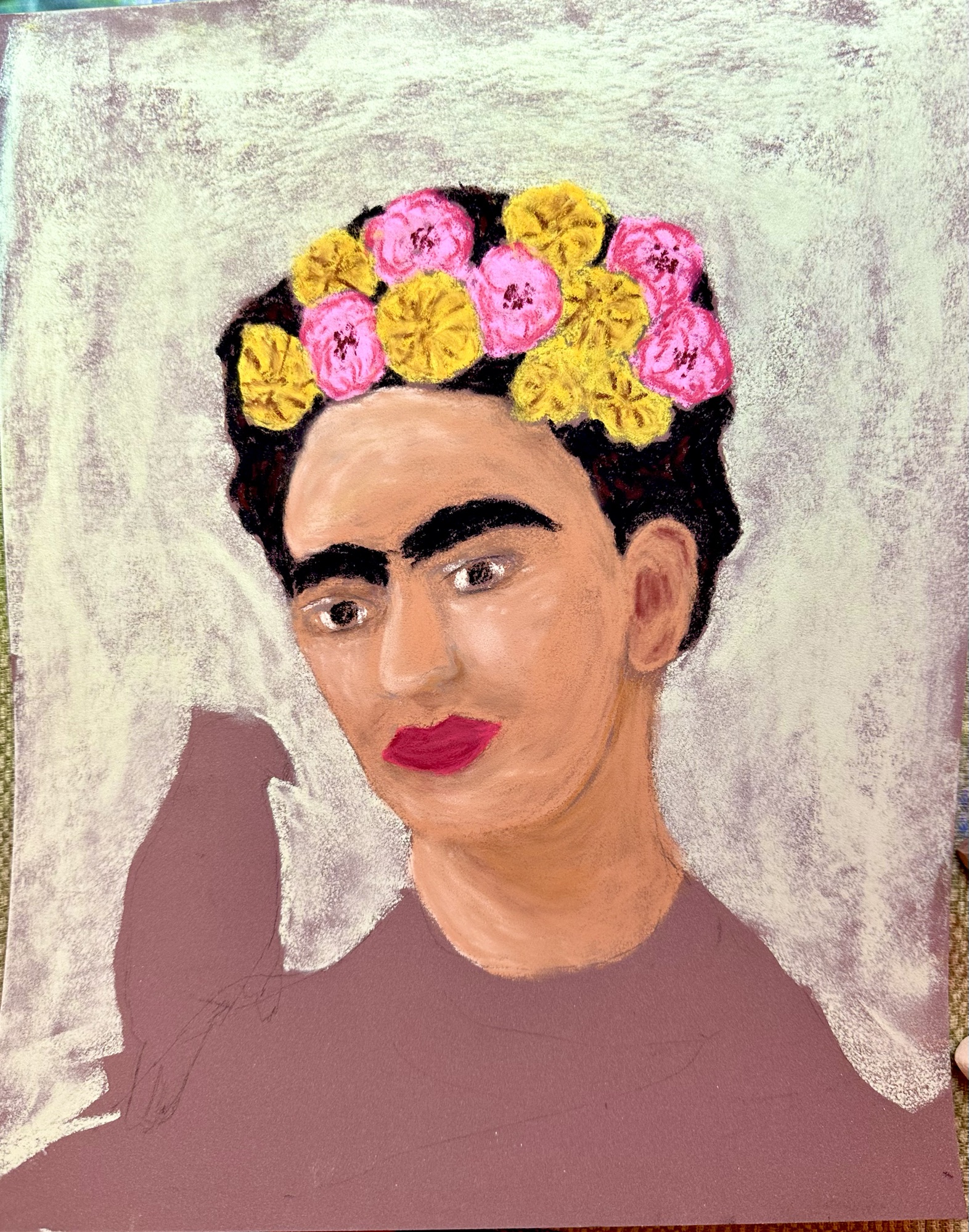
Brenda’s colourful picture of Frida Kahlo is in pastels as are her images of the dragon and the parrot on a dictionary page. The cockerel is painted in watercolours.
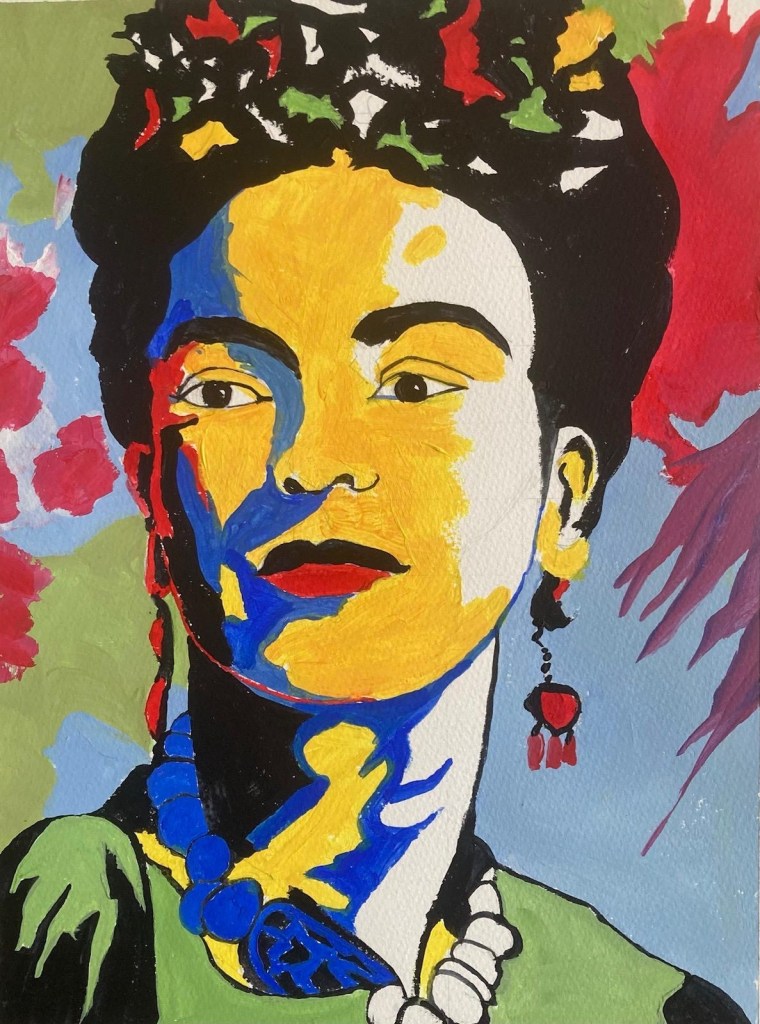
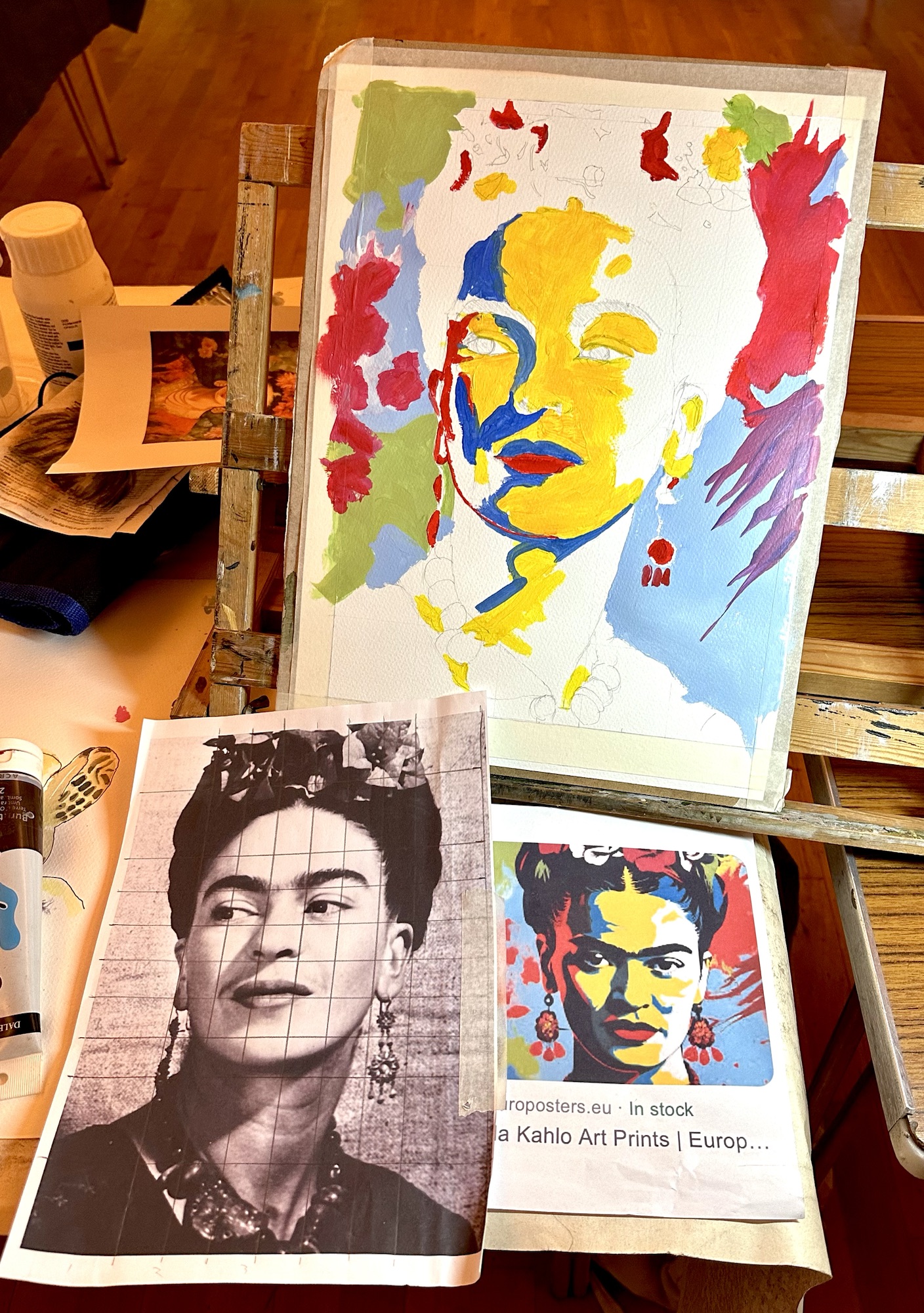
Steve’s posterised image of Frida Kahlo was painted in acrylics and the other in black pastel on grey pastel paper with a dramatic pop of lip colour in pink. Chalk Church was created when we visited last month, again in pastel but using many colours for a realistic picture.
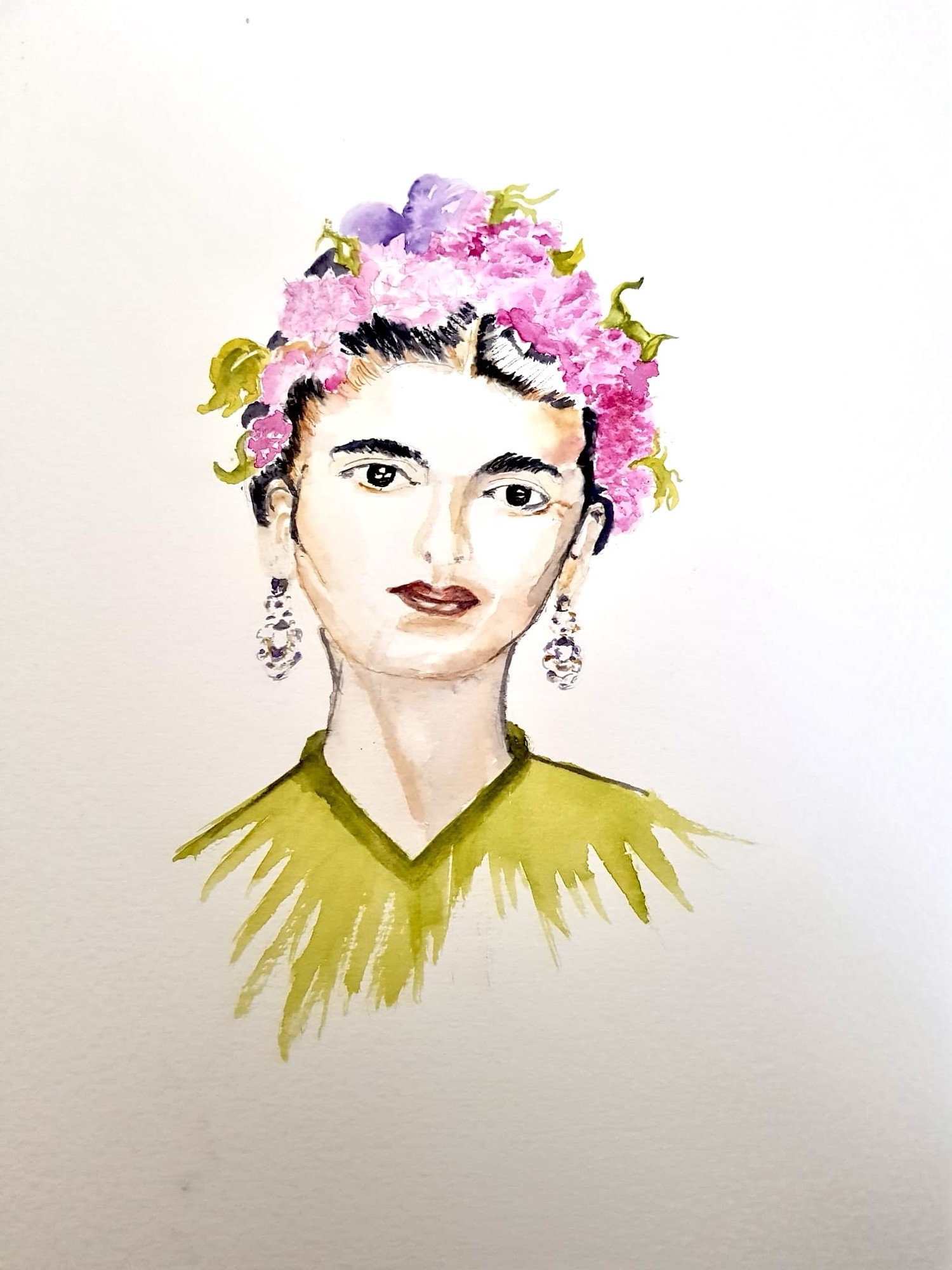
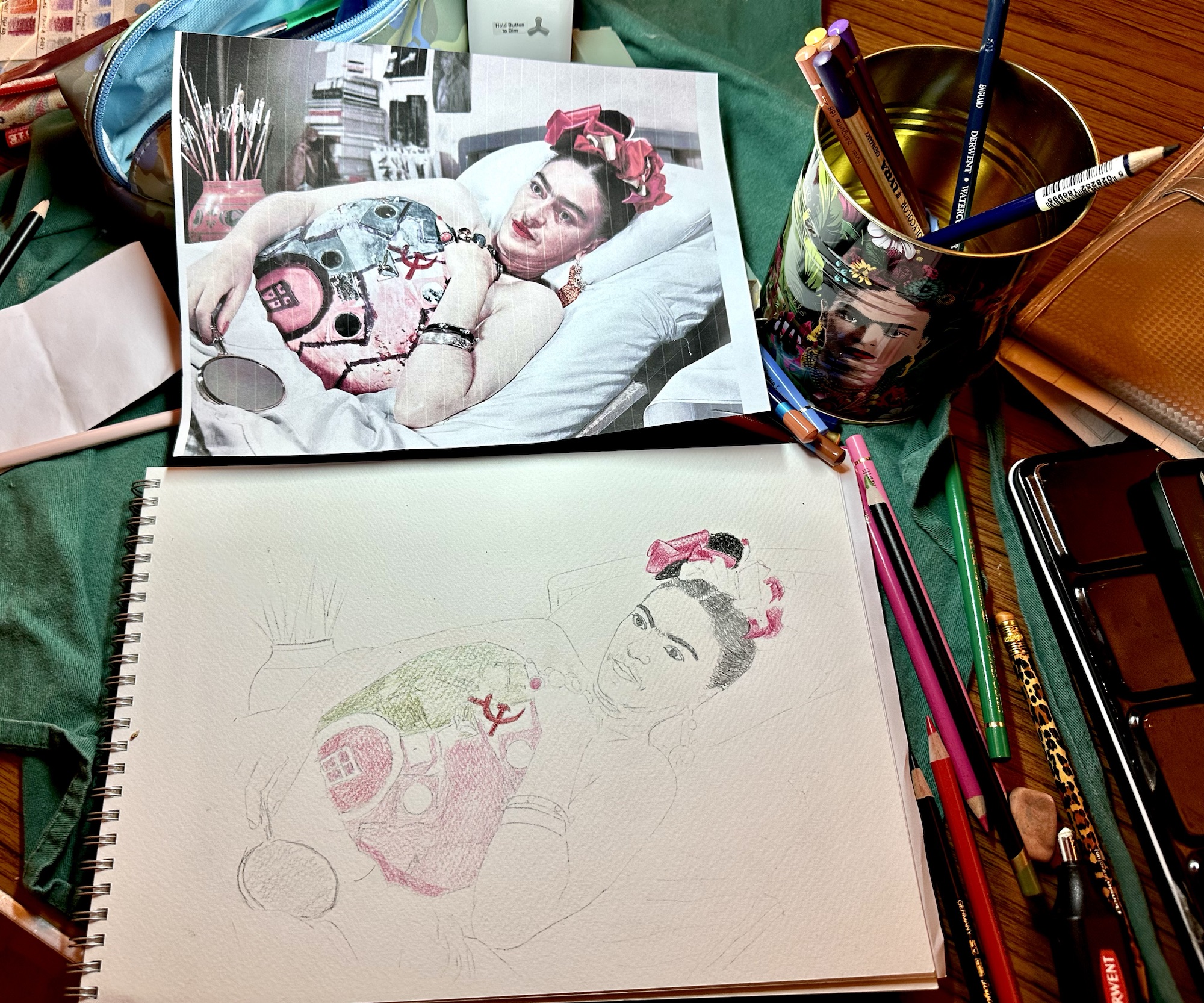
Tracy’s images of Frida Kahlo were painted in watercolours, as were the underwater eagle spotted rays. The cottage garden at Sissinghurst is in coloured pencils, lightly pressed on to the paper so the finished effect is delicate.
Well done, it’s great to see all your finished pictures!
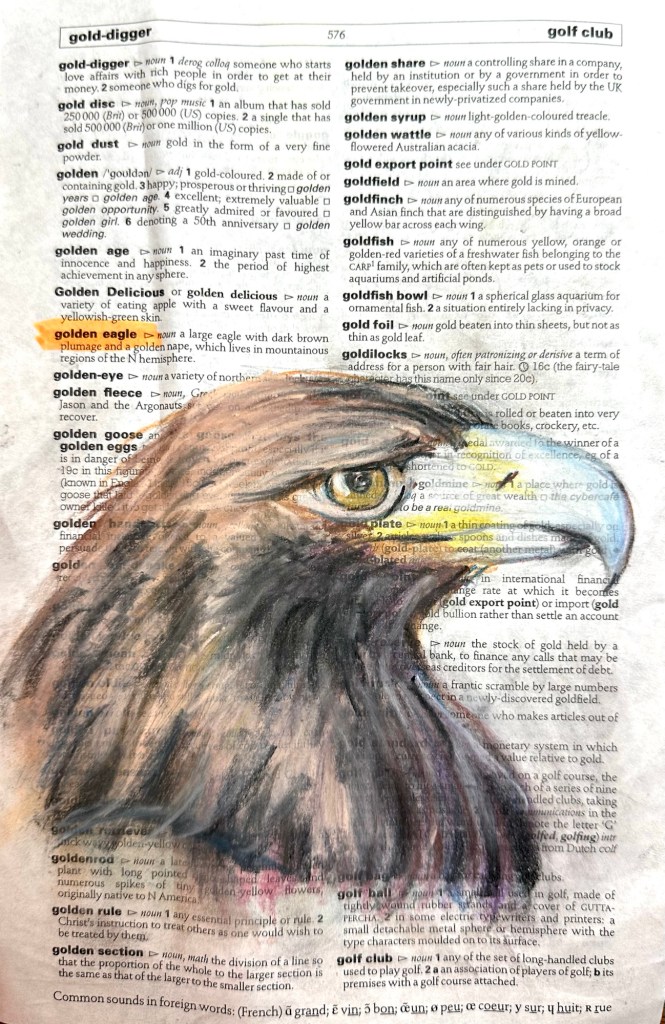
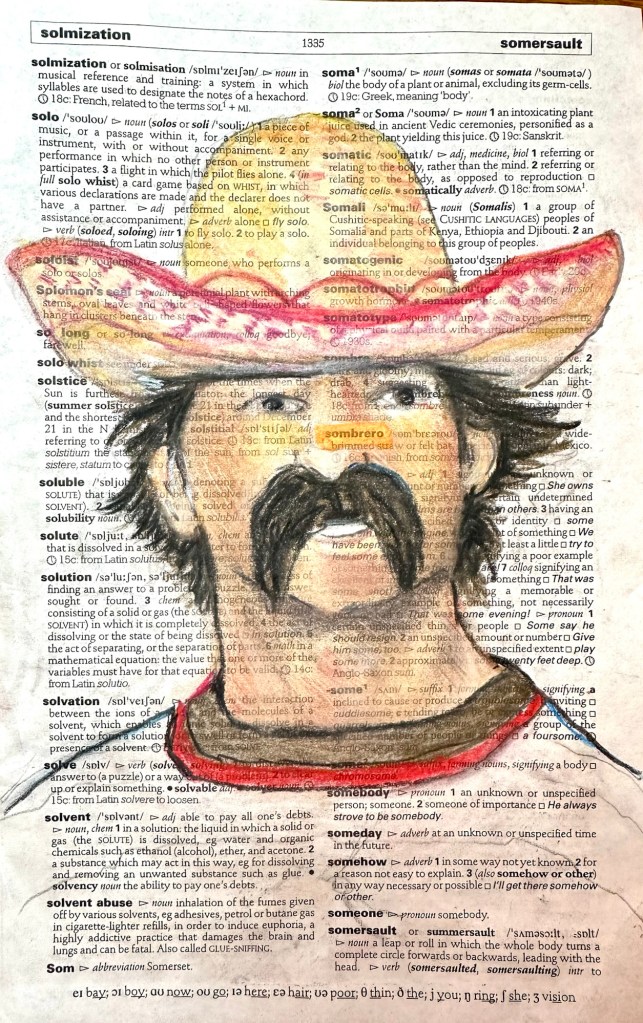
Steve’s surname of Goldson isn’t in the dictionary so he used the pages with the words ‘gold’ and ‘son’ on to create images of other words on the pages. He used soft pastels to draw a golden eagle and a man wearing a sombrero.
Very imaginative, Steve. Great colours and details you’ve achieved with the soft pastels, well done!
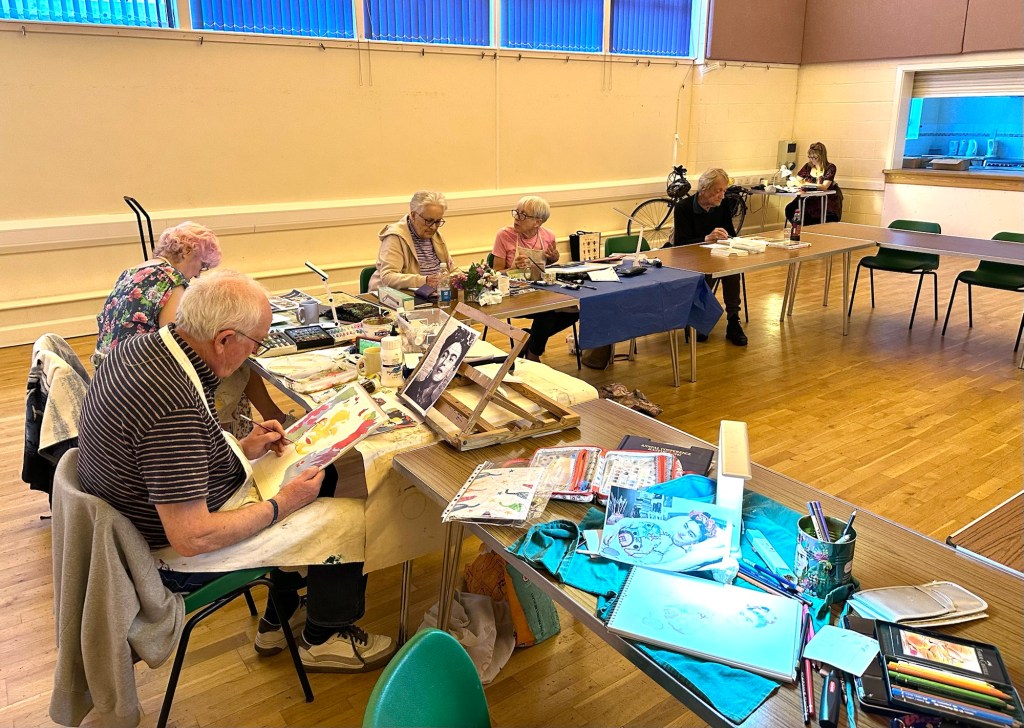
Just 7 members attended the session yesterday evening, with several members away on holiday or others watching England in the Euro football semi finals. We had a good natter and enjoyed creating our pictures to do with the life of artist Frida Kahlo.
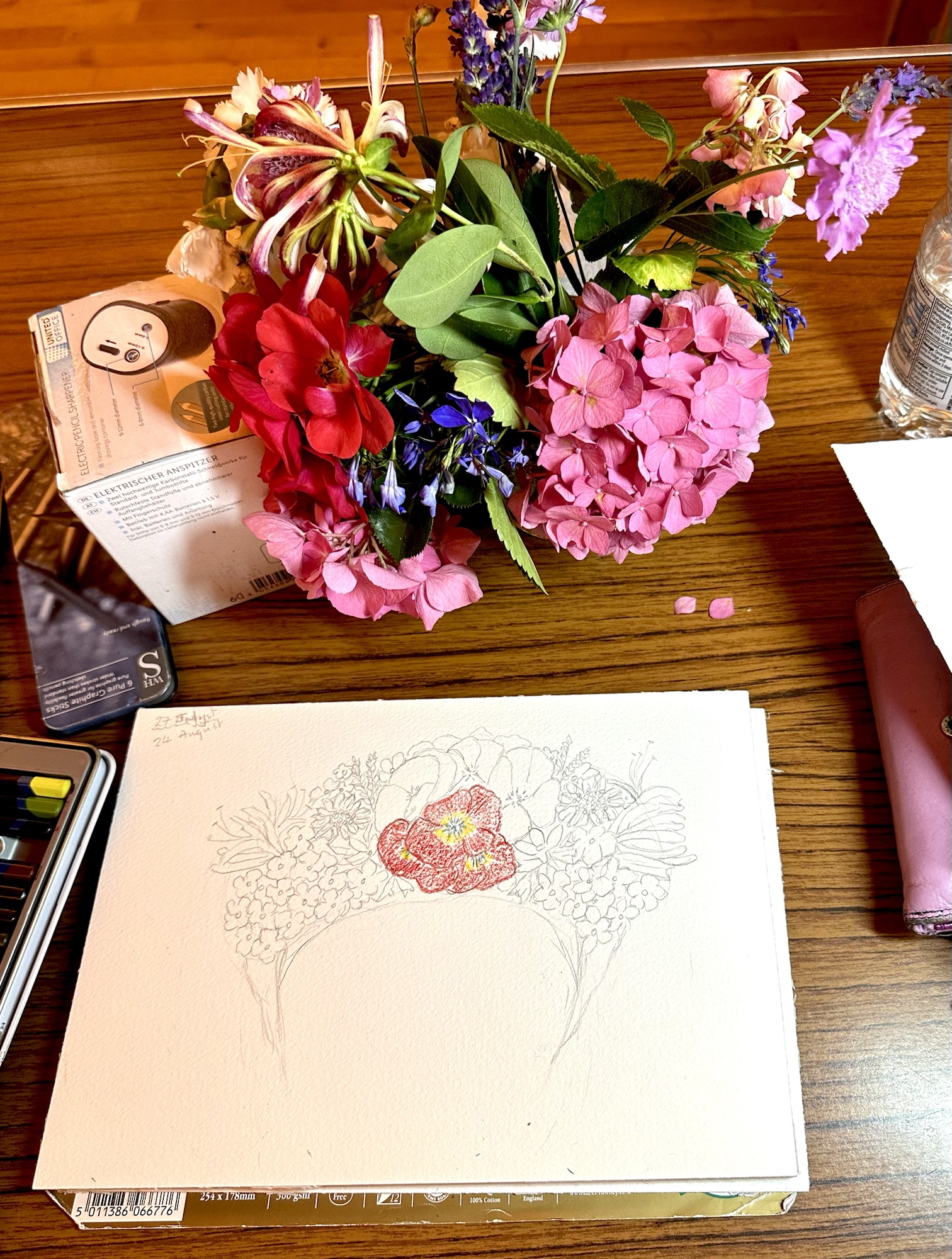
Several portraits by Brenda, Steve and Tracy, a flower study of similar blooms Frida wore by Myrna and a picture by Angela of the Casa Azul (the Blue House) Frida’s family home were started and will hopefully be finished at home. Chris couldn’t attend the session but completed a portrait at home, sending a photo for inclusion. If you do draw or paint the suggested subject at home, please send a photo to Tracy or Steve and they’ll be happy to add to it the relevant post.
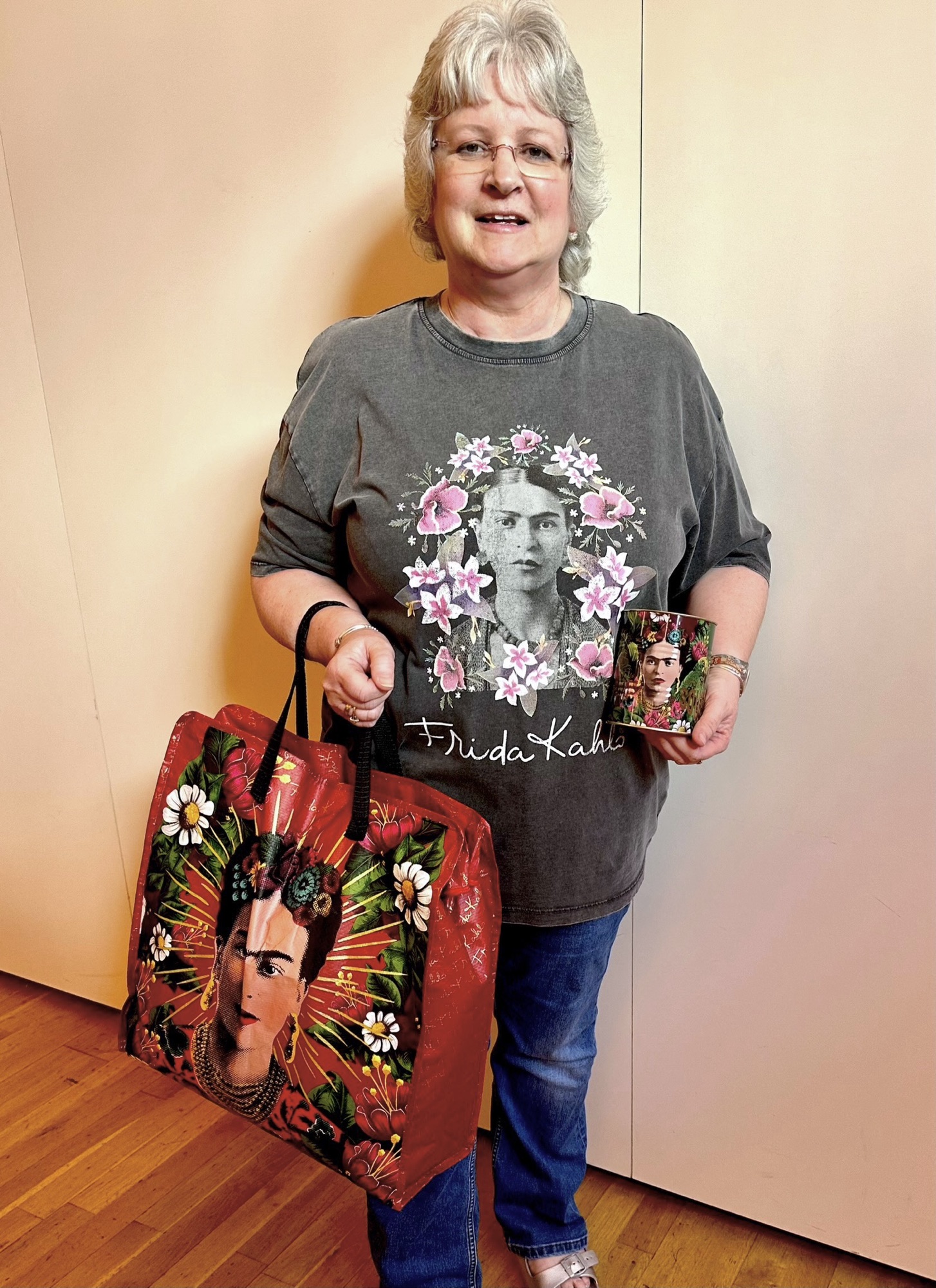
Here are our pictures, including a photo of Tracy wearing a t-shirt and holding a bag and tin all with Frida Kahlo’s image on.
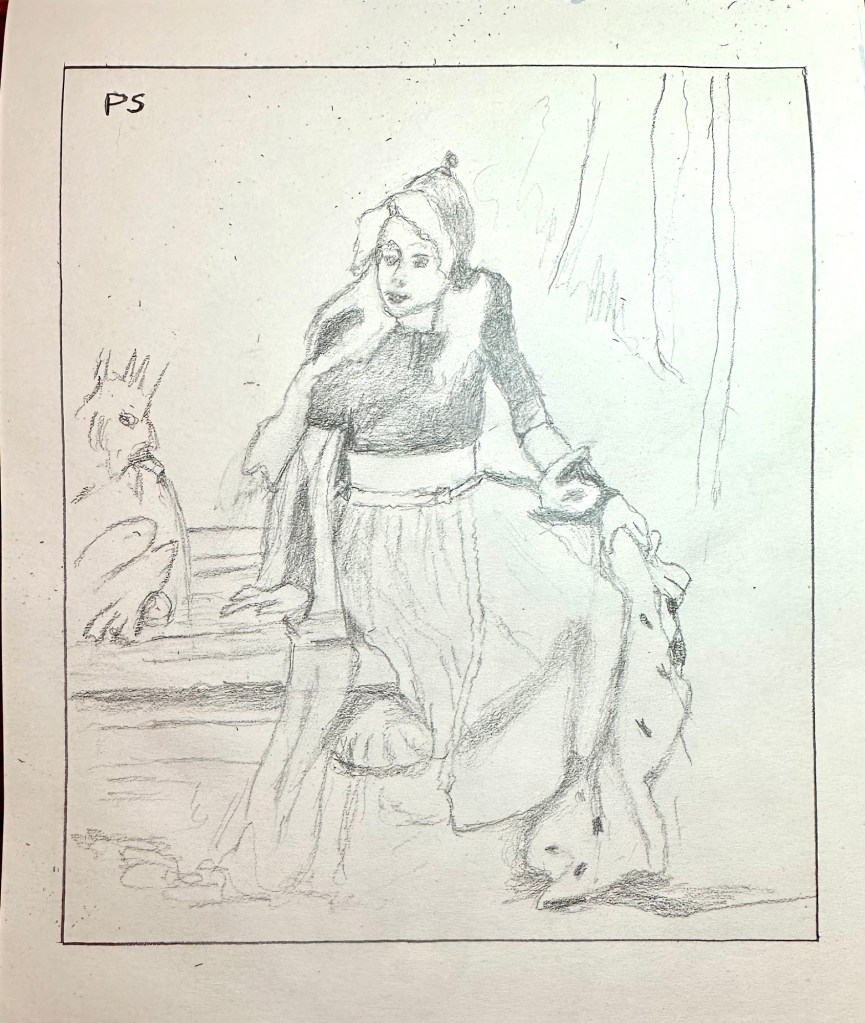
Patrick drew a picture of the Frog Princess.
Two more dictionary pages have been finished and they will be shown in the next post.
Our next session is at Chalk Church on Saturday 27th July from after 10am to just before 3pm
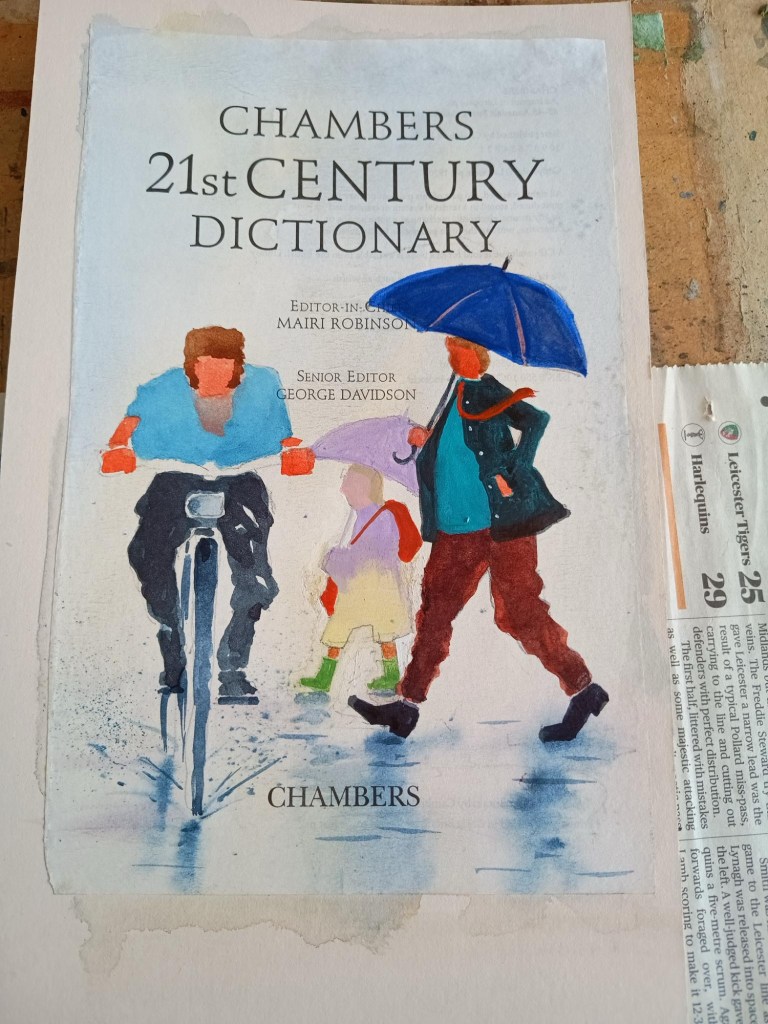
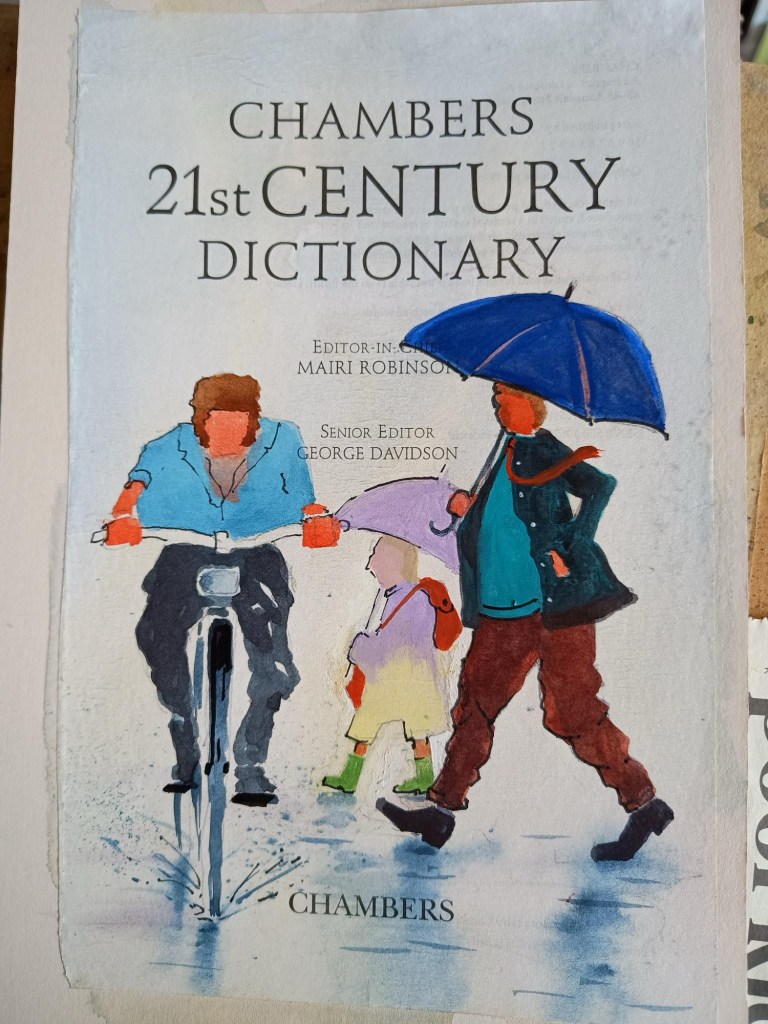
Graham chose several pages from the dictionary to paint on, but before he starts he tried painting on a spare dictionary page to experiment with how much water to use with watercolour and gouache paints and he tried using a pen too. His process is really interesting and is useful to everyone who has painted a dictionary page or who wants to paint one, especially his technique of mounting the page on scrap board to start with. The dictionary will be brought to future sessions in case anyone wants to paint more pages.
In Graham’s own words and photographs…
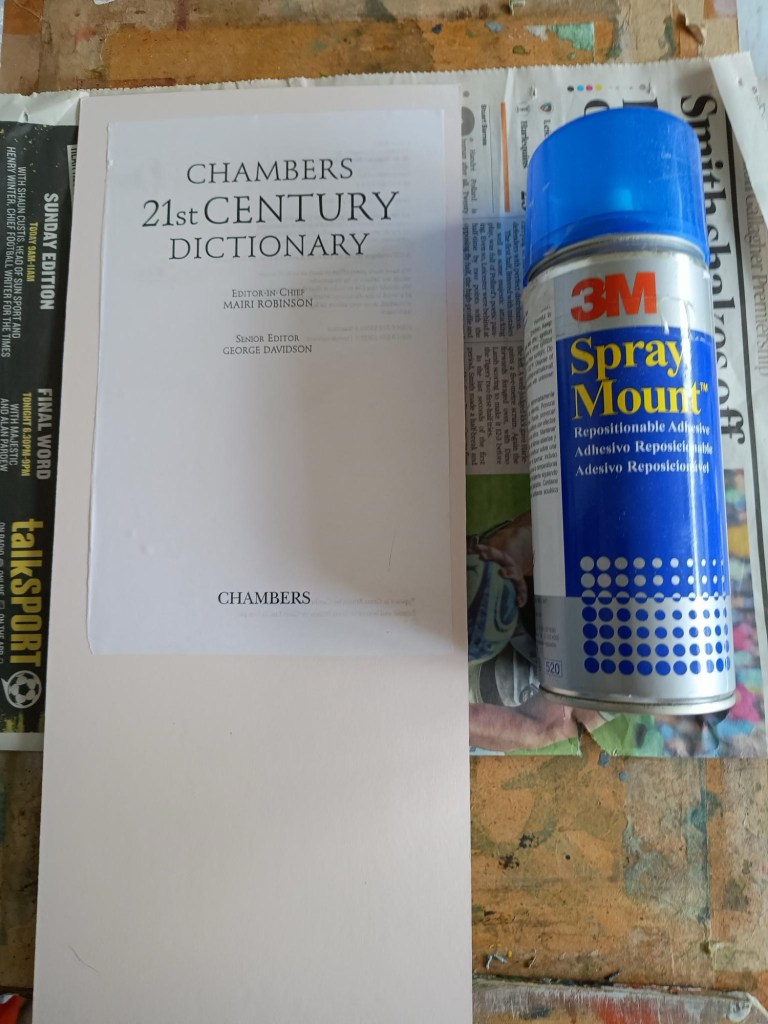
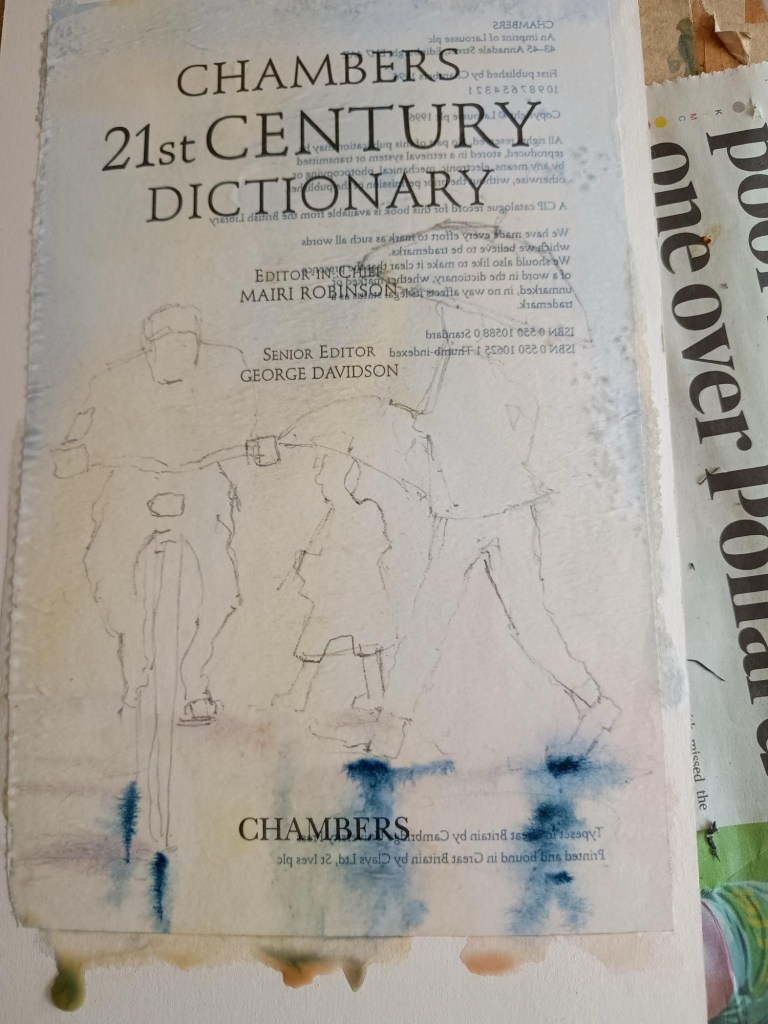
“I was determined to test the Dictionary Page paper to see how much abuse it would take. Firstly, I mounted it on some scrap board. This gave it rigidity. Then I drew on it, deliberately doing a fair bit of rubbing out and re-drawing.
For the background watercolour wash I adopted my usual procedure of wetting the paper, then putting in very faint wet washes, and as the paper dried, ever stronger and less wet washes. The paper stood up to this exceedingly well. It might be interesting to see how the page reacts when fixed to watercolour paper.
When this was all dry, I tried painting the rear figure with equally wet into wet washes. This failed abysmally. All the washes bled beyond where I had applied them, and they did not mix well. When dry, to try to redefine the edges of the figure, I applied some white gouache tinted with the background colours.
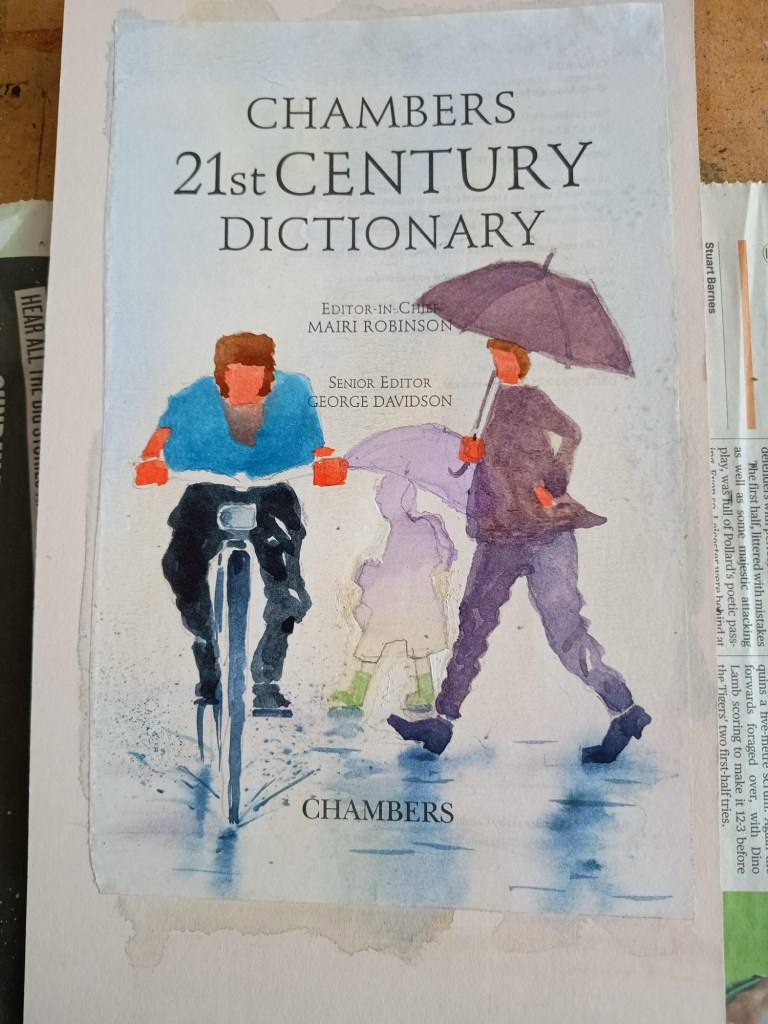
For the man with the umbrella I tried applying the watercolour with a 50/50 mix of water and gum arabic. This thickened the paint and stopped it bleeding but left it looking very streaky and unsightly.
For the man on the bicycle I mixed all the colours in the palette and applied them with a fairly dry brush, often taking most of the wet paint out of the brush with a tissue.
Once all the paint was dry I applied fresh colour to several of the washes on the other two figures. These were similarly applied fairly dry paint. The paler colours were again mixed with gouache so that under washes would be covered.
Finally, I did some ink drawing .. I’m not sure how successful that was.
This was all very experimental. Glueing the paper down was certainly a good idea for me, and I will continue to do so when using a wet medium. I was surprised how well the paper stood up to the original wet washes and to the number of layers of paint I could apply to the figures. I used watercolour throughout.
The lesson I learned was to apply it in a “dry brush” fashion. Although I suspect Gouache and acrylic paints may well work better on this sort of paper I shall continue to experiment using watercolour.
Happy Experimenting and Painting
Graham”
Thank you very much, Graham. To read your process from start to finish was very helpful and having the photos too made each stage easy to follow. Many of us have found that a dryer application of paint is the way forward and once one page is painted we want to paint several more!







 Chalk Art Group