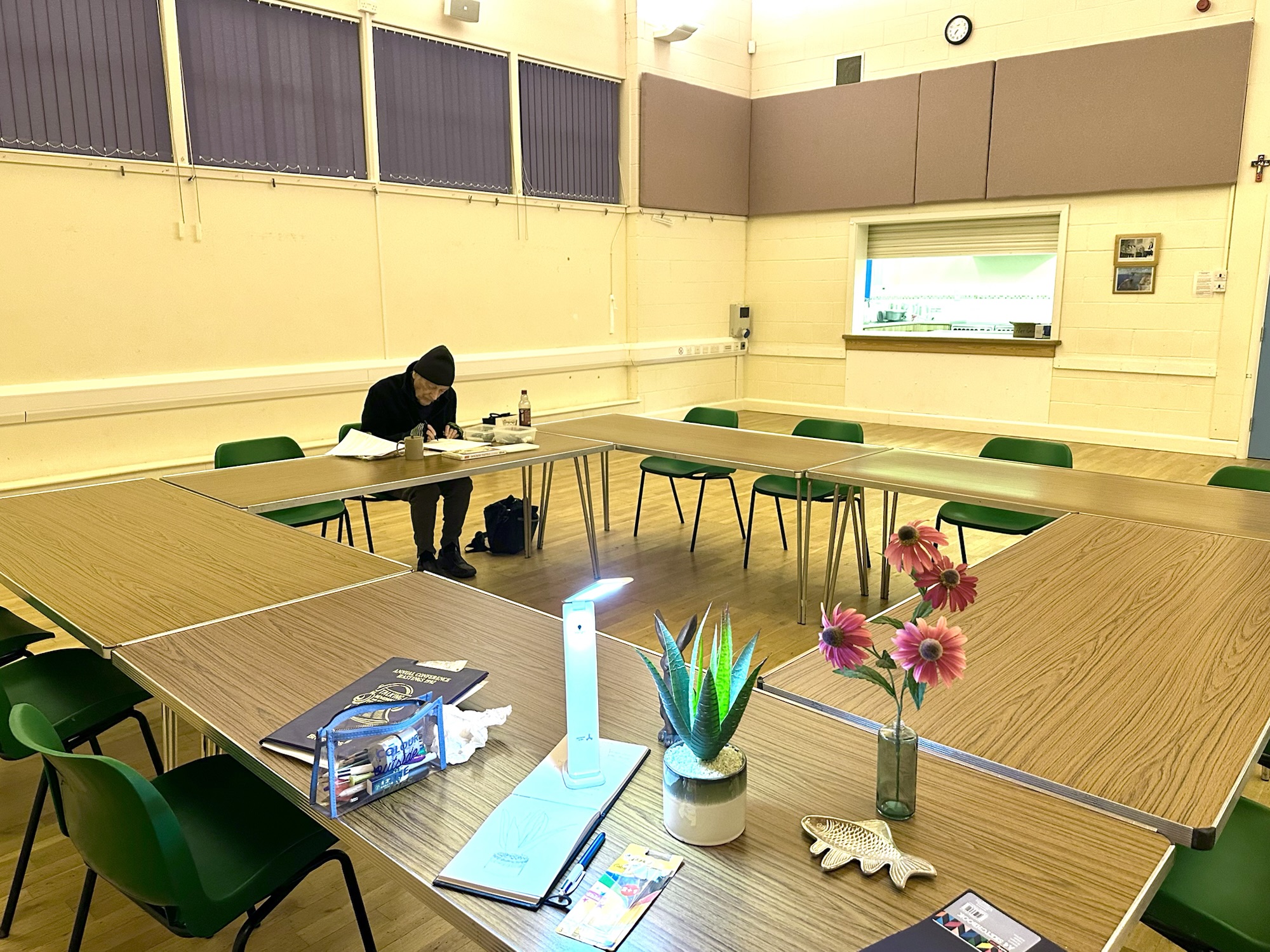
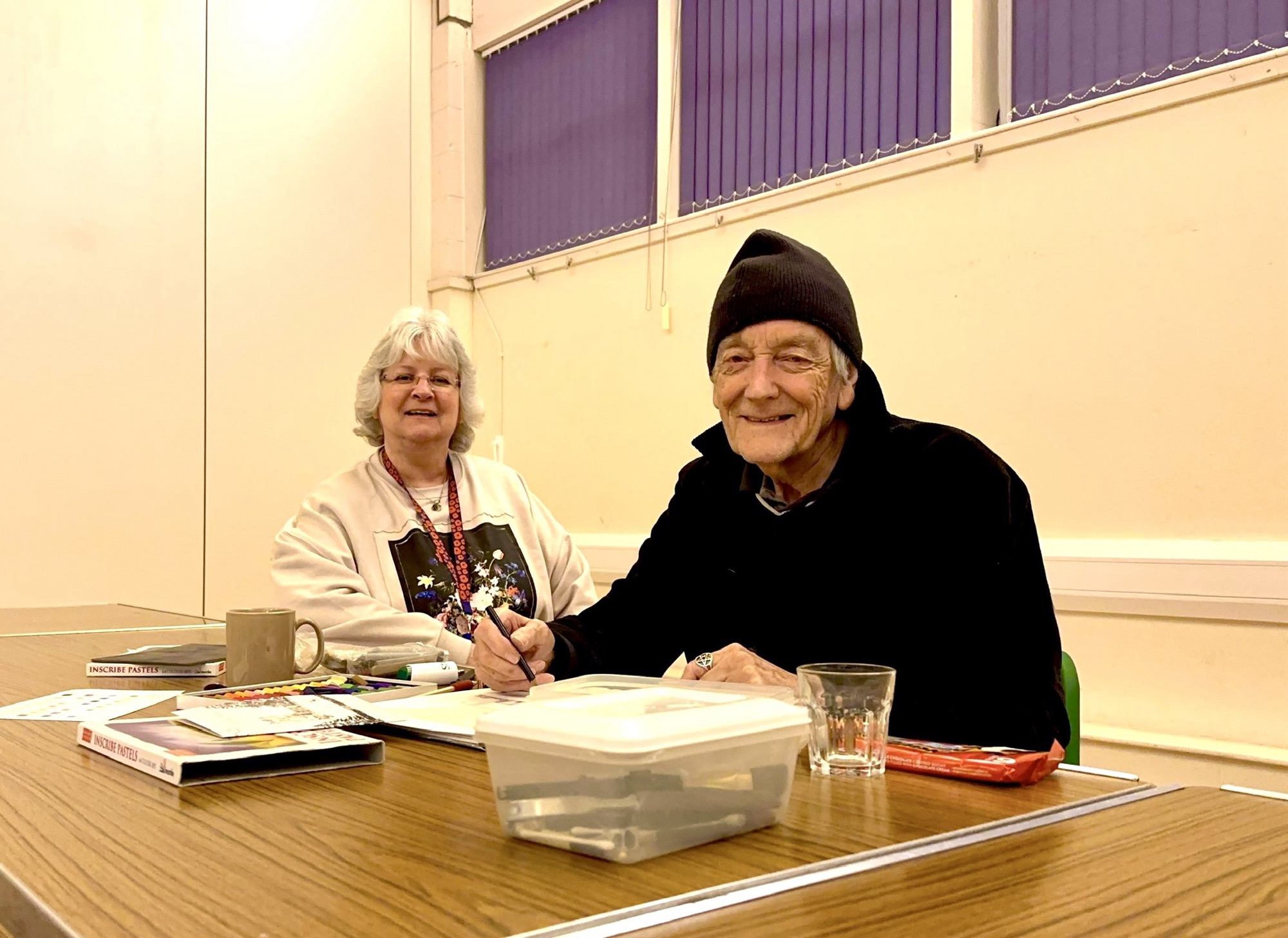
A simple subject to start the year but illness and cold weather kept most members at home apart from two. Patrick and Tracy chatted throughout the evening and found the hall heated up quickly using the warm aircon.
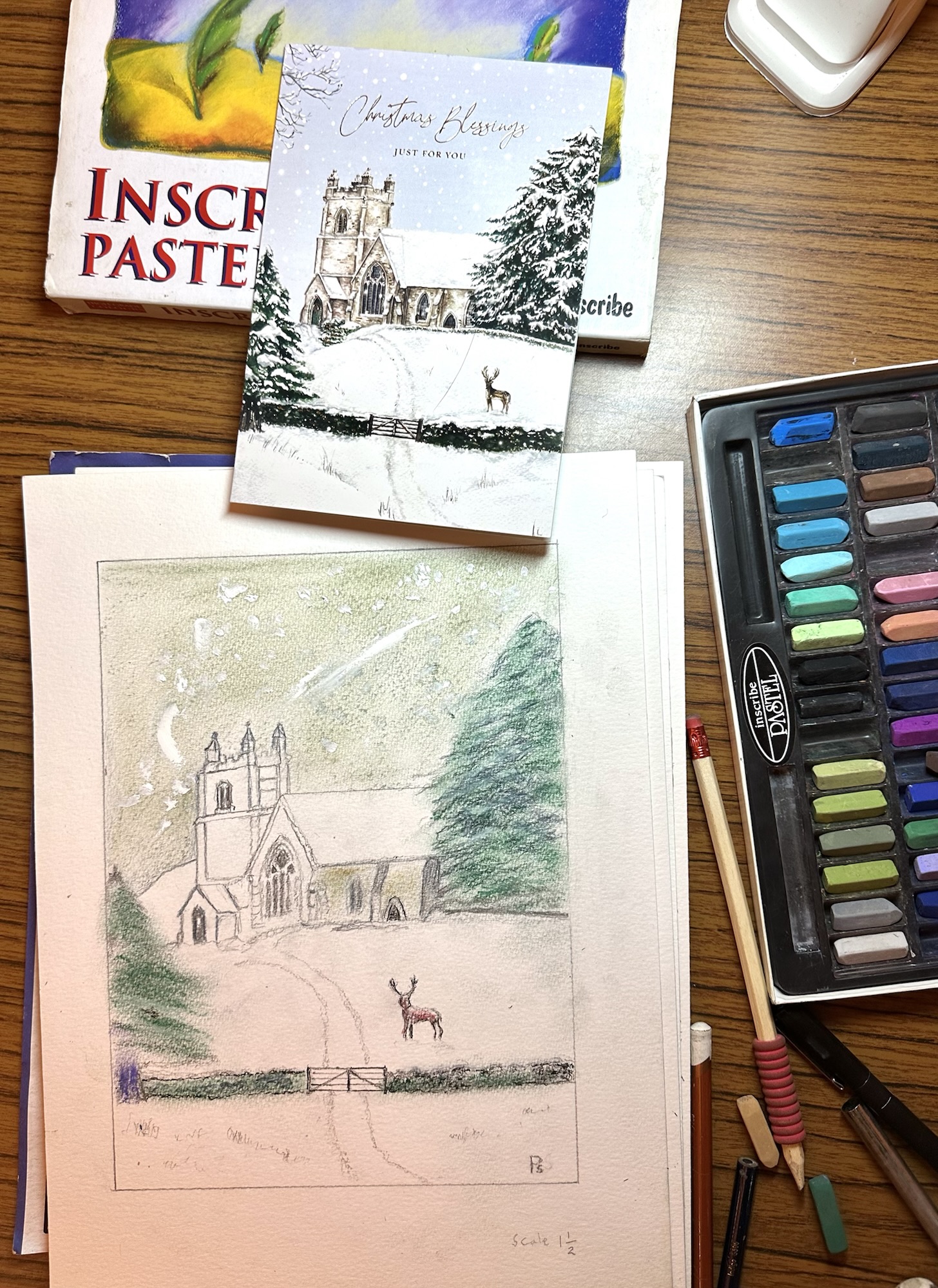
Patrick had sketched out his picture for the next session of a wintry scene, inspired by a Christmas card he had received. He used coloured pencils, pastels and water mixable oil for the snow and hopes to finish the picture next time.
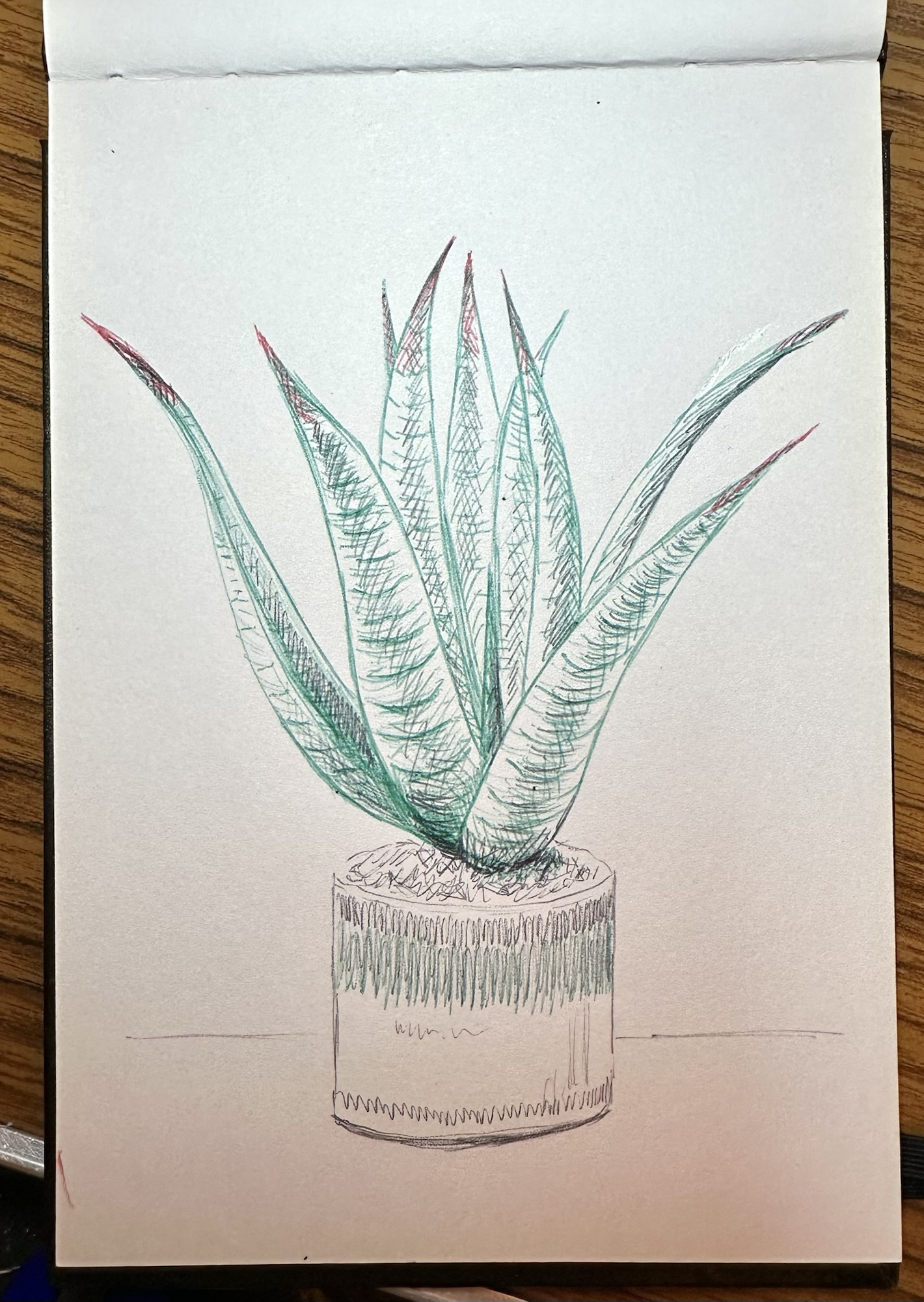
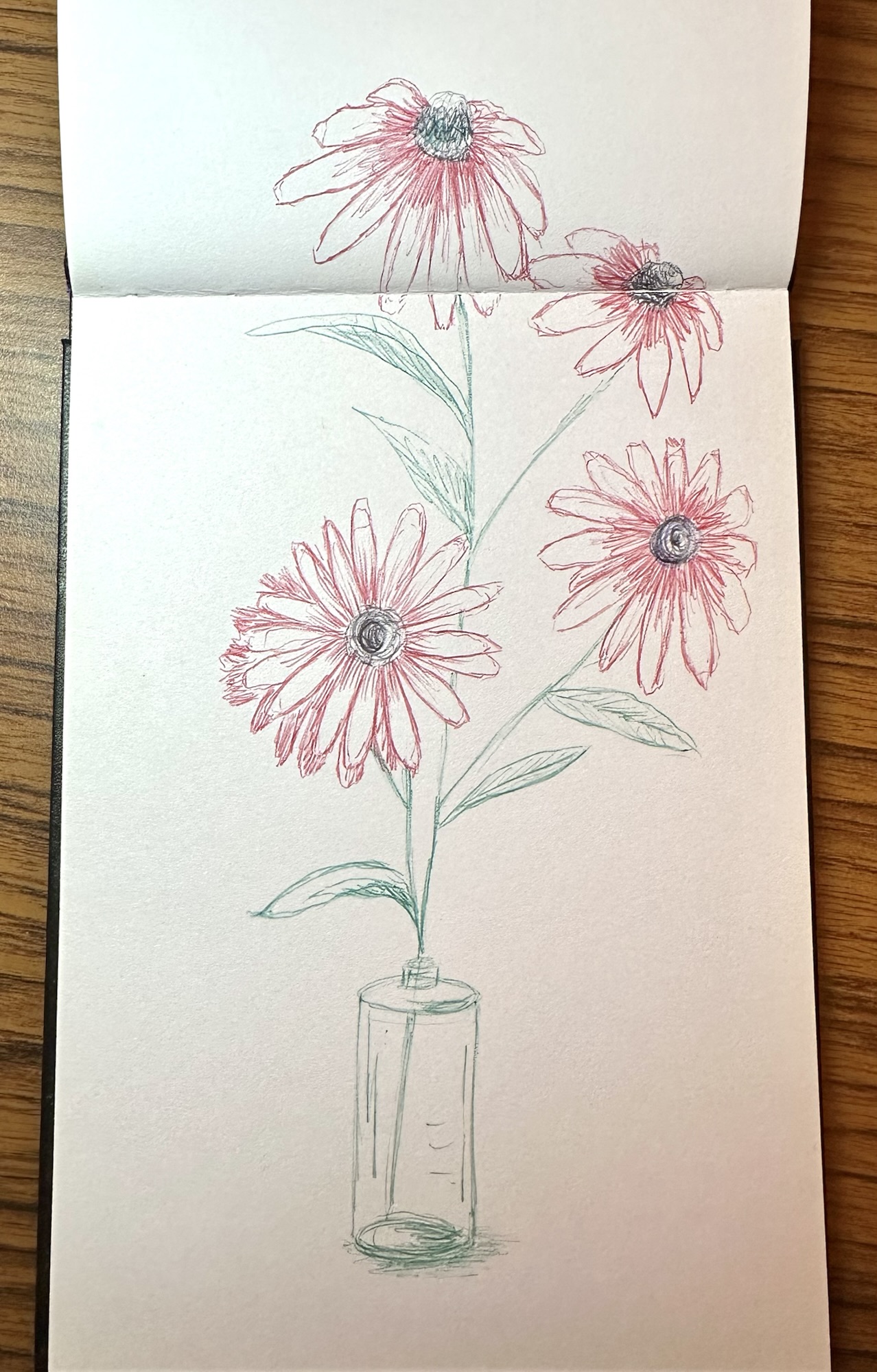
Tracy enjoyed researching about the history of ballpoint pens and finding out about John Loud, László Bíró and Michel Bich. For the session she brought objects from home and drew the faux plants. Firstly in just black then using a Bic pen with four colours, using the green, red and black.
Three members tried the subject at home.
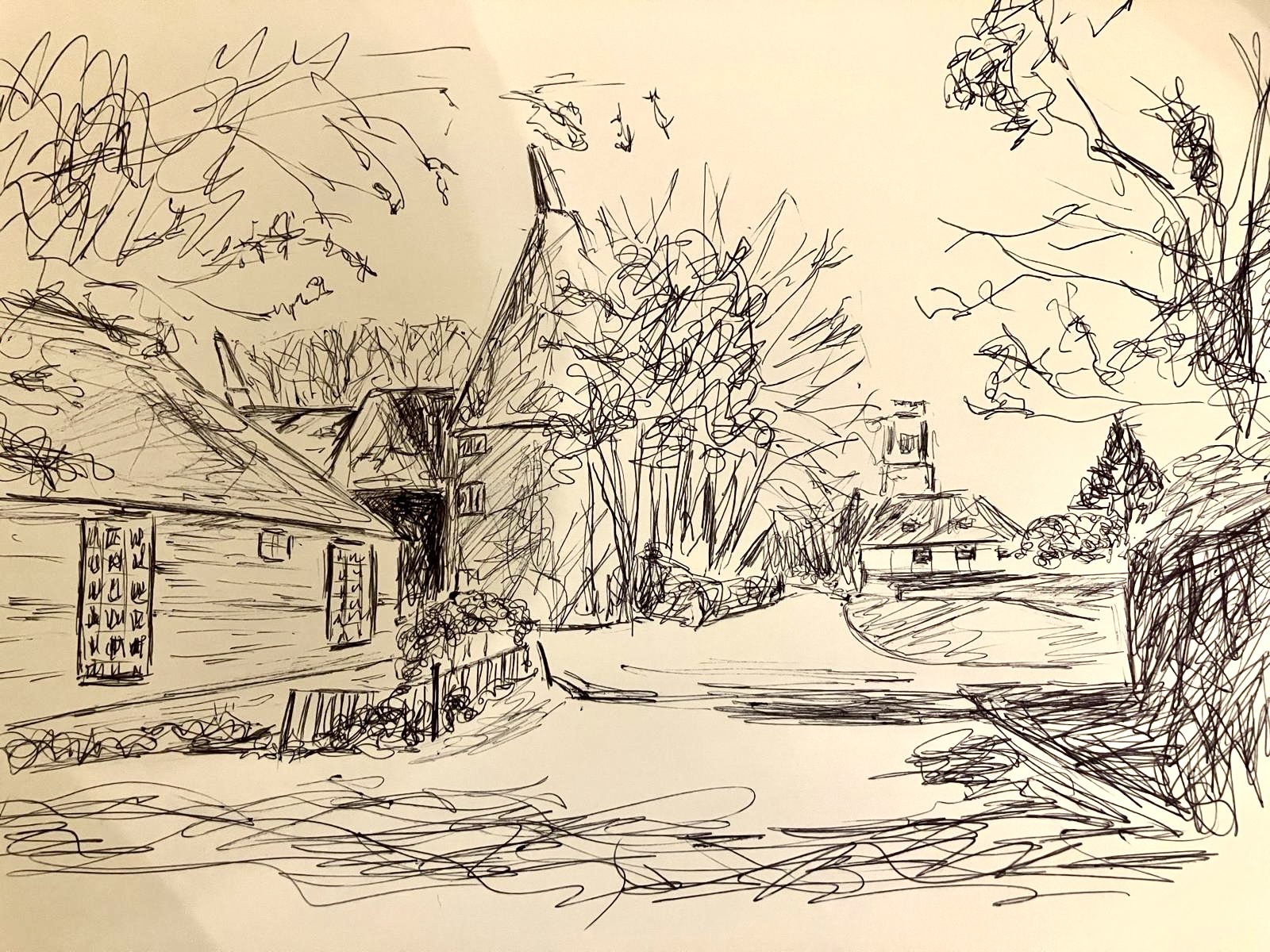
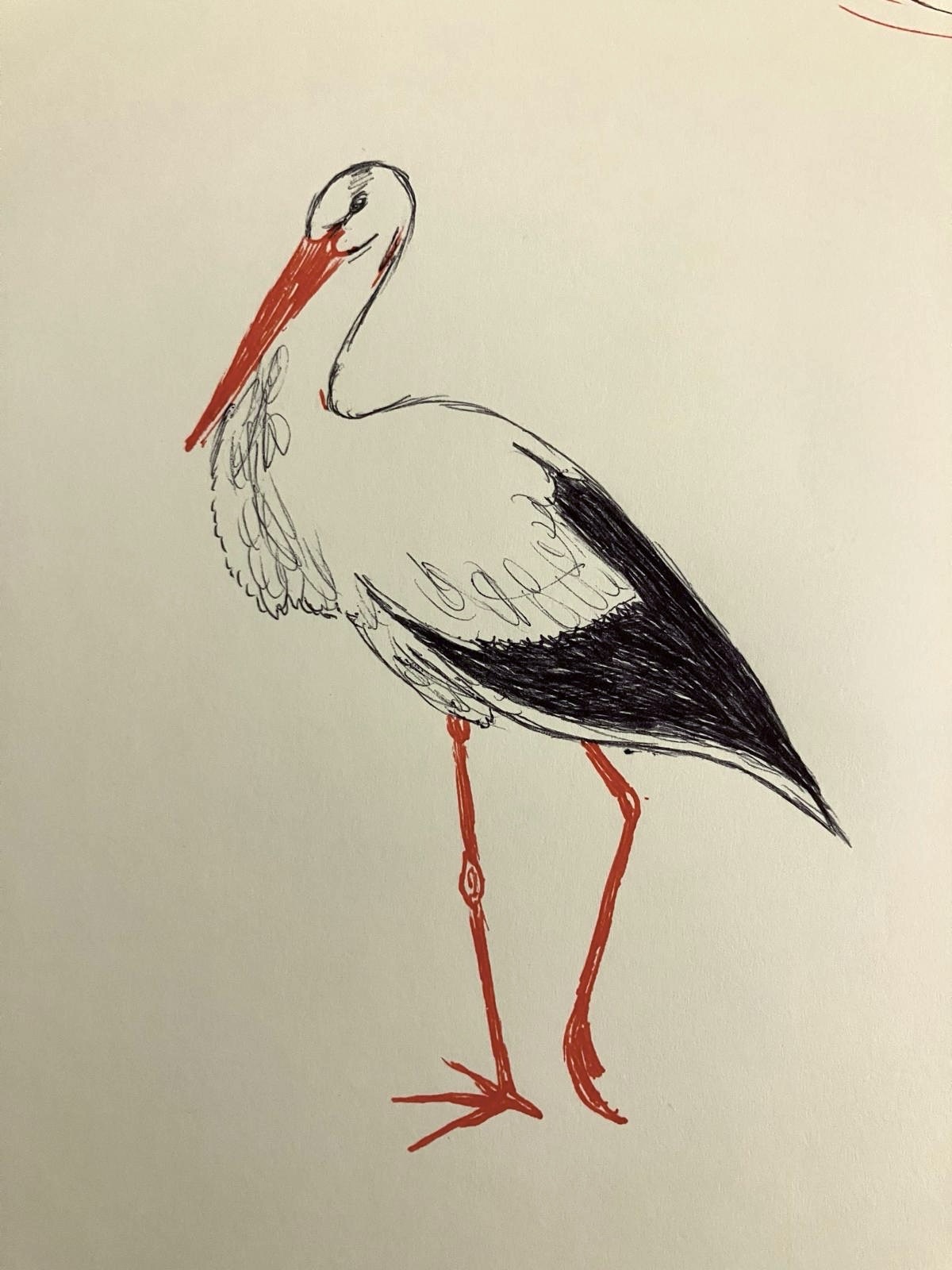
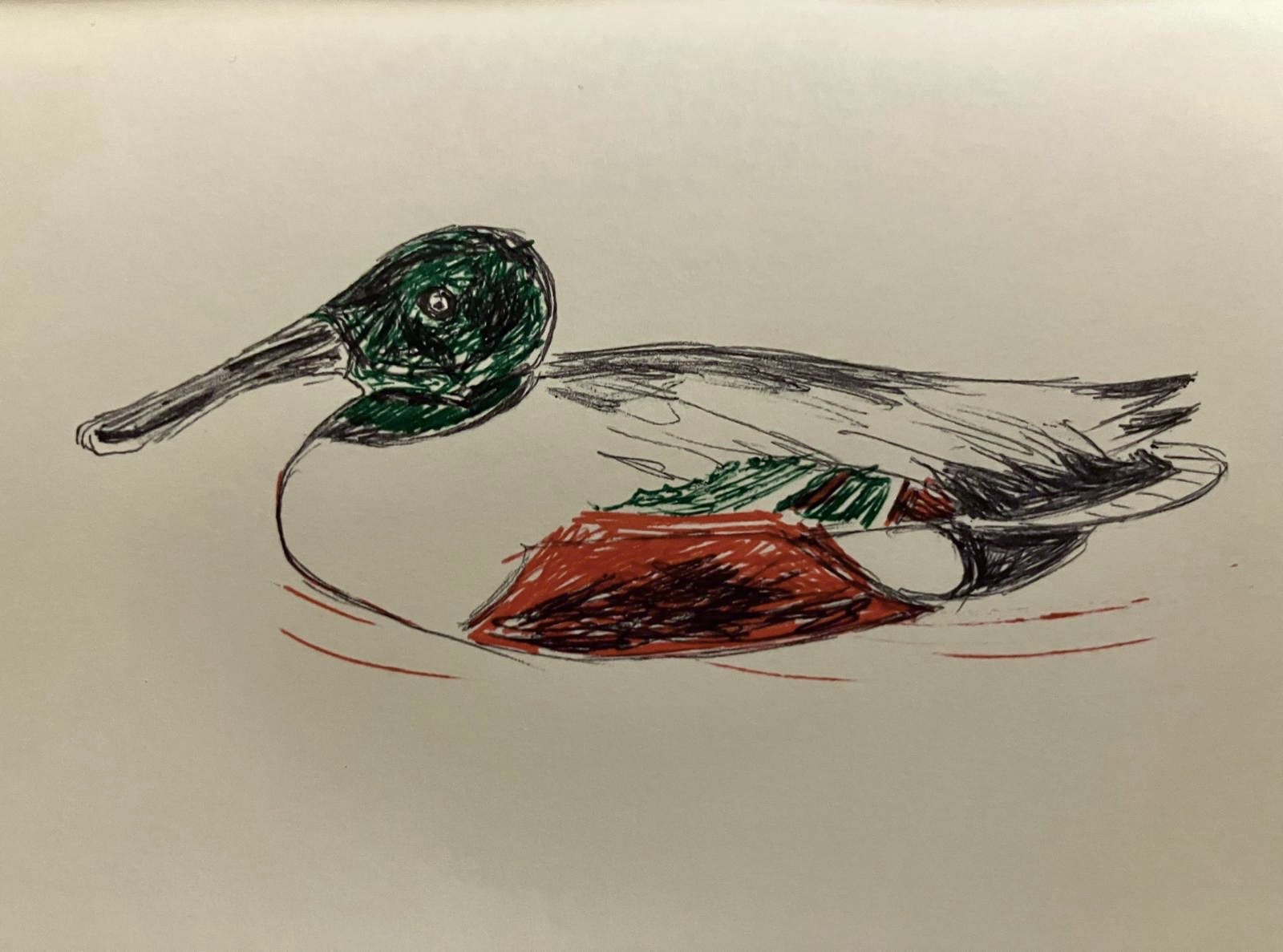
Susan drew a lovely detailed scene of Smarden in Kent in black ink and it includes the church where her daughter was married last year. For the sketches of the birds different coloured ballpoint pens were used.
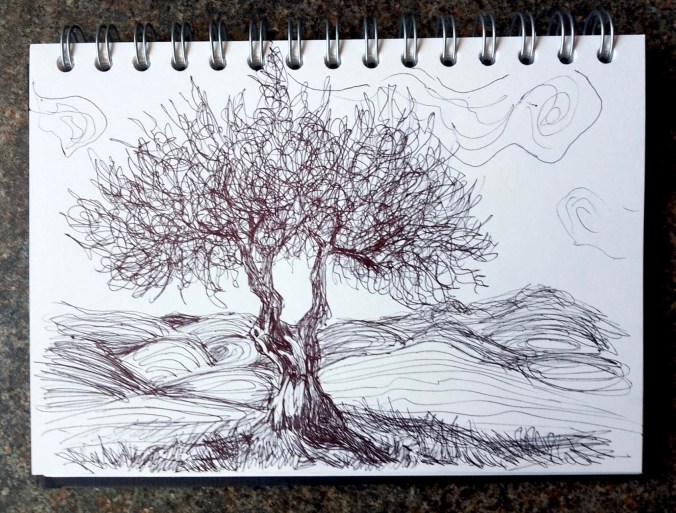
Angela found a picture of an olive tree and drew it with a ballpoint pen in the style of Van Gogh. It’s a beautiful sketch and the swirls with the ink give a Van Gogh effect.
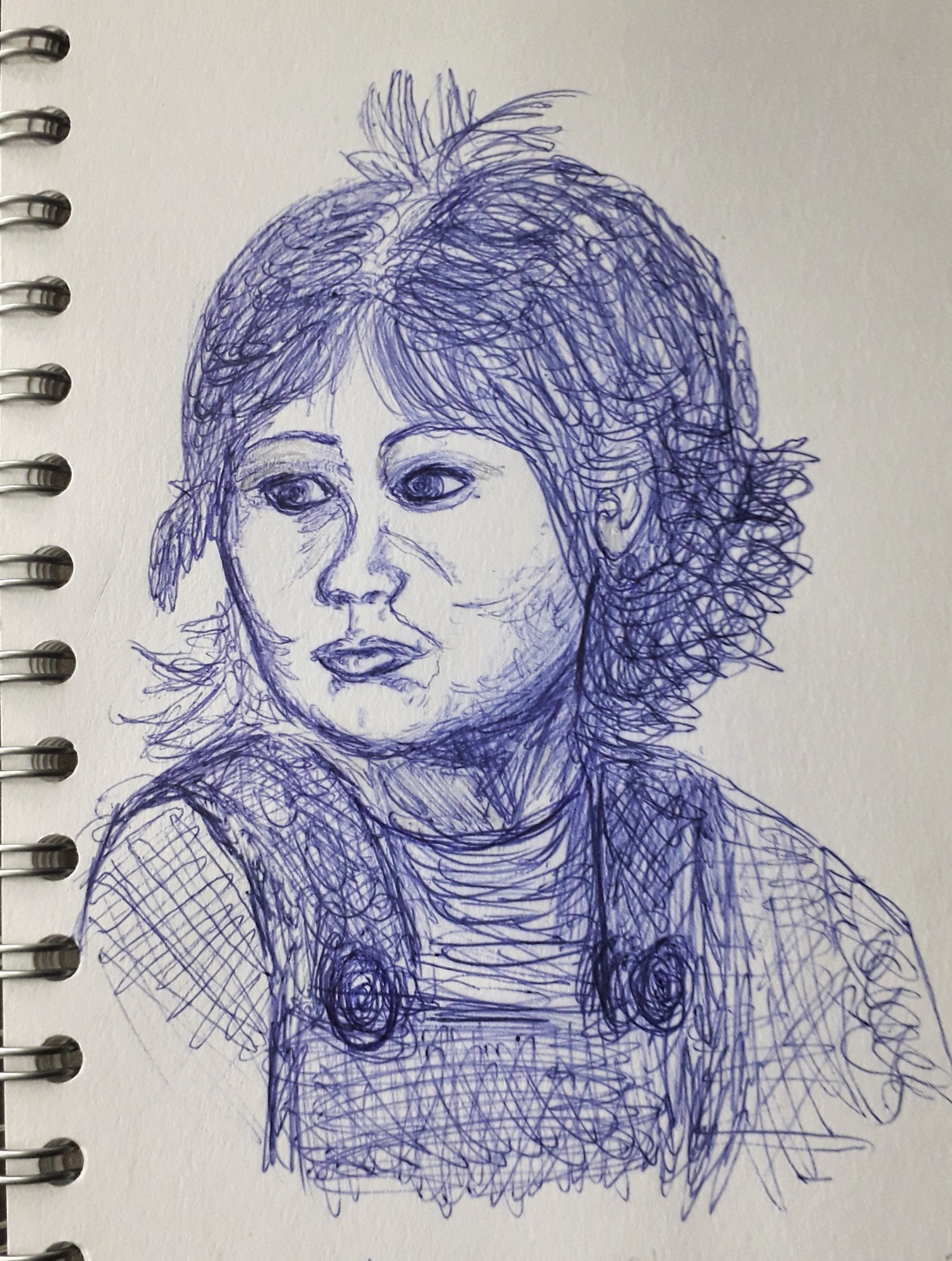
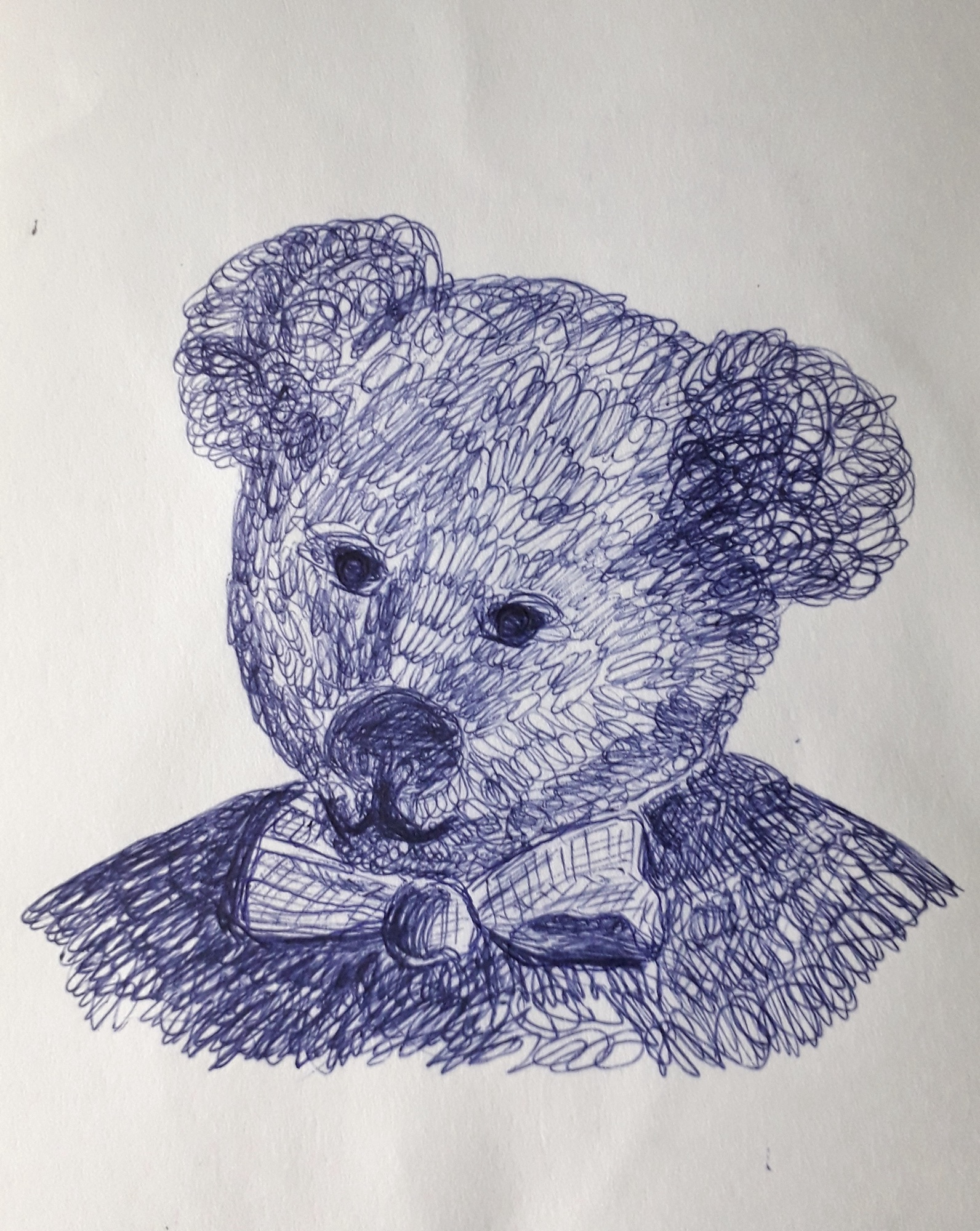
Dot used a blue ballpoint pen to draw these pictures of a little girl and a teddy bear. On the girl and the teddy she achieved a really good effect of hair and fur by following the shapes of the heads.
Using a simple ballpoint pen is a very quick way to sketch, especially if you’re out and about and only have a pen and sketchbook with you. Please do give it a try!
The next session is on Saturday 25th January from 10am to 3pm and the suggested subject is ‘Winter Wonders’. See the post published on 1st January for more details.
Here are ideas for January’s two sessions, but you are very welcome to come along and paint whatever you want to.
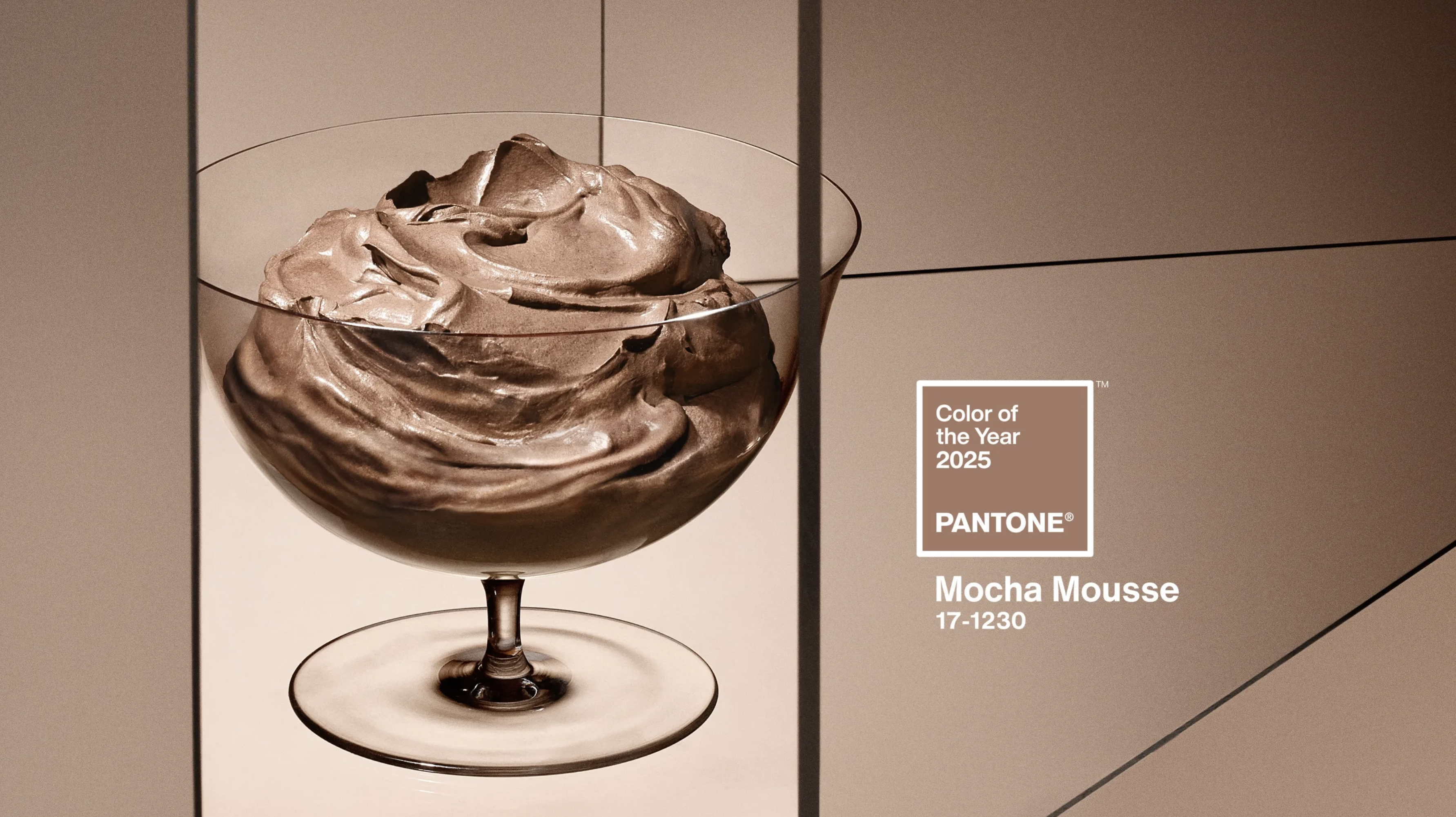
After years of bright, dynamic colours worldwide colour company Pantone has chosen a soft, mellow, comforting brown as its colour of the year, called Mocha Mousse. Instead of a whole session on this colour try and add it to your paintings throughout this year.
Wednesday 8th January 7-9pm – Ballpoint pen and a sketchbook
A simple start to the year to bring along a sketchbook and ballpoint pen and sketch some ideas of what you plan to draw and paint in 2025 or bring items from home to sketch. We usually use pencils to sketch but ballpoint pens are often overlooked yet are so versatile. Handy too if you’re going out and just want to pop a pen and small sketchbook in your bag.
Originally patented by John Loud in the USA in 1888 the first ballpoint pens were clumsy and not a success so the patent lapsed. László Bíró developed the idea decades later in Europe and patented his idea in 1938 as Biro pens. A few years later Marcel Bich bought Bíró’s patent and the Bic Cristal ballpoint pen became his first product in 1950. The four-colour ballpoint pen followed in 1969 and both designs remain almost unchanged since then.
Saturday 25th January 10am-3pm – Winter Wonders
Before recycling your Christmas cards have a look through and see if any will inspire you for this session. A wintry landscape, place, people, domestic or wild animals. With watercolours leave the white paper unpainted to represent snow or with acrylics or oils layer the paint on thickly with a palette knife. Or you might see many colours in snow, it’s not just white with sunlight and shadows. A broad subject in any media, come along and enjoy an arty day with friends.
HAPPY NEW YEAR and THANK YOU to everyone for your continued support for Chalk Art Group during 2024, attending sessions and painting along at home.
Membership
We will finance M&C this year with an annual subscription of £84 to cover the hall hire fees for 2025.
Alternatively, equal payments of £28 will be due 3 times this year in January, May and September. If you choose to pay in instalments you are committing to pay for the whole year. Without this support we will not be able to raise enough funds to hire the hall. Steve emailed everyone on 21st December with details of how to pay by bank transfer, cheque or cash Please look back to his email as there is important info about the art group’s name at the bank. Please pay promptly as this saves members being emailed and phoned to be reminded to pay!
Please pay your membership fee by the end of January to continue to be a member of the art group. Thank you :o)
Sessions
Our sessions will be on the second Wednesday and the fourth Saturday of the month, with session ideas being published on the 1st of that month.
You don’t have to paint the suggested ideas, you’re welcome to come along and paint anything you want to. Or if you come on a Wednesday and want to paint the Saturday idea or vice versa, that’s no problem at all.
Free tea, coffee and biscuits will be provided at all sessions so if you just want to come and chat with your art friends then that’s fine too!
Workshops
If we have any workshops they will have the usual ‘first come, first served’ policy of putting your name down, with an additional amount to pay to cover the tutor’s fee. If more artists wish to attend the session than the tutor has room for, we’ll have a waiting list and you have a chance of getting a place as members do pull out at the last minute.
Even if you don’t want to attend a workshop you will have already paid for the hall hire in your subs. You are therefore welcome to sit and paint quietly at the kitchen end of the hall whilst the workshop session takes place towards the window end of the hall.
Here are the session dates for 2025
Please print them out or write them in your diary or calendar. Some months have 5 Saturdays but we meet on the 4th one.
Open Day is on Saturday 22nd November, with hanging the evening before.
We have so many different subjects in our sessions that we often start pictures but don’t get around to finishing them.
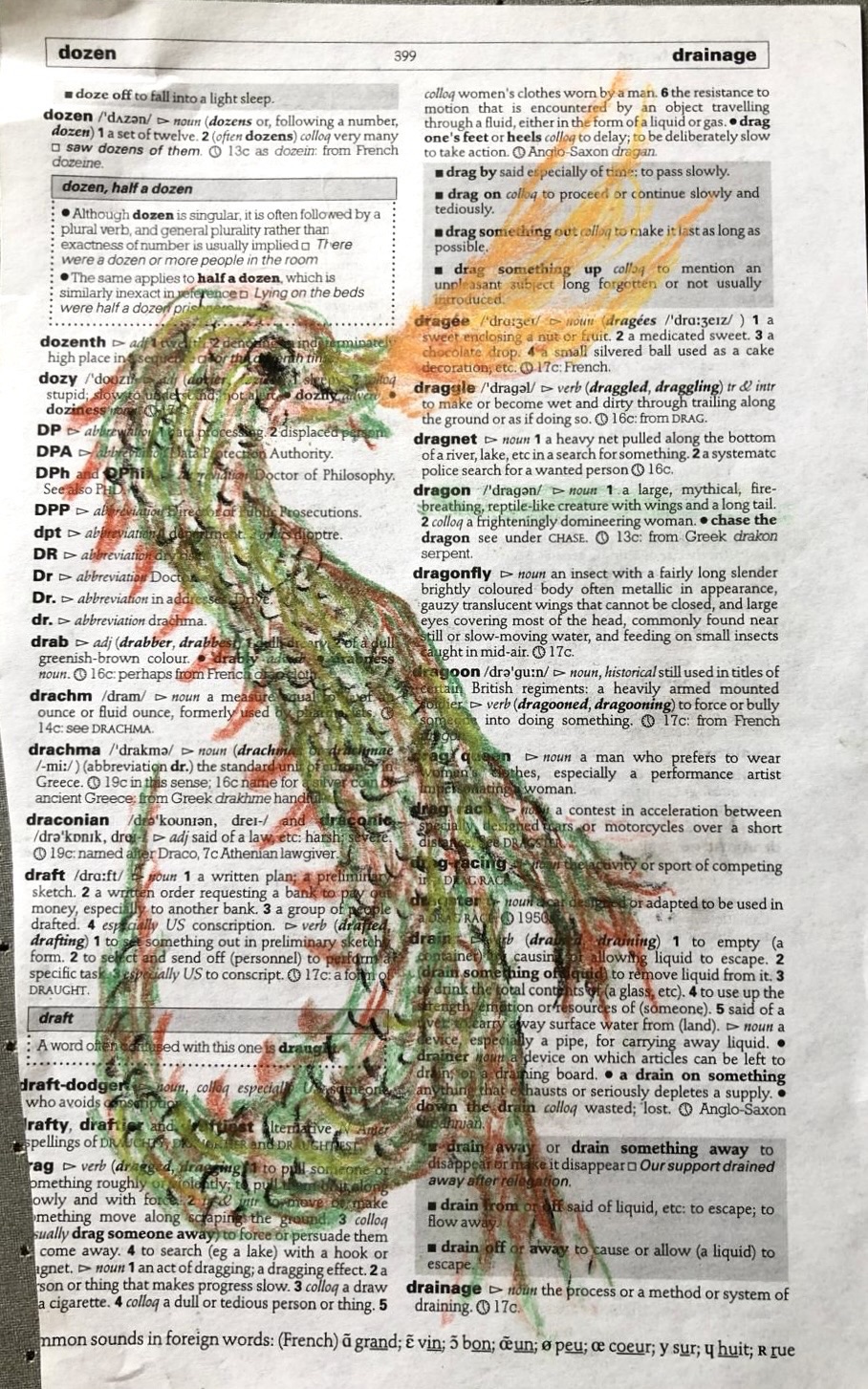
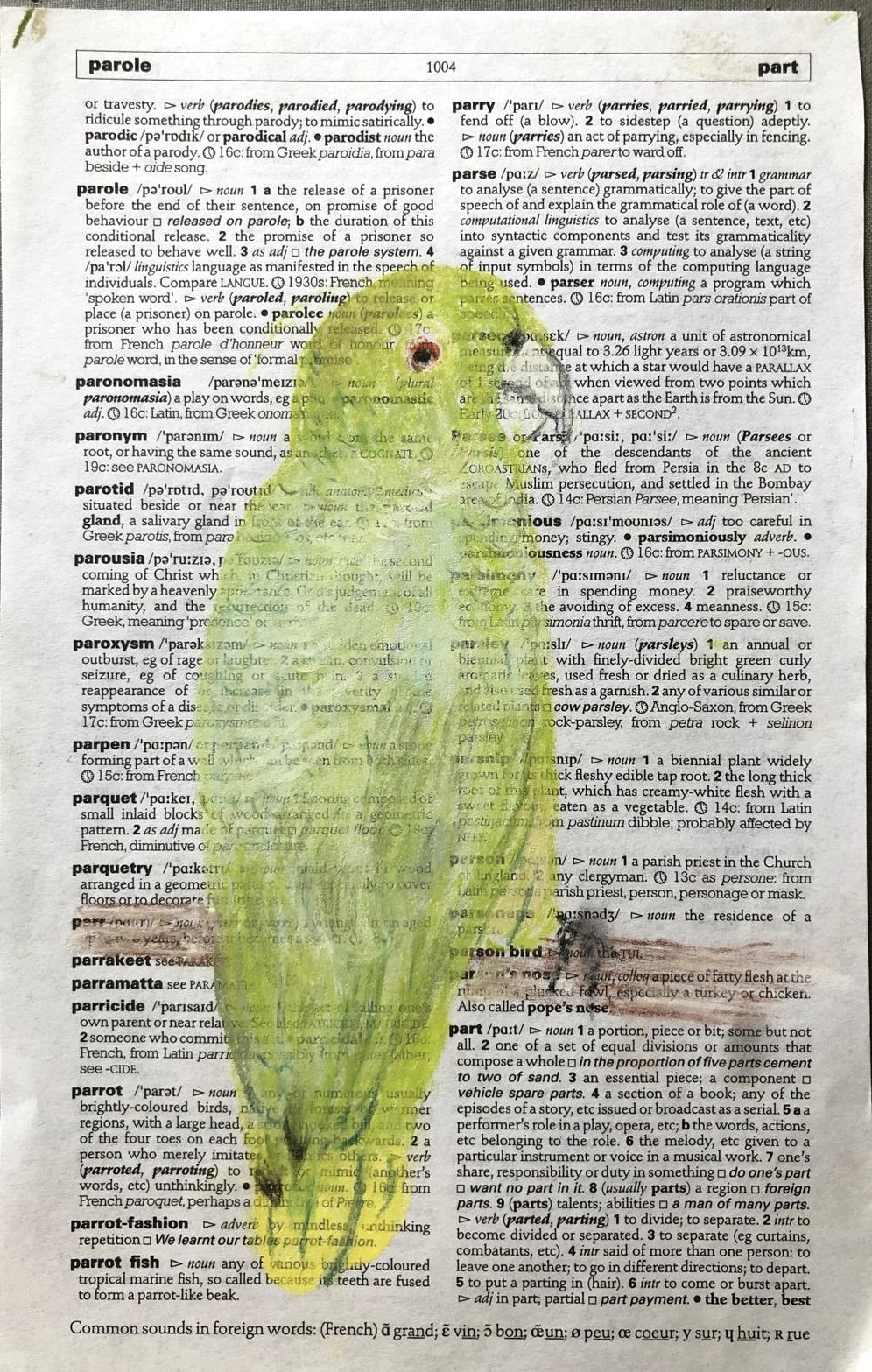
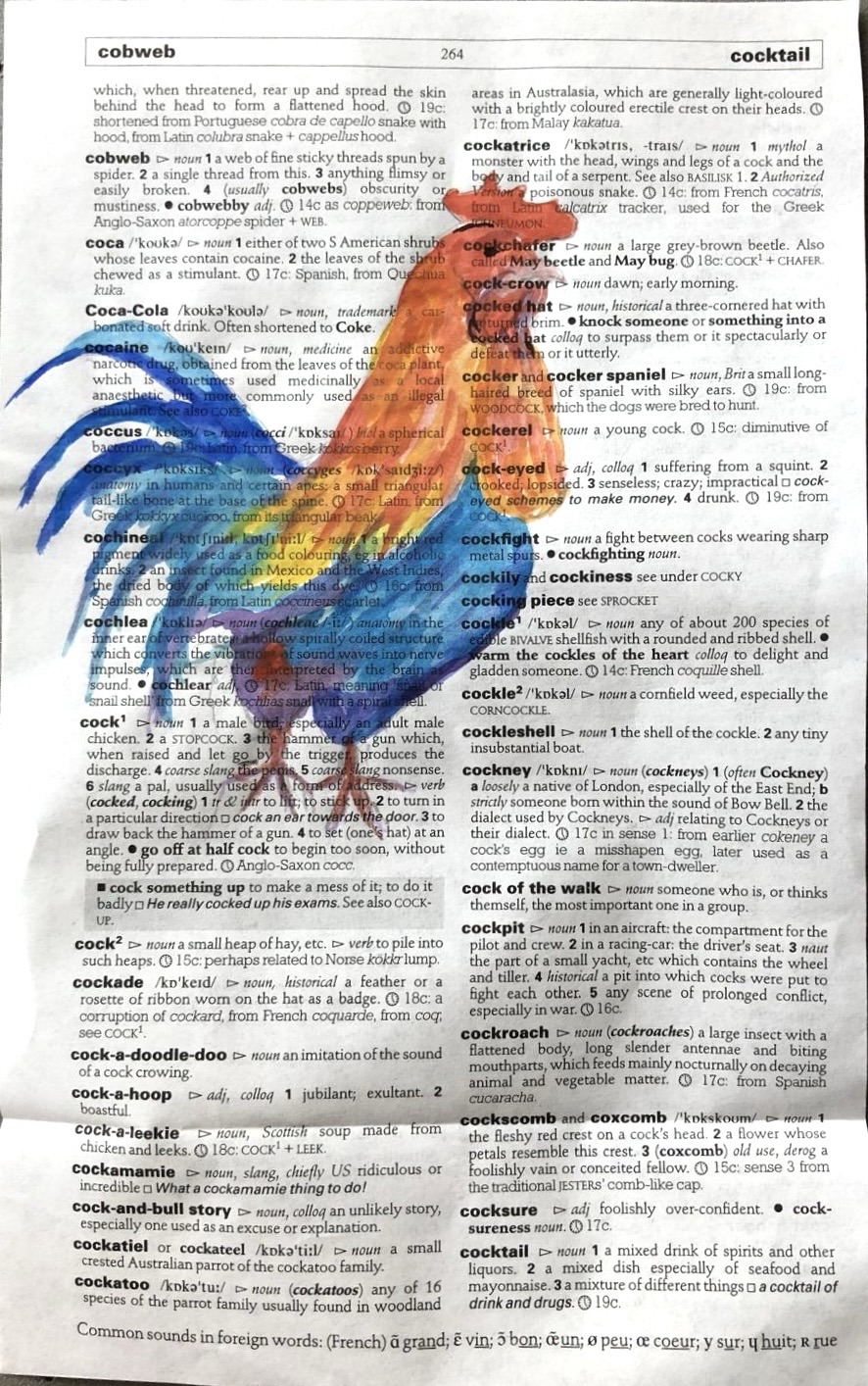
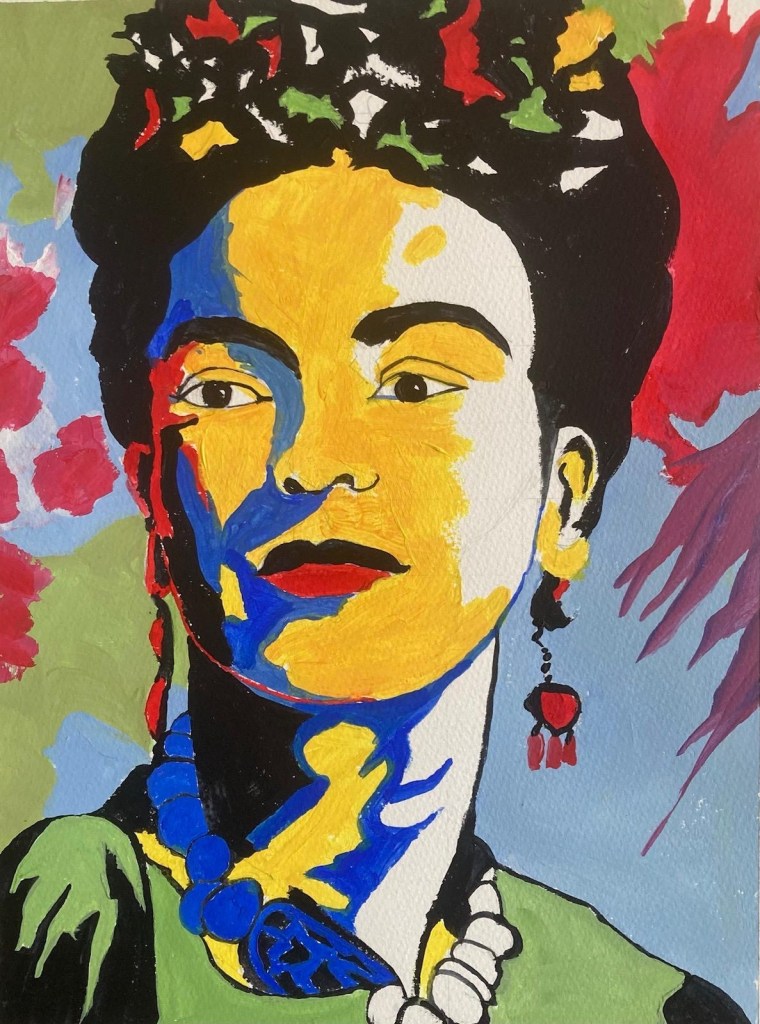
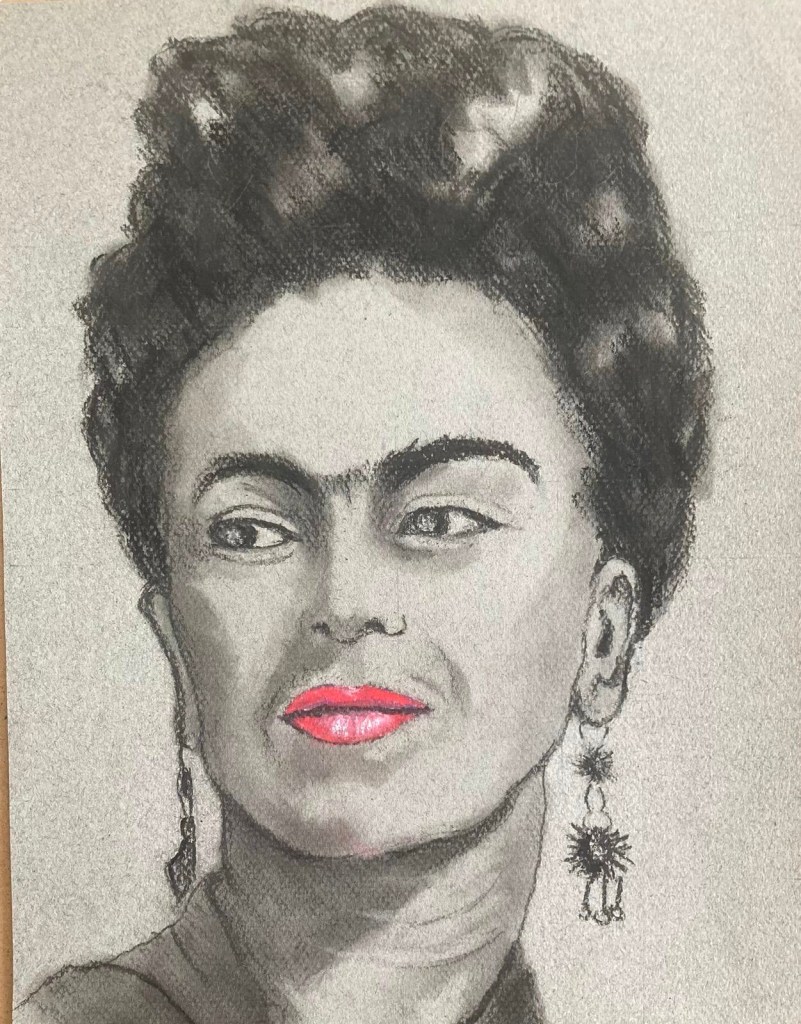
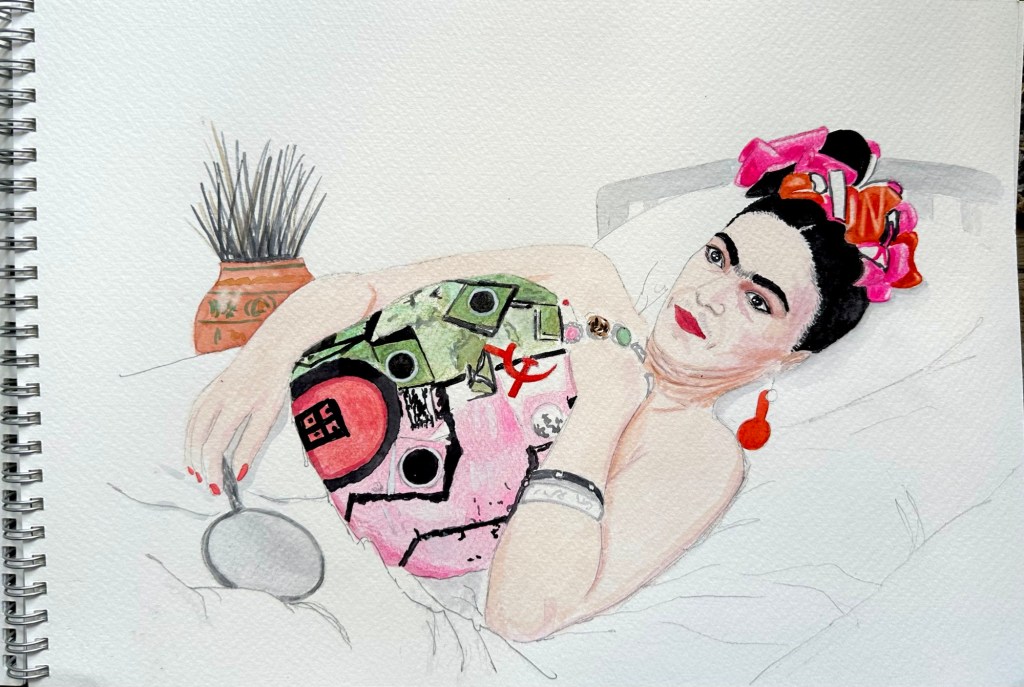
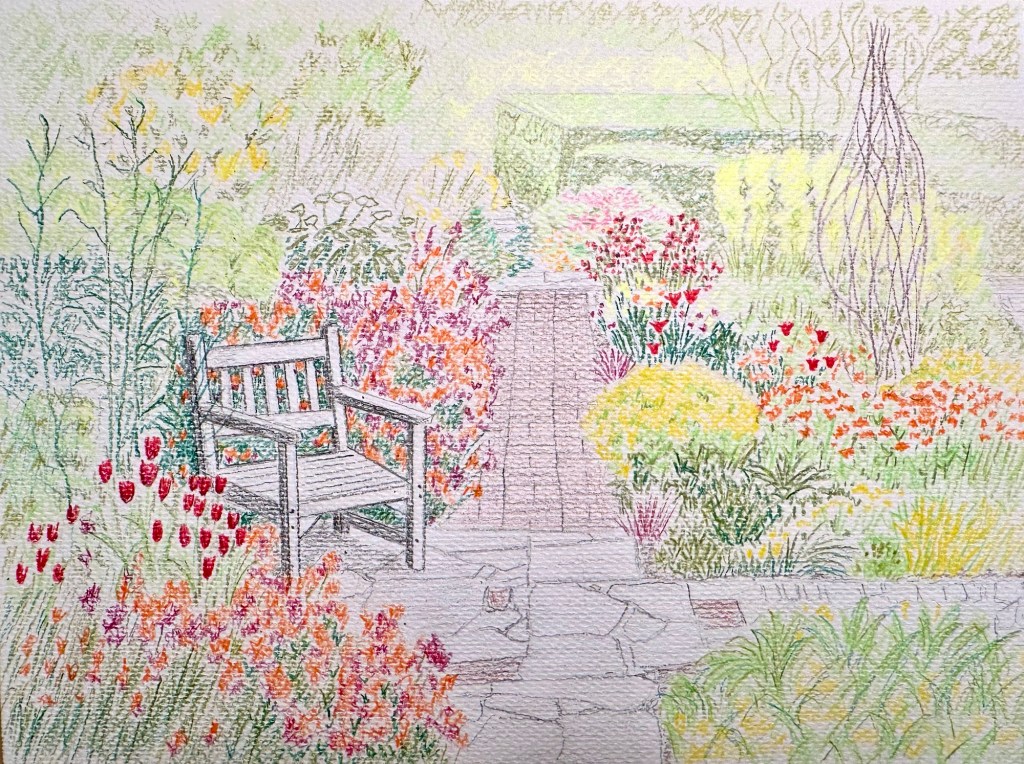
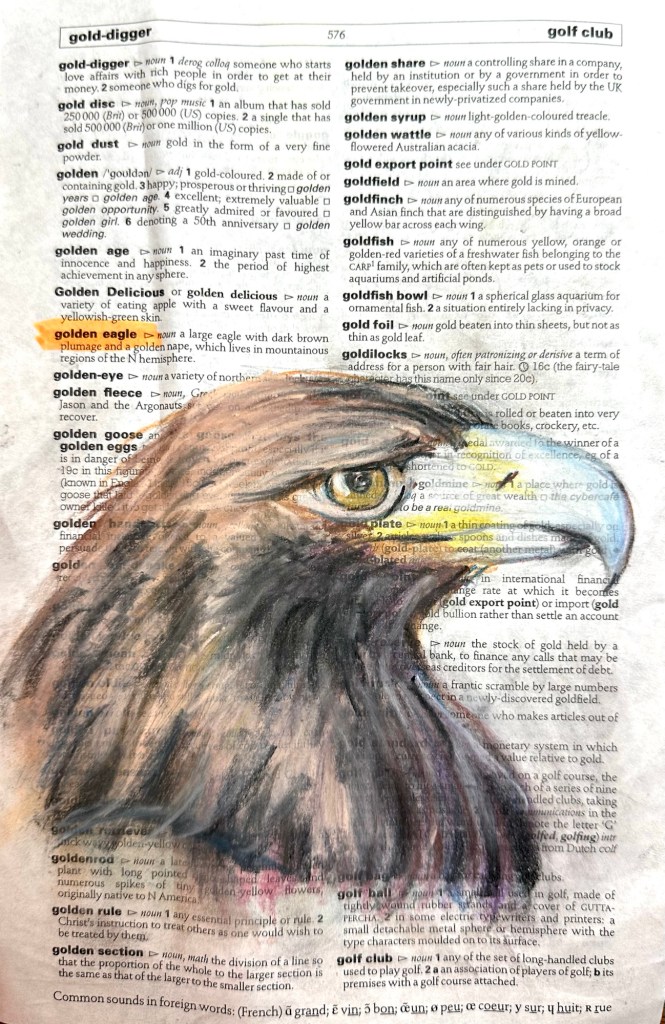
Here are several pictures that were finished at home from sessions on Frida Kahlo, painting on a book page, Underwater Life, In an English Country Garden, and Chalk Church.
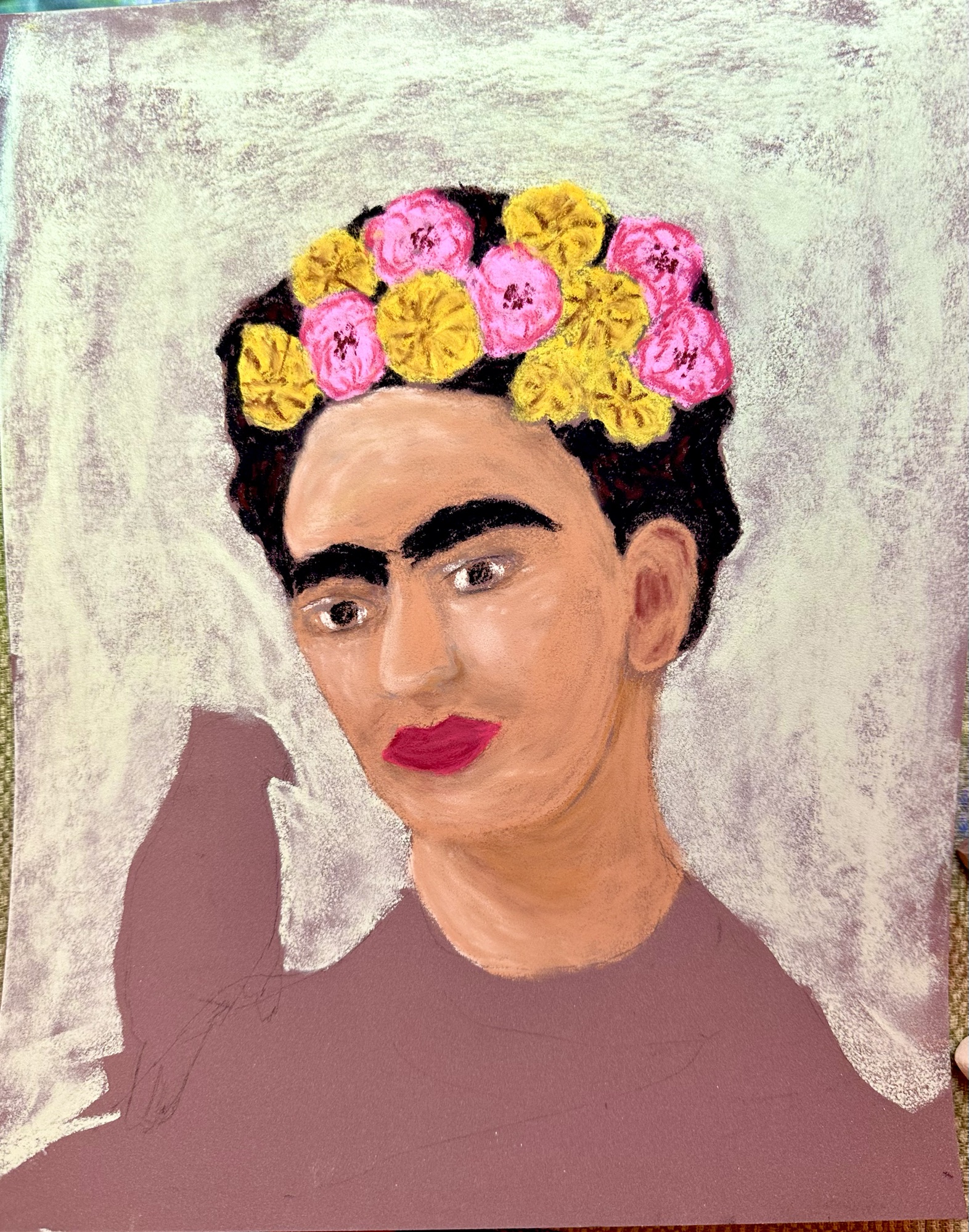
Brenda’s colourful picture of Frida Kahlo is in pastels as are her images of the dragon and the parrot on a dictionary page. The cockerel is painted in watercolours.
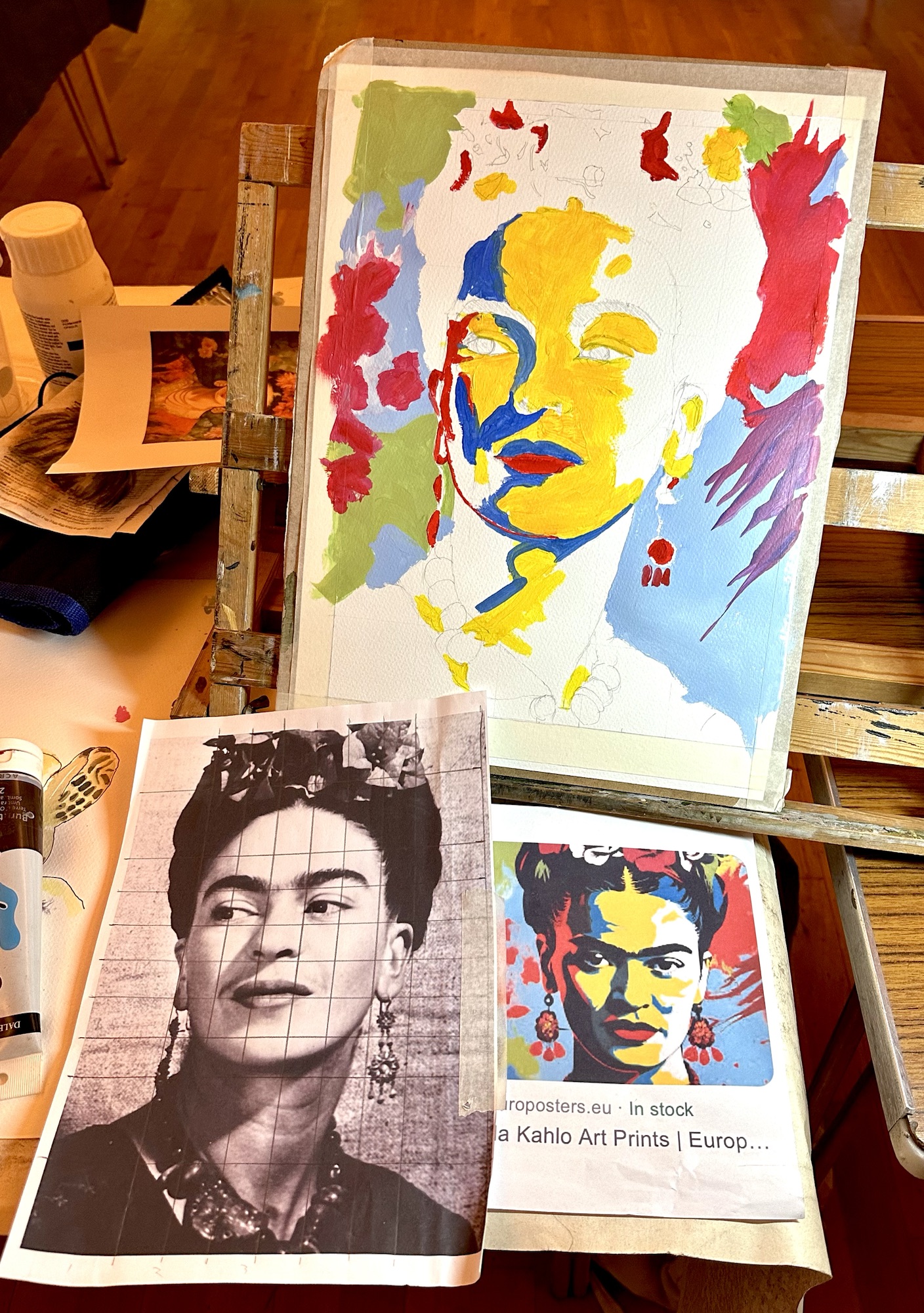
Steve’s posterised image of Frida Kahlo was painted in acrylics and the other in black pastel on grey pastel paper with a dramatic pop of lip colour in pink. Chalk Church was created when we visited last month, again in pastel but using many colours for a realistic picture.
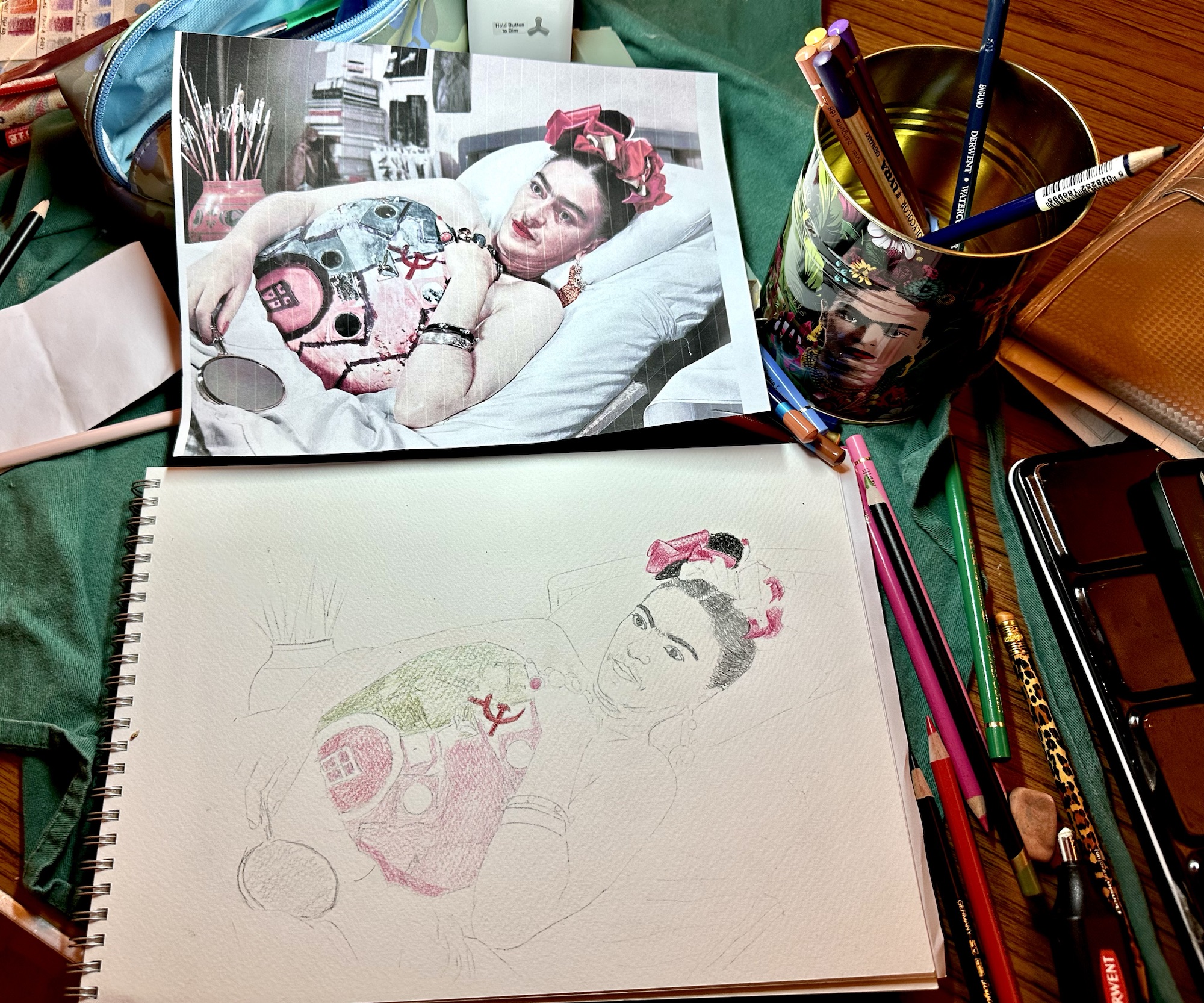
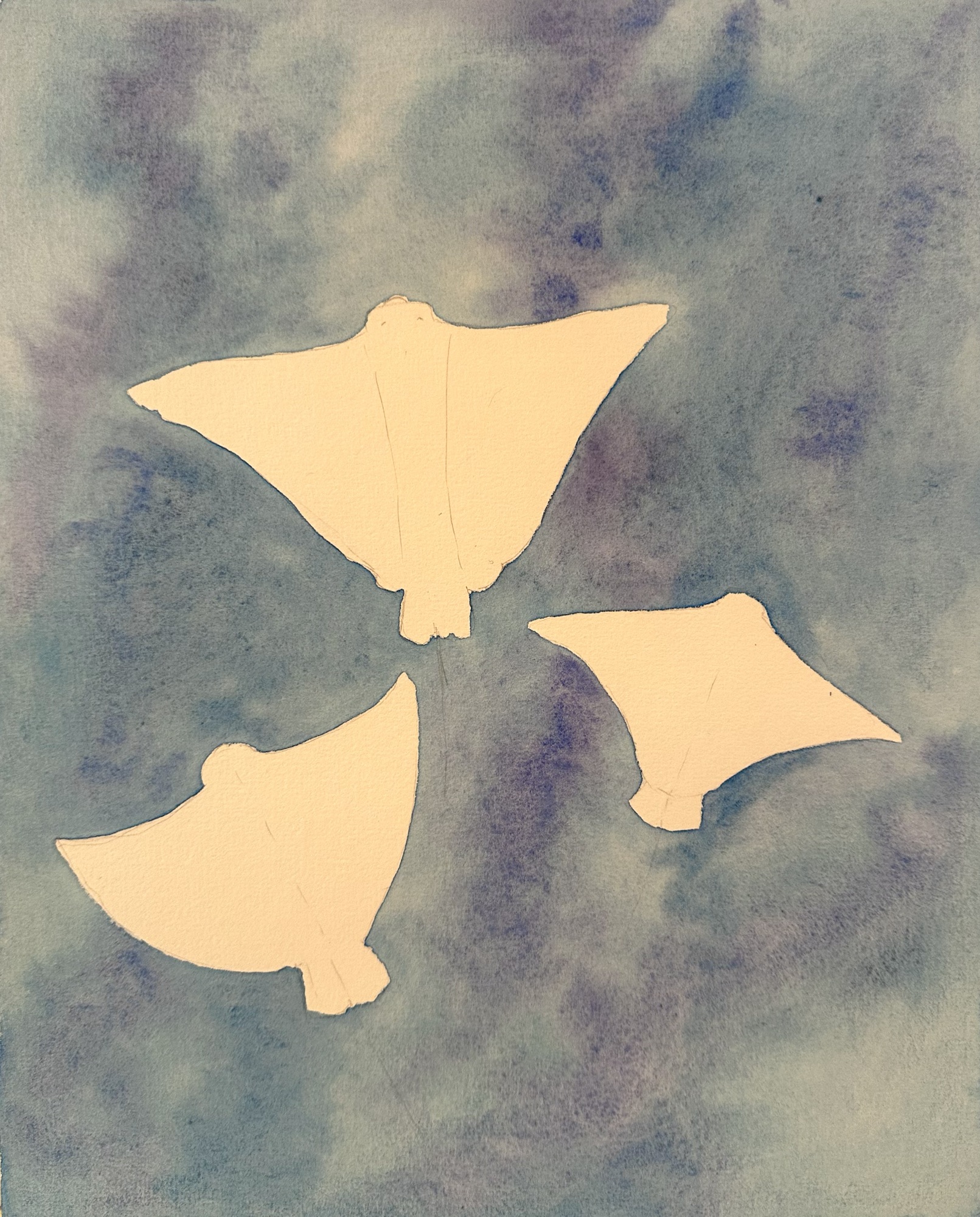
Tracy’s images of Frida Kahlo were painted in watercolours, as were the underwater eagle spotted rays. The cottage garden at Sissinghurst is in coloured pencils, lightly pressed on to the paper so the finished effect is delicate.
Well done, it’s great to see all your finished pictures!
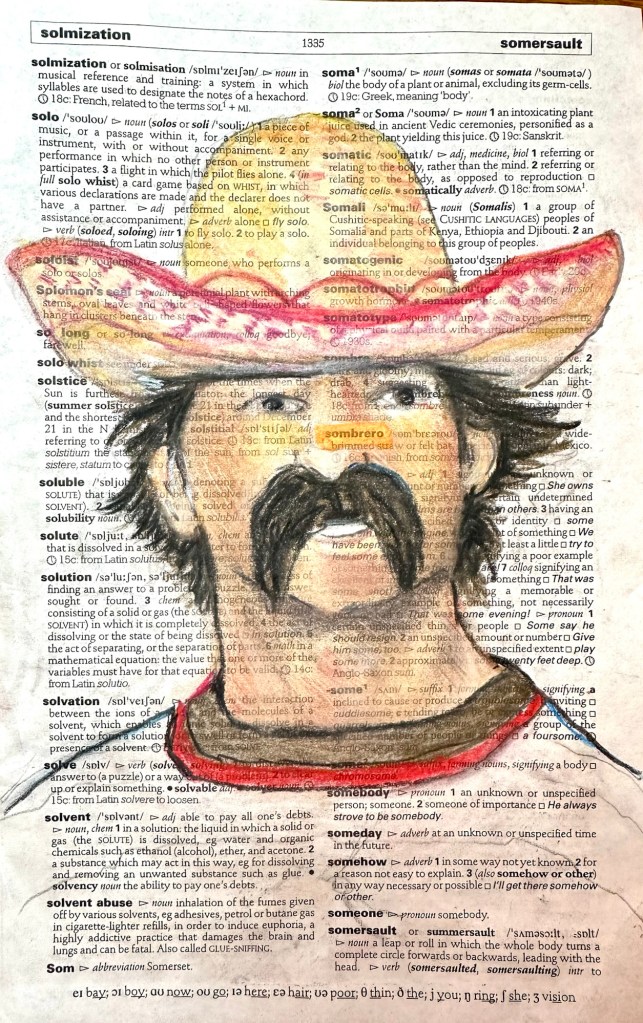
Steve’s surname of Goldson isn’t in the dictionary so he used the pages with the words ‘gold’ and ‘son’ on to create images of other words on the pages. He used soft pastels to draw a golden eagle and a man wearing a sombrero.
Very imaginative, Steve. Great colours and details you’ve achieved with the soft pastels, well done!
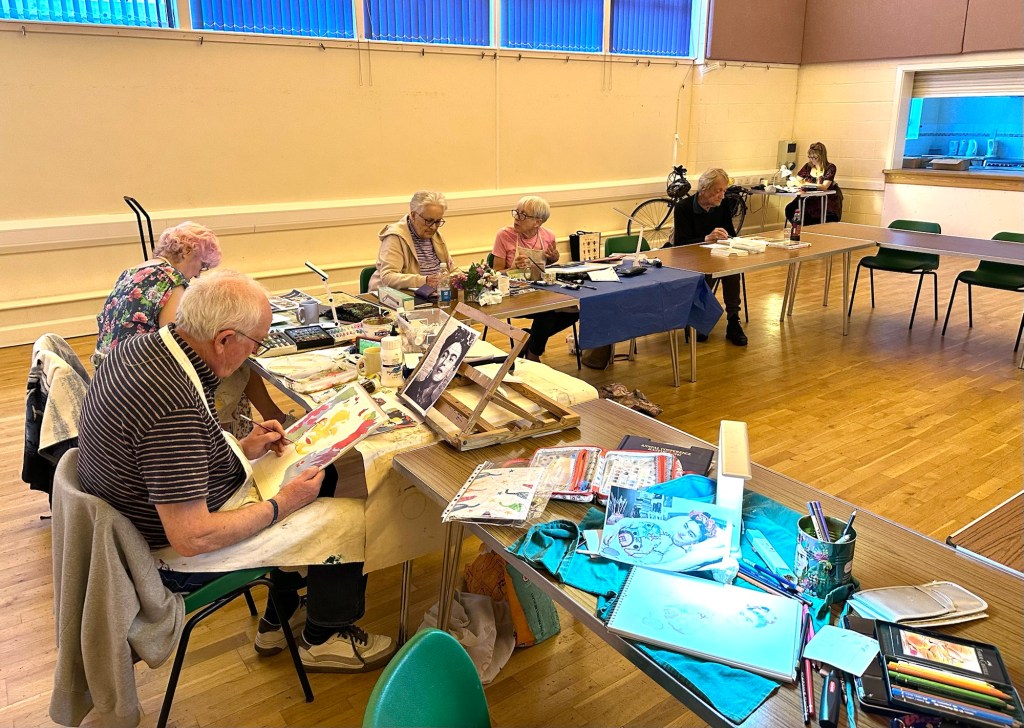
Just 7 members attended the session yesterday evening, with several members away on holiday or others watching England in the Euro football semi finals. We had a good natter and enjoyed creating our pictures to do with the life of artist Frida Kahlo.
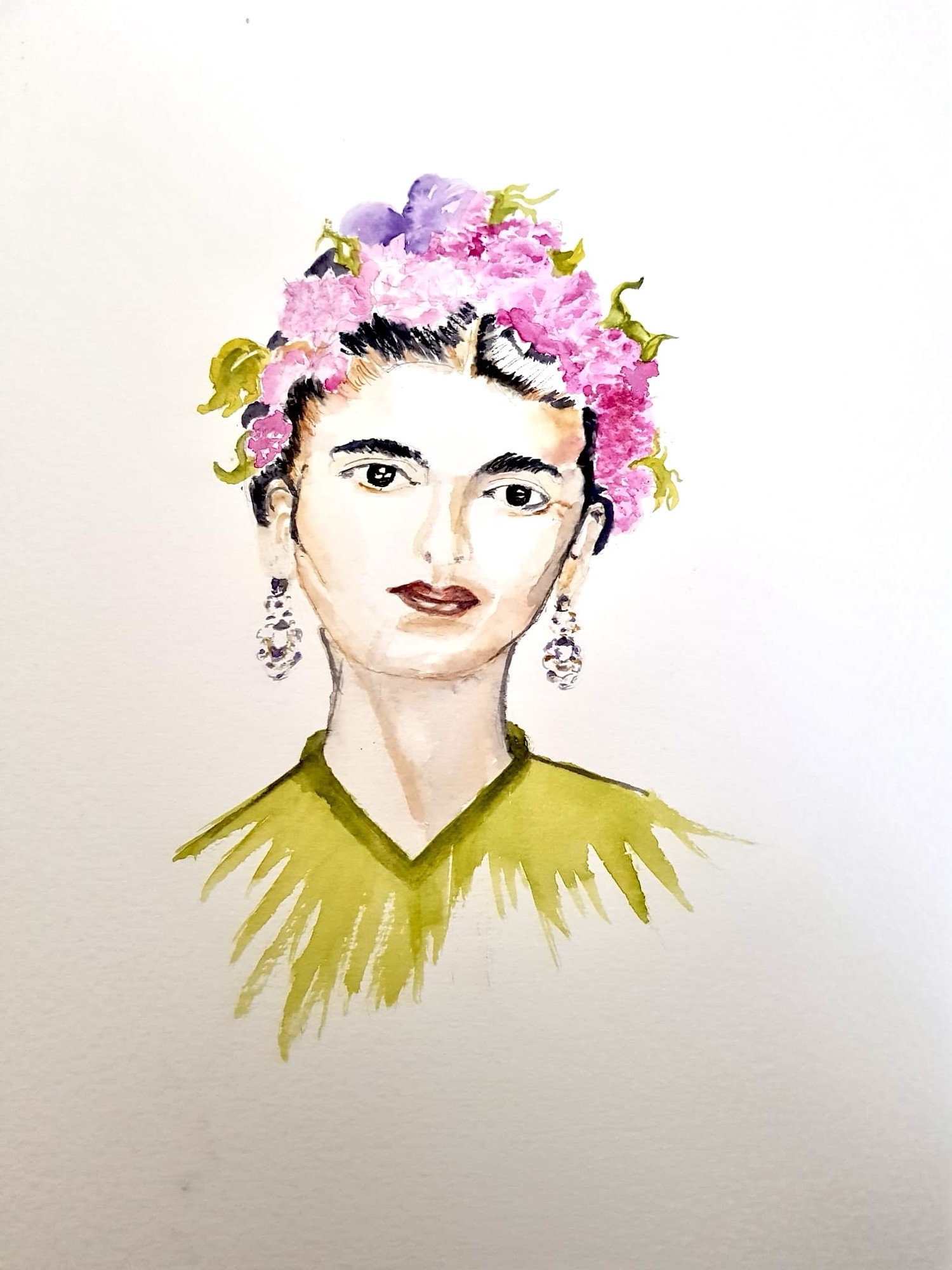
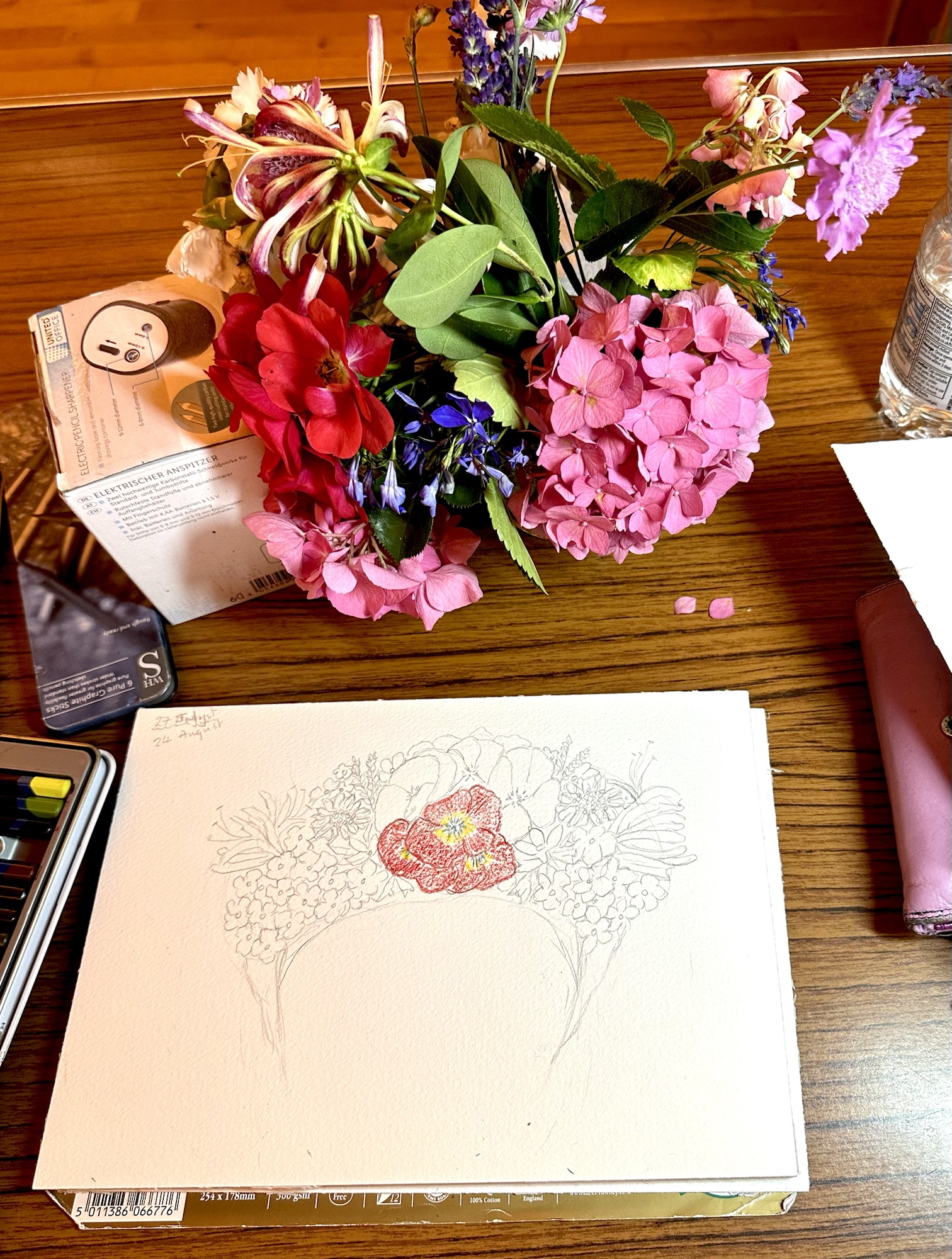
Several portraits by Brenda, Steve and Tracy, a flower study of similar blooms Frida wore by Myrna and a picture by Angela of the Casa Azul (the Blue House) Frida’s family home were started and will hopefully be finished at home. Chris couldn’t attend the session but completed a portrait at home, sending a photo for inclusion. If you do draw or paint the suggested subject at home, please send a photo to Tracy or Steve and they’ll be happy to add to it the relevant post.
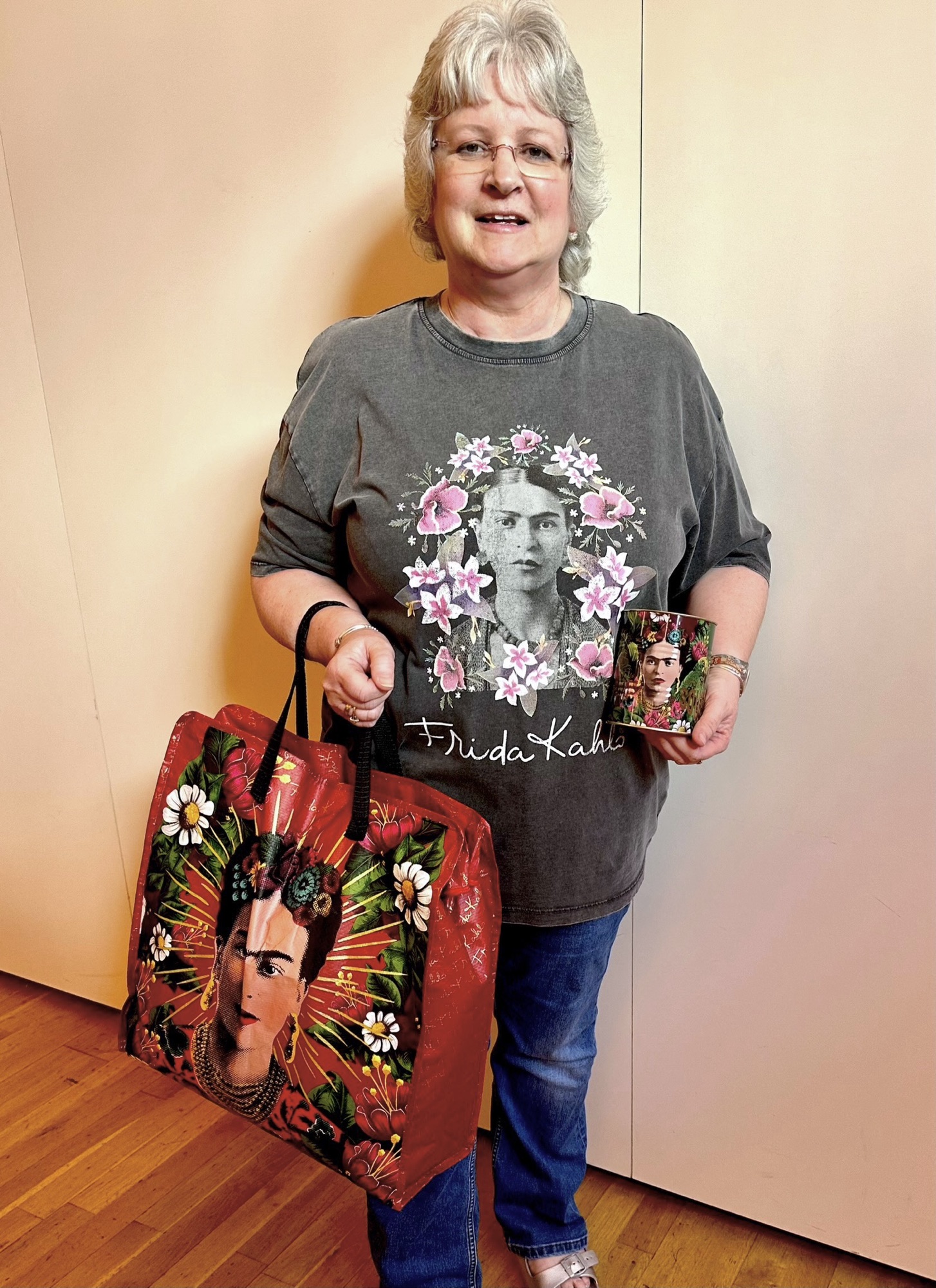
Here are our pictures, including a photo of Tracy wearing a t-shirt and holding a bag and tin all with Frida Kahlo’s image on.
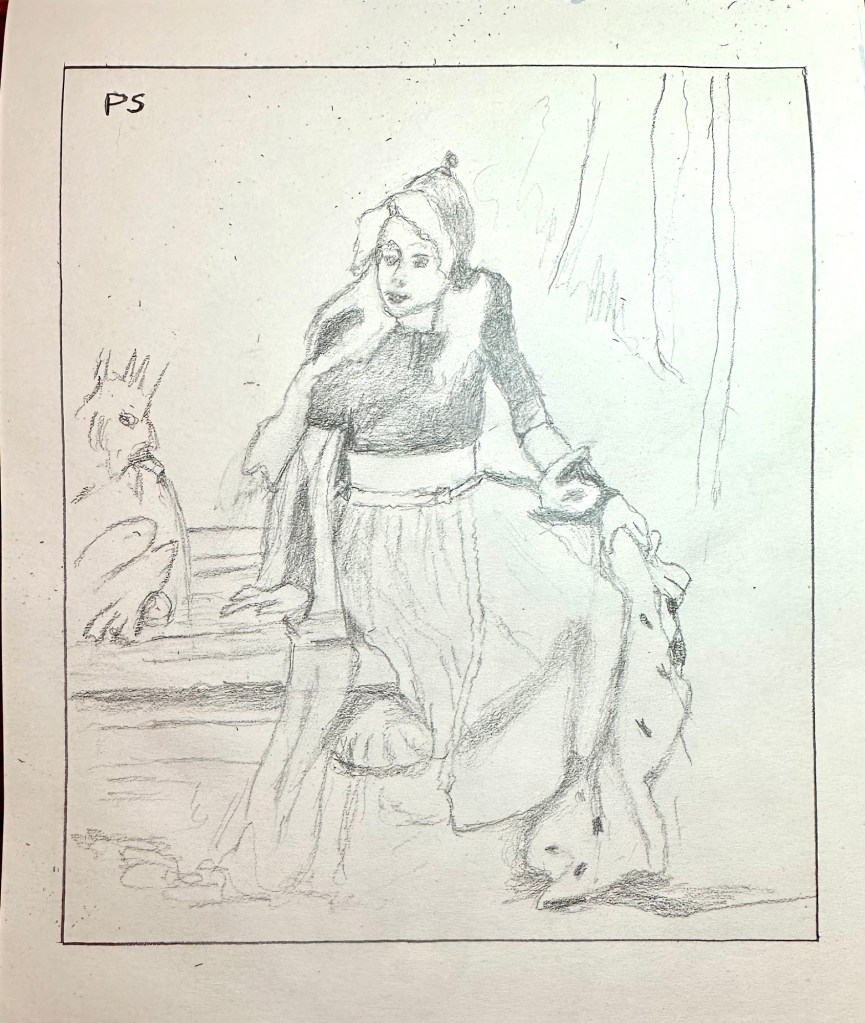
Patrick drew a picture of the Frog Princess.
Two more dictionary pages have been finished and they will be shown in the next post.
Our next session is at Chalk Church on Saturday 27th July from after 10am to just before 3pm
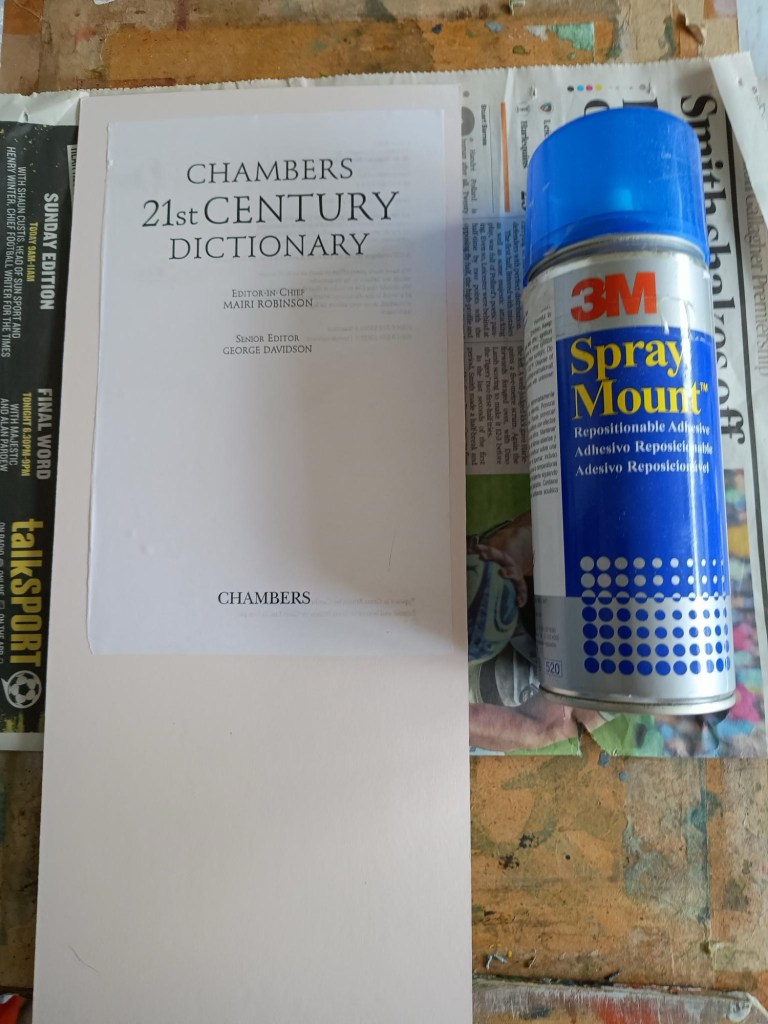
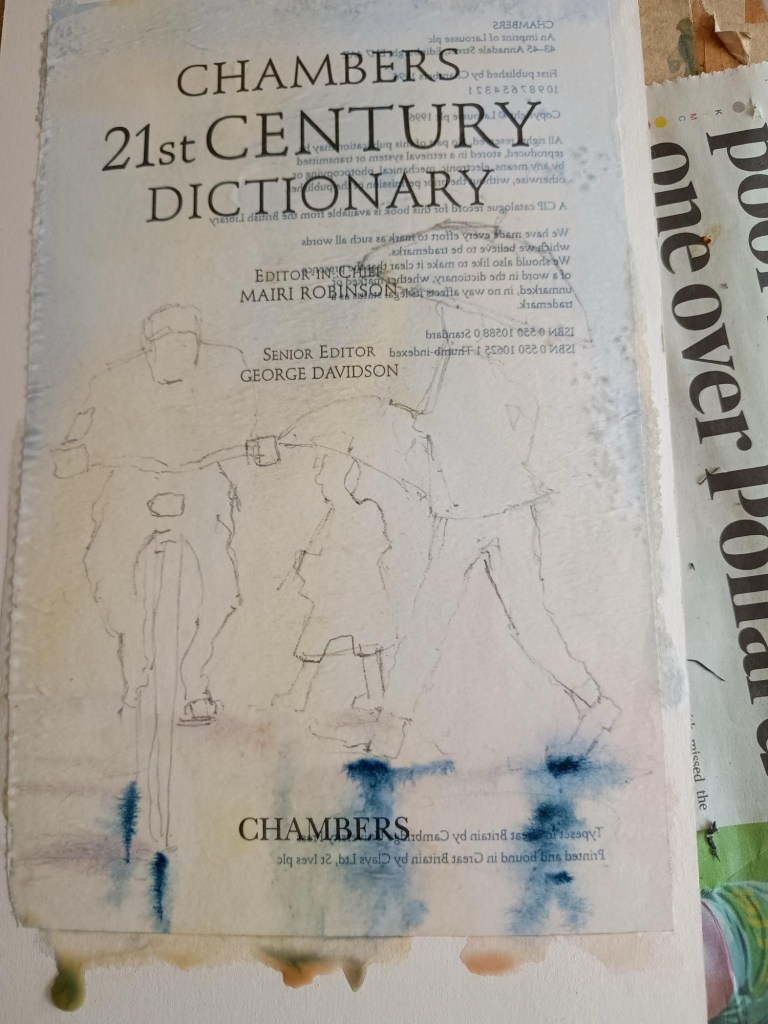
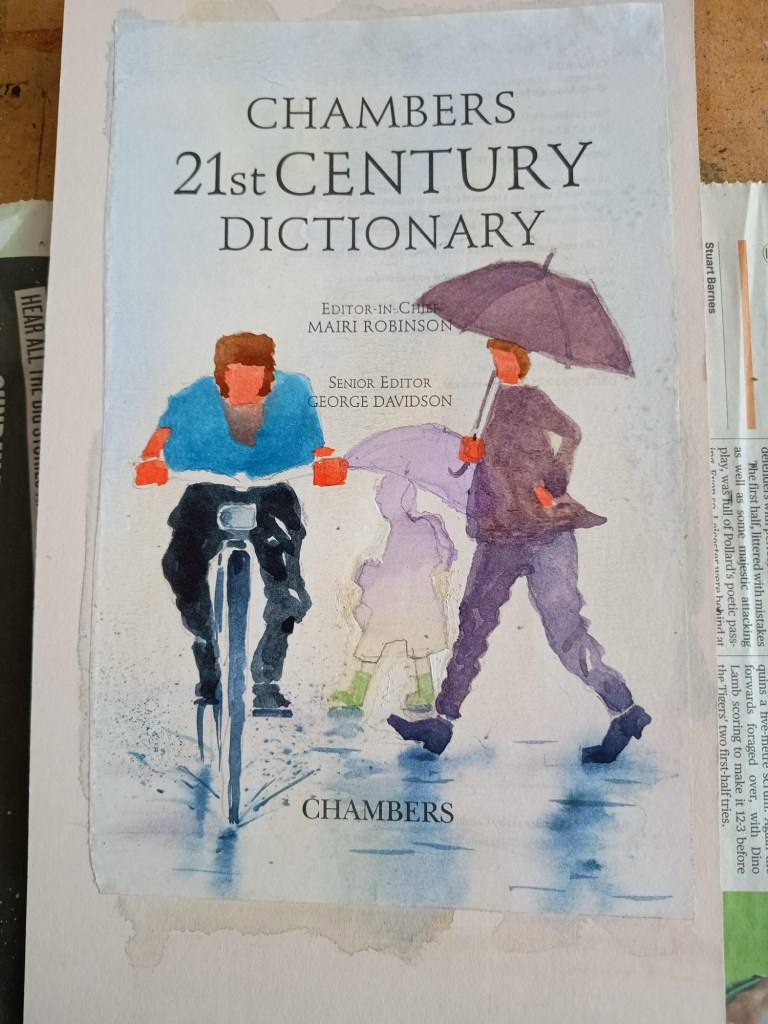
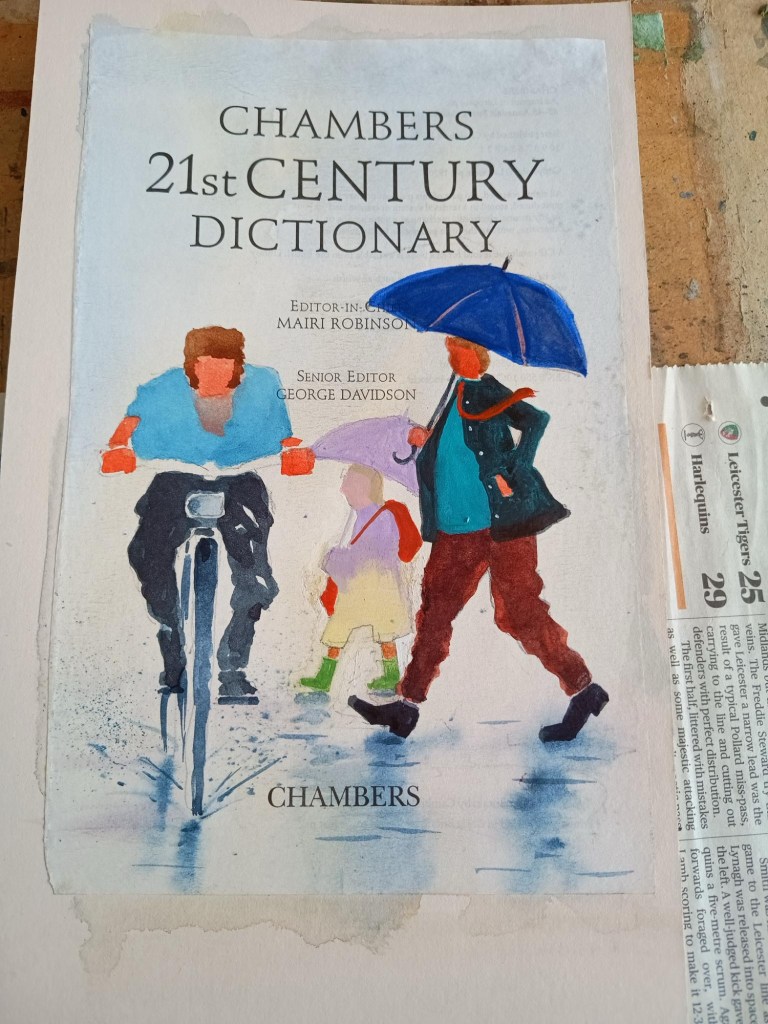
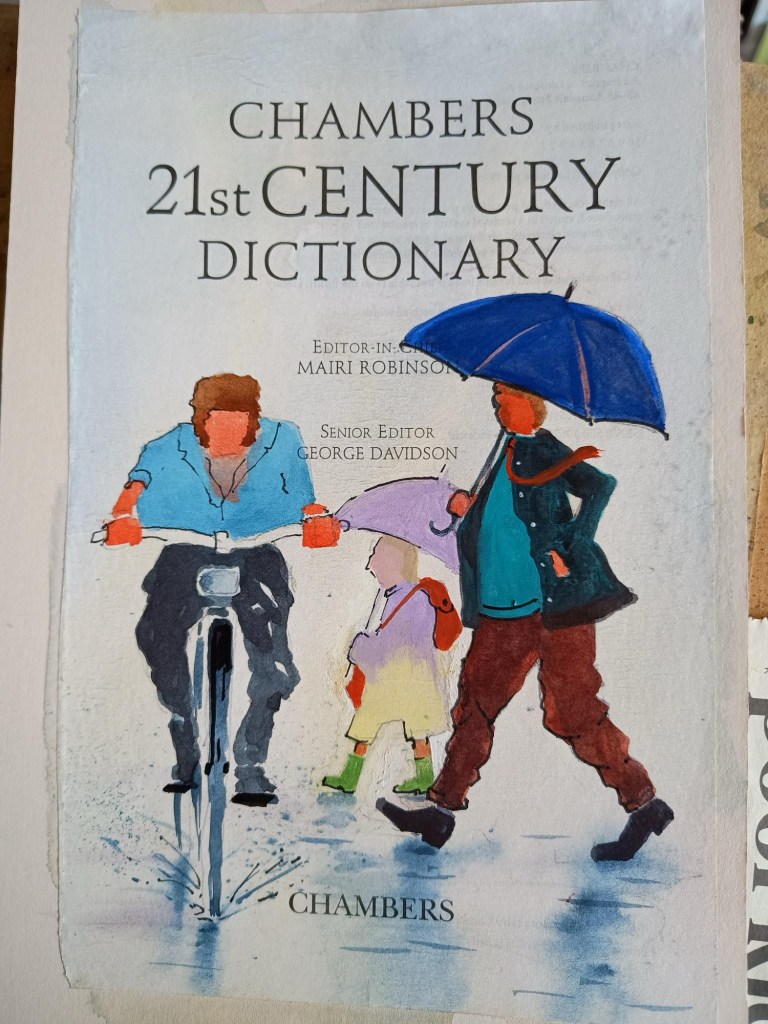
Graham chose several pages from the dictionary to paint on, but before he starts he tried painting on a spare dictionary page to experiment with how much water to use with watercolour and gouache paints and he tried using a pen too. His process is really interesting and is useful to everyone who has painted a dictionary page or who wants to paint one, especially his technique of mounting the page on scrap board to start with. The dictionary will be brought to future sessions in case anyone wants to paint more pages.
In Graham’s own words and photographs…
“I was determined to test the Dictionary Page paper to see how much abuse it would take. Firstly, I mounted it on some scrap board. This gave it rigidity. Then I drew on it, deliberately doing a fair bit of rubbing out and re-drawing.
For the background watercolour wash I adopted my usual procedure of wetting the paper, then putting in very faint wet washes, and as the paper dried, ever stronger and less wet washes. The paper stood up to this exceedingly well. It might be interesting to see how the page reacts when fixed to watercolour paper.
When this was all dry, I tried painting the rear figure with equally wet into wet washes. This failed abysmally. All the washes bled beyond where I had applied them, and they did not mix well. When dry, to try to redefine the edges of the figure, I applied some white gouache tinted with the background colours.
For the man with the umbrella I tried applying the watercolour with a 50/50 mix of water and gum arabic. This thickened the paint and stopped it bleeding but left it looking very streaky and unsightly.
For the man on the bicycle I mixed all the colours in the palette and applied them with a fairly dry brush, often taking most of the wet paint out of the brush with a tissue.
Once all the paint was dry I applied fresh colour to several of the washes on the other two figures. These were similarly applied fairly dry paint. The paler colours were again mixed with gouache so that under washes would be covered.
Finally, I did some ink drawing .. I’m not sure how successful that was.
This was all very experimental. Glueing the paper down was certainly a good idea for me, and I will continue to do so when using a wet medium. I was surprised how well the paper stood up to the original wet washes and to the number of layers of paint I could apply to the figures. I used watercolour throughout.
The lesson I learned was to apply it in a “dry brush” fashion. Although I suspect Gouache and acrylic paints may well work better on this sort of paper I shall continue to experiment using watercolour.
Happy Experimenting and Painting
Graham”
Thank you very much, Graham. To read your process from start to finish was very helpful and having the photos too made each stage easy to follow. Many of us have found that a dryer application of paint is the way forward and once one page is painted we want to paint several more!
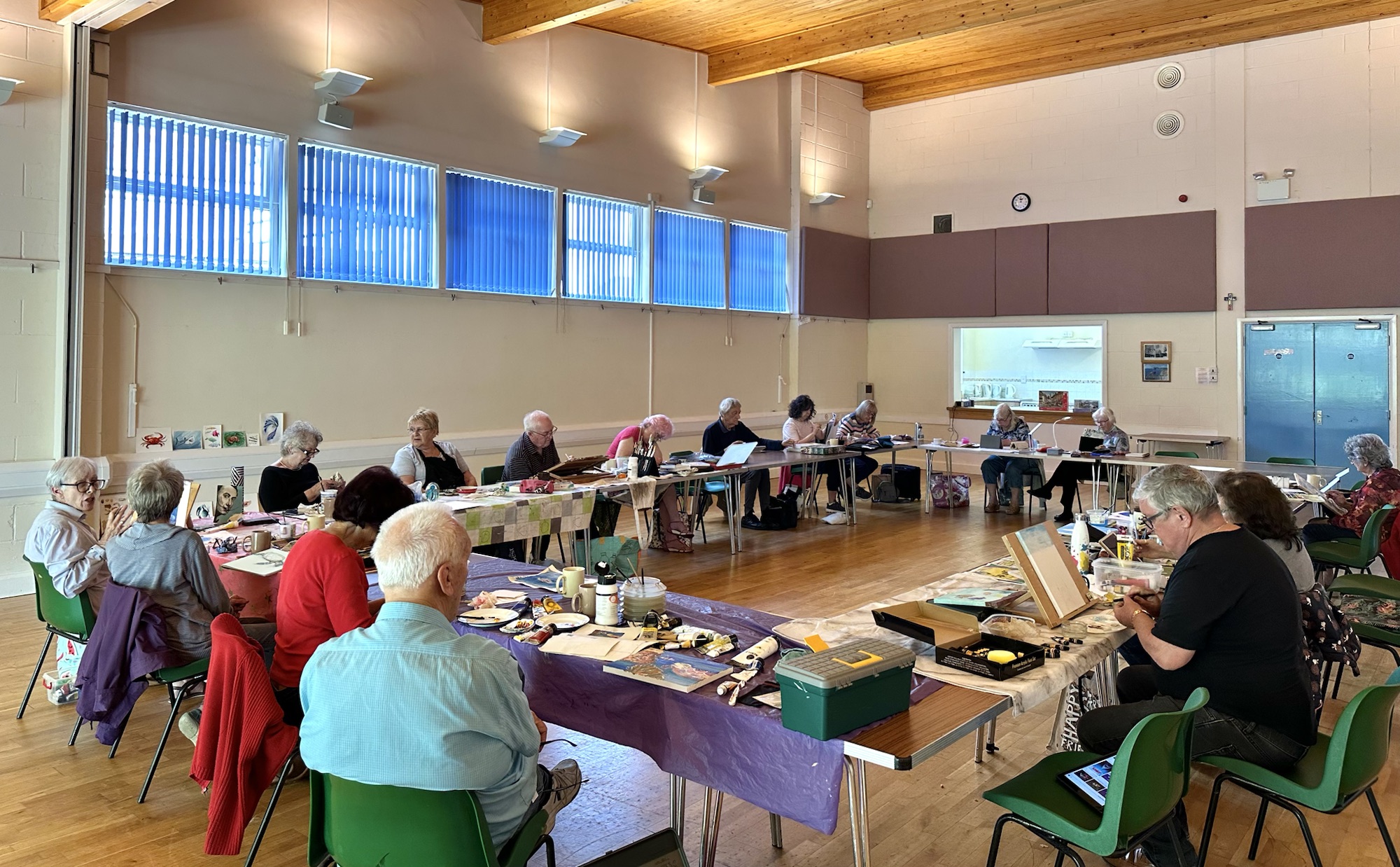
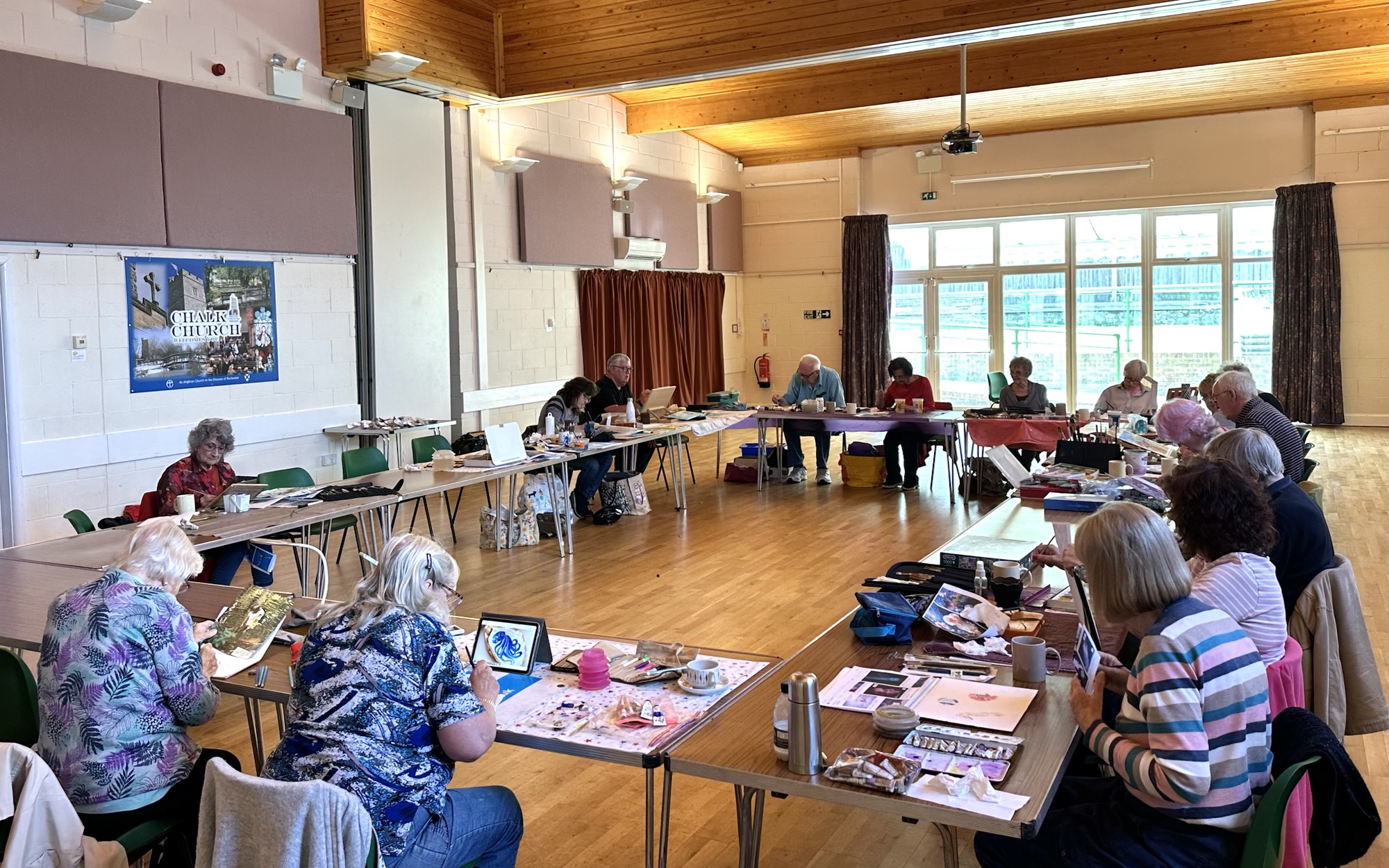
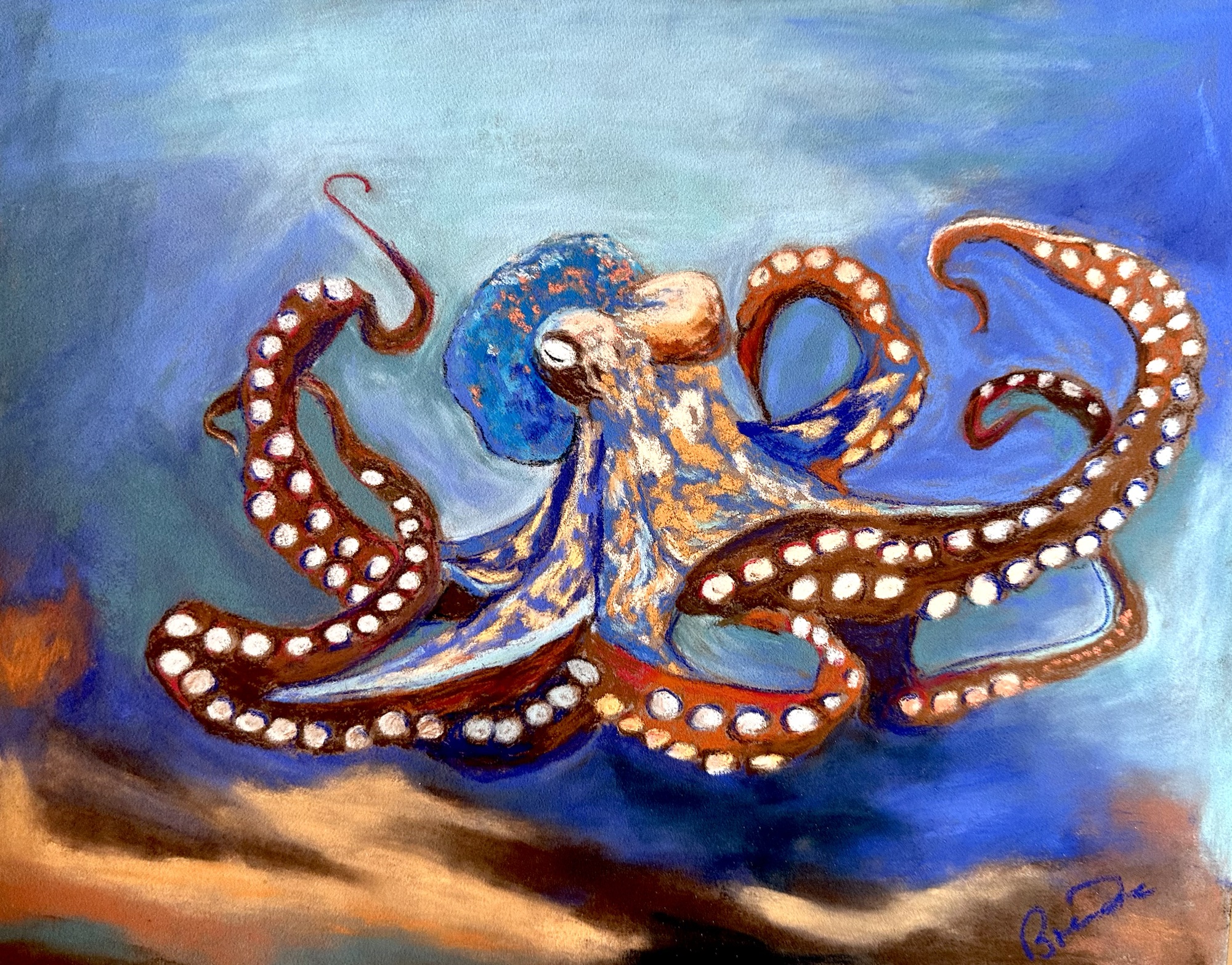
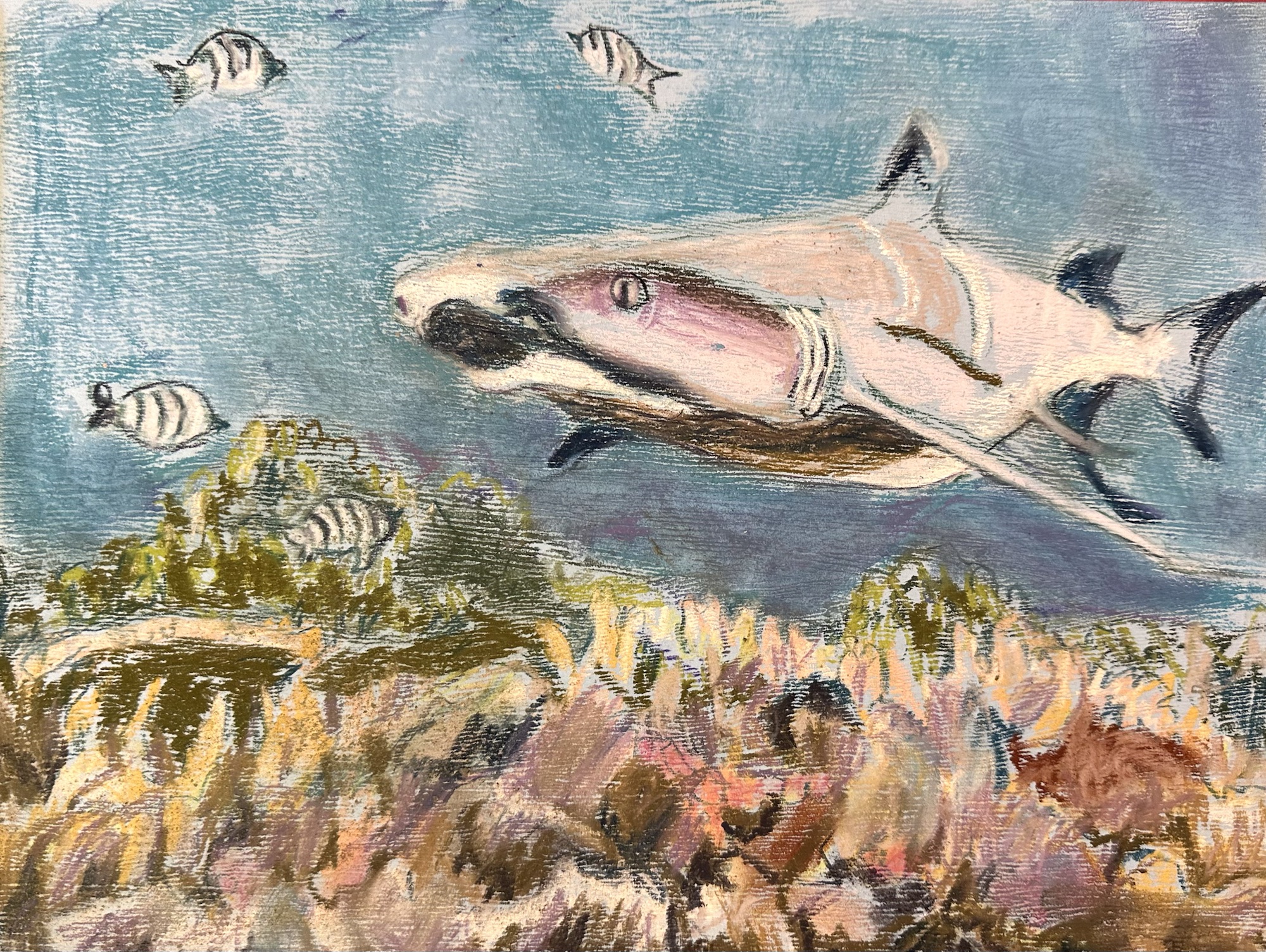
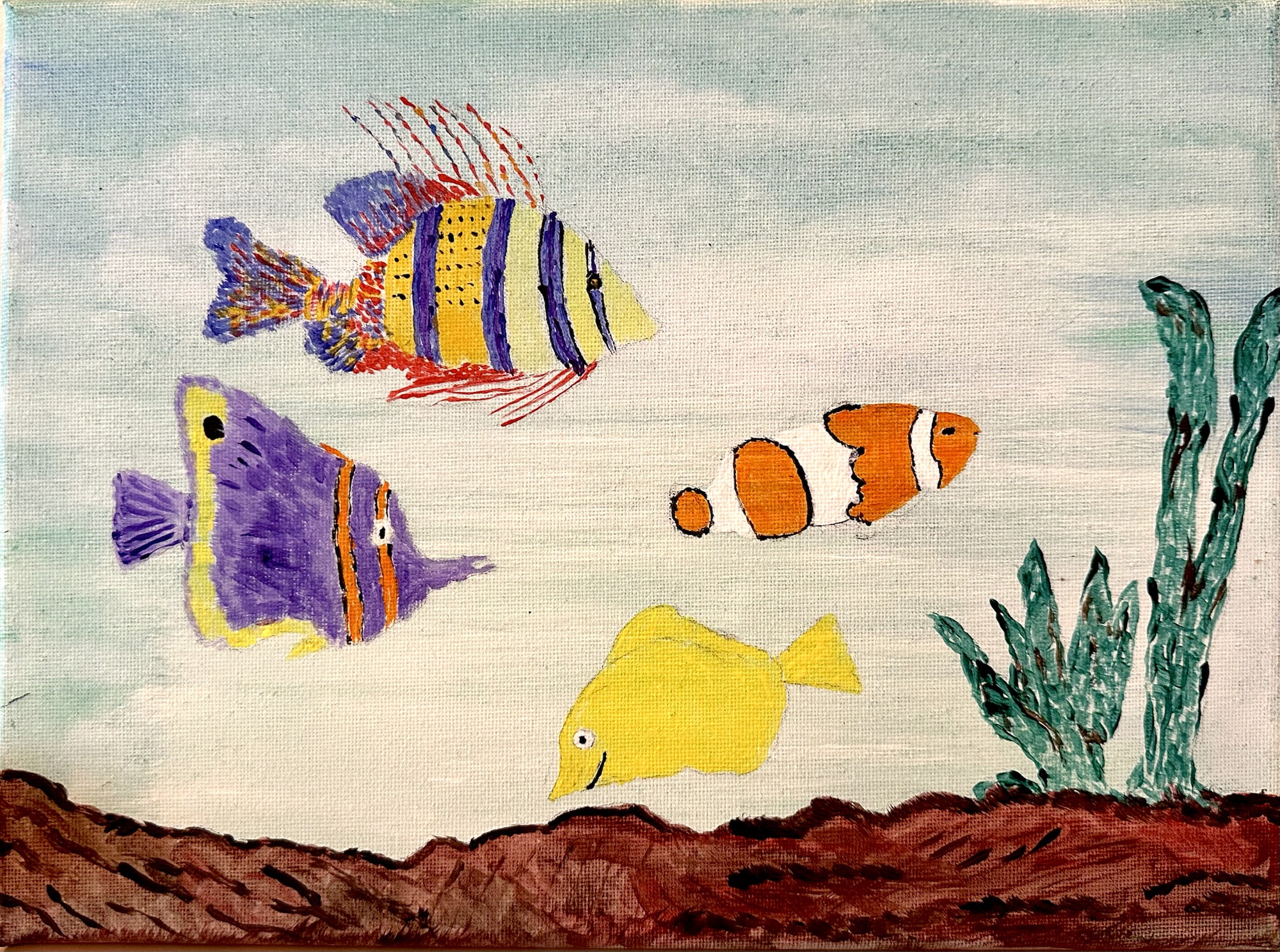
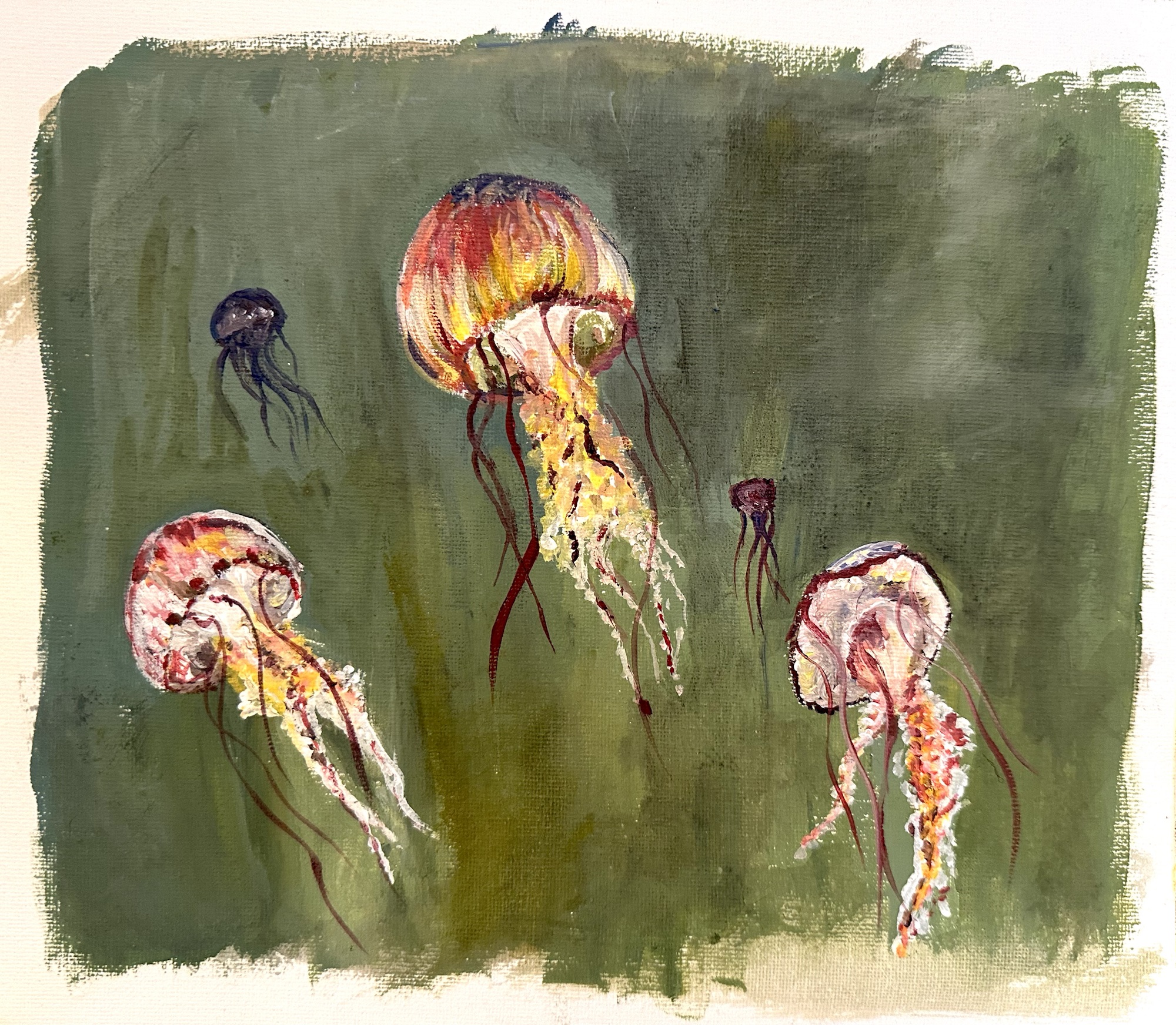
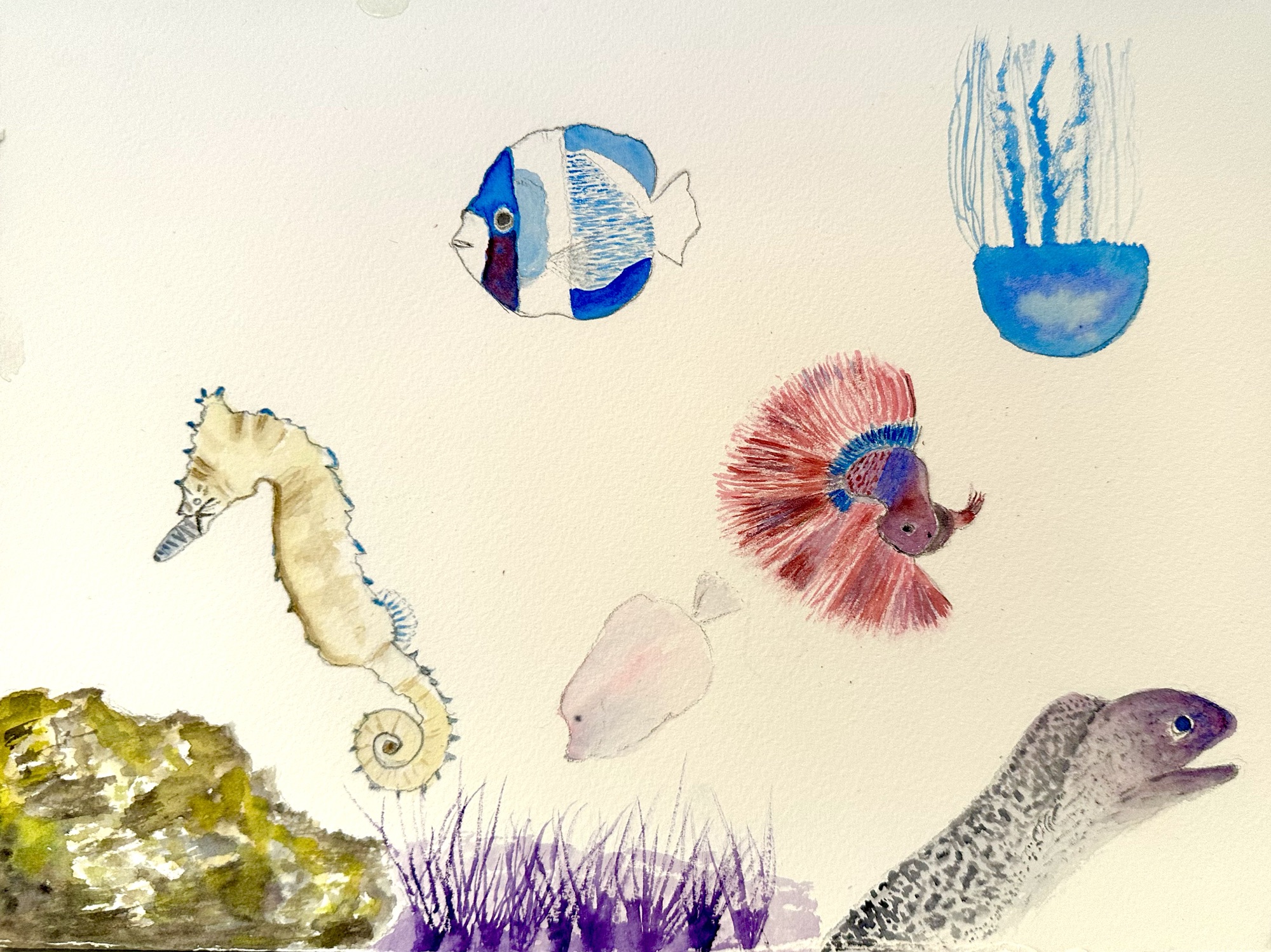
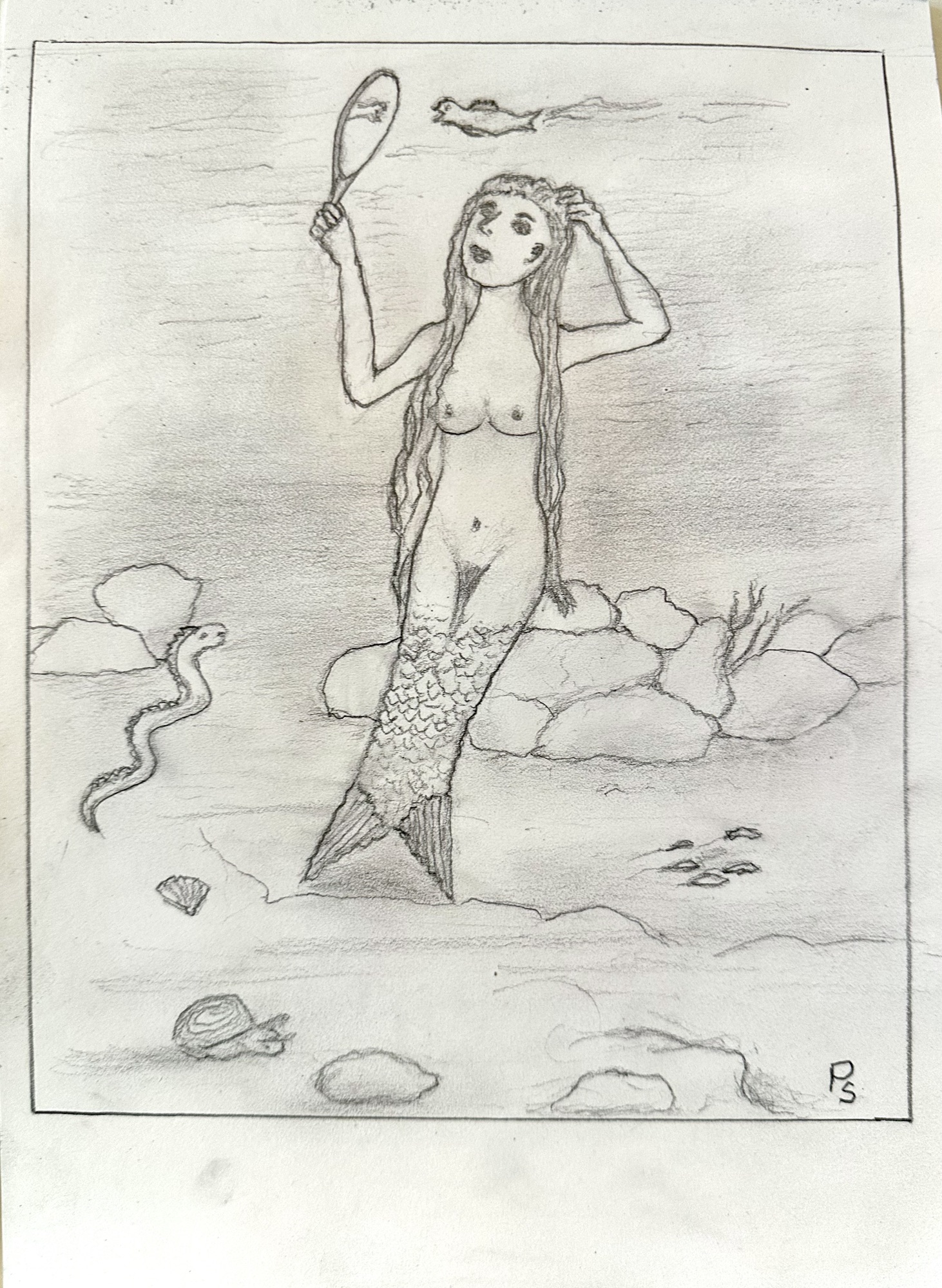
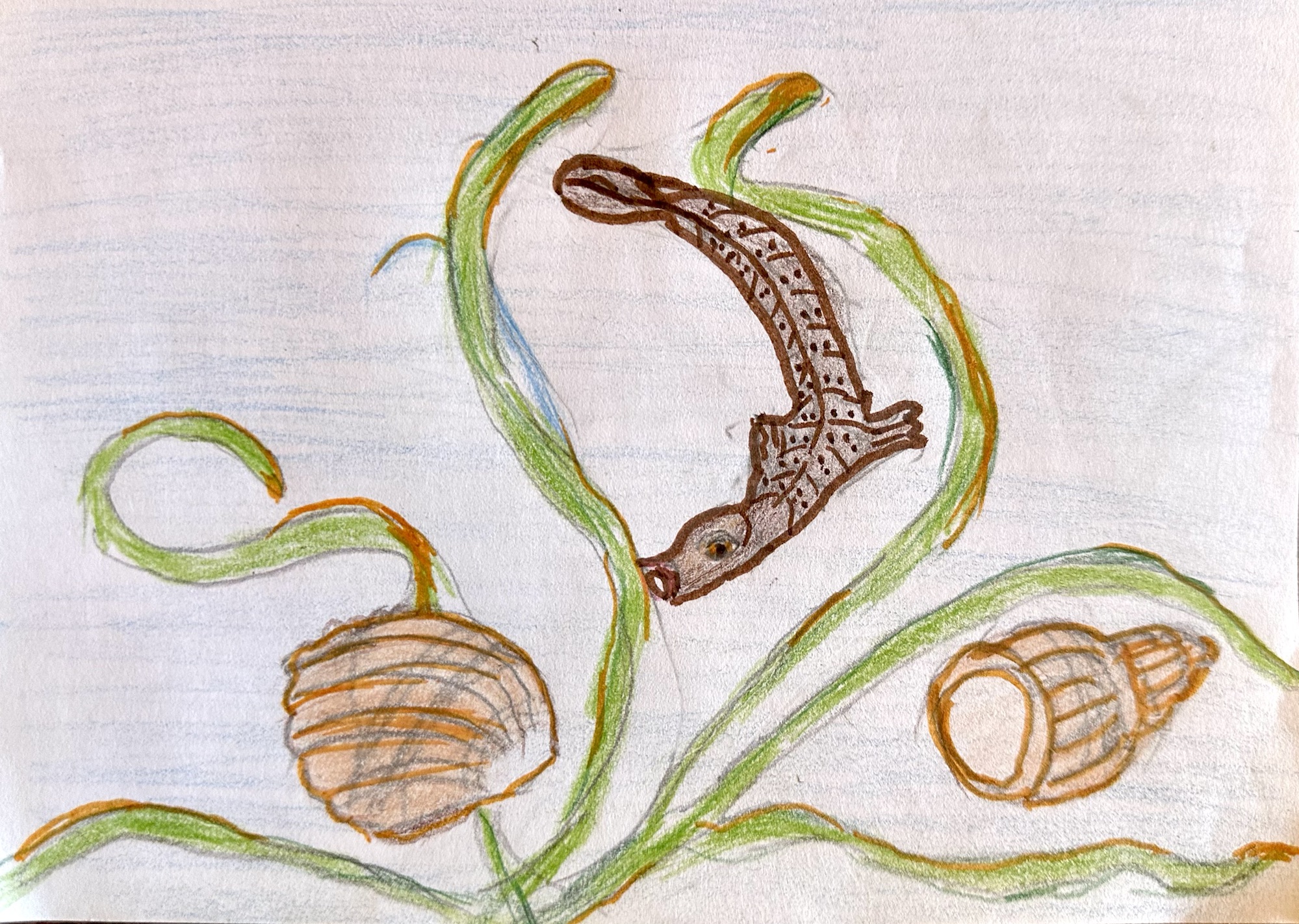
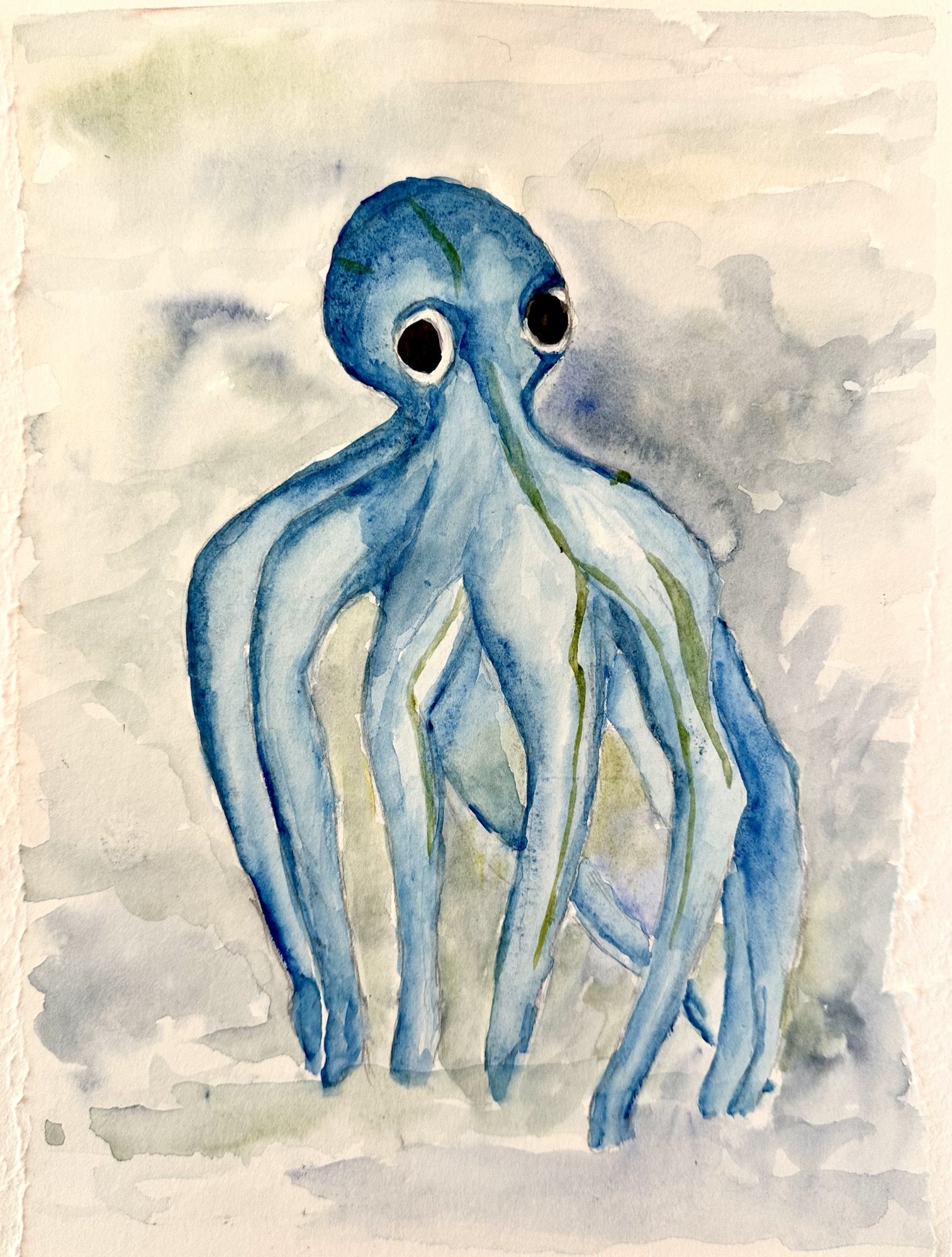
Eighteen members rose magnificently to the challenge of painting underwater life, using watercolours acrylics, pens and pastels.
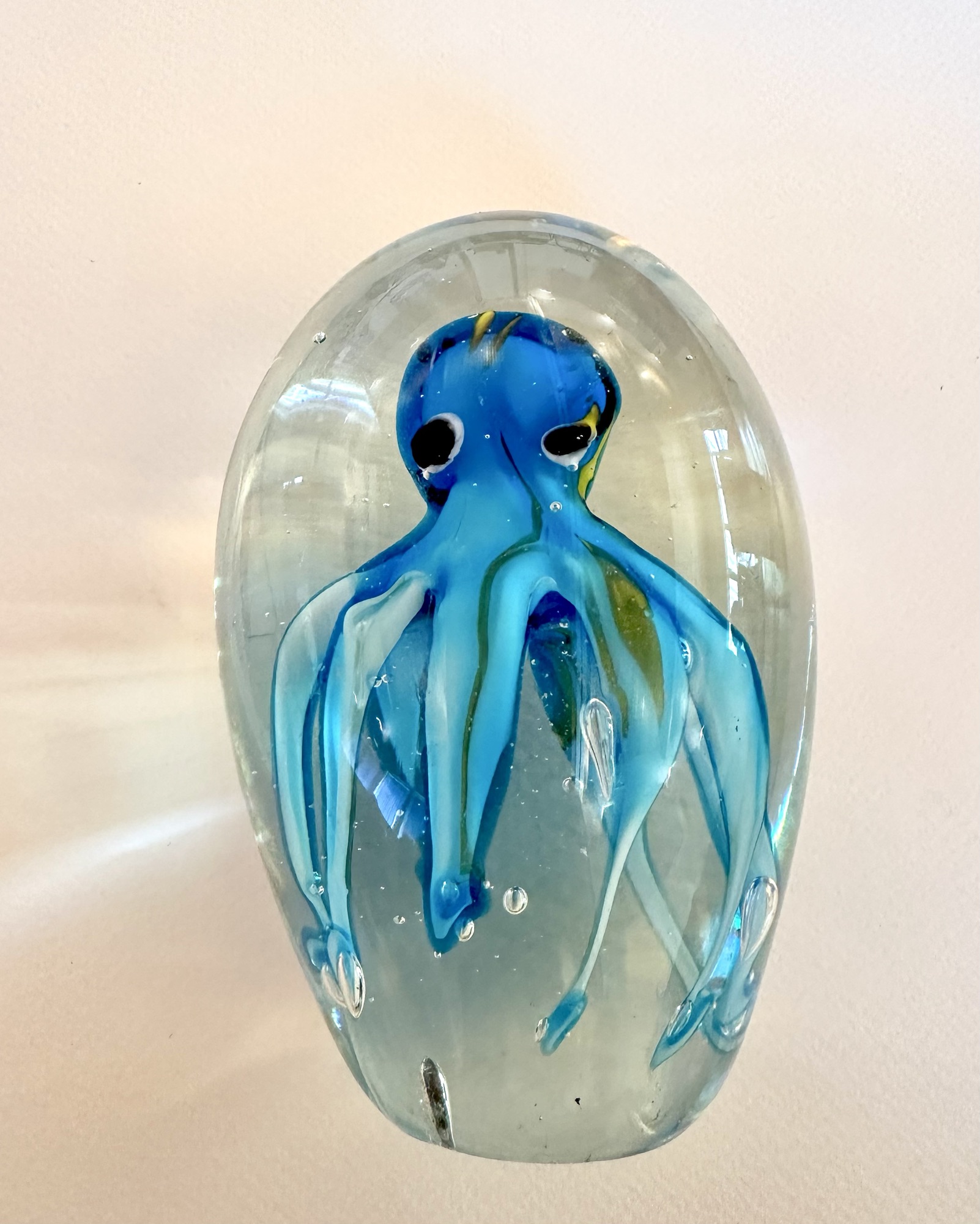
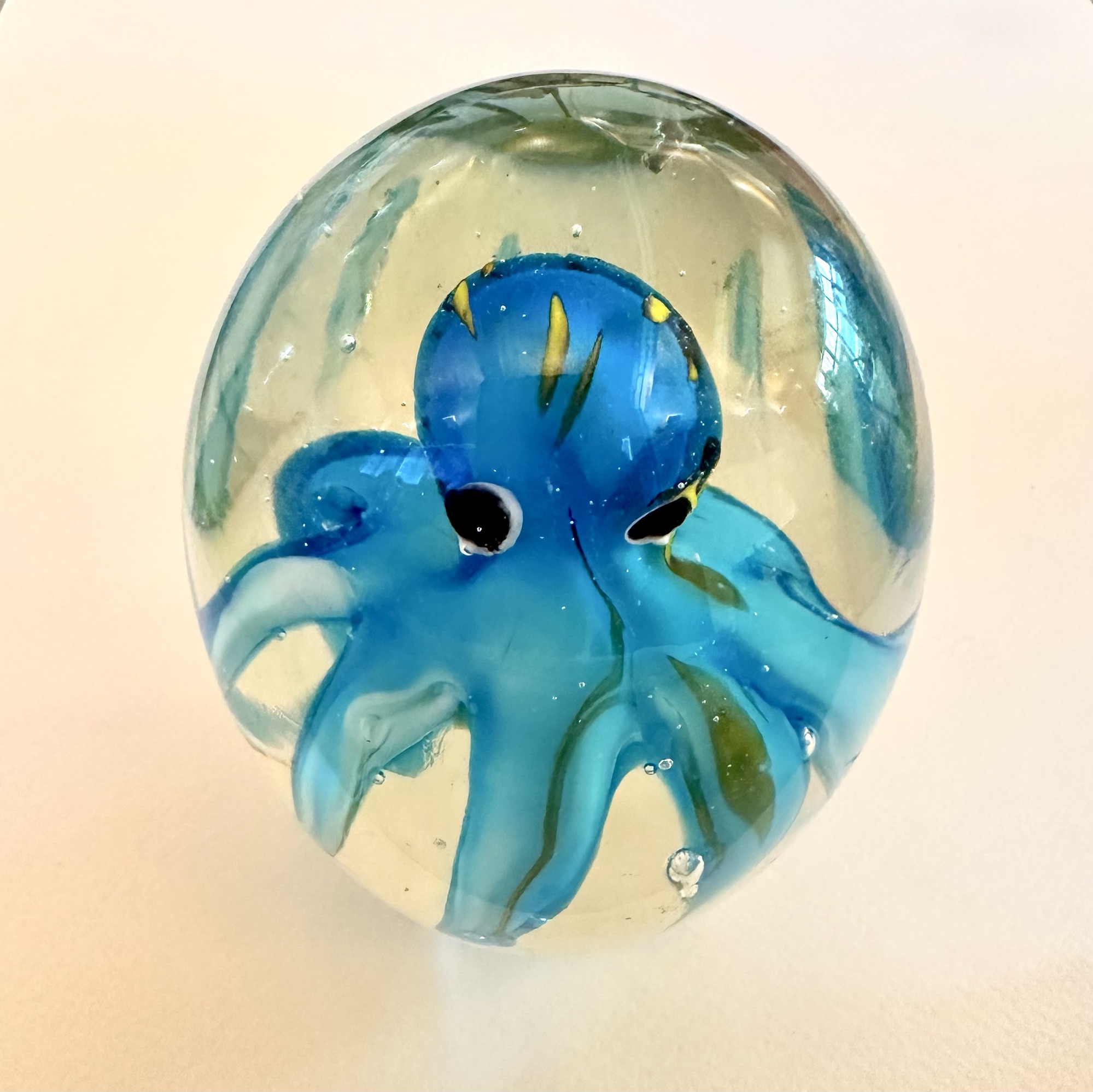
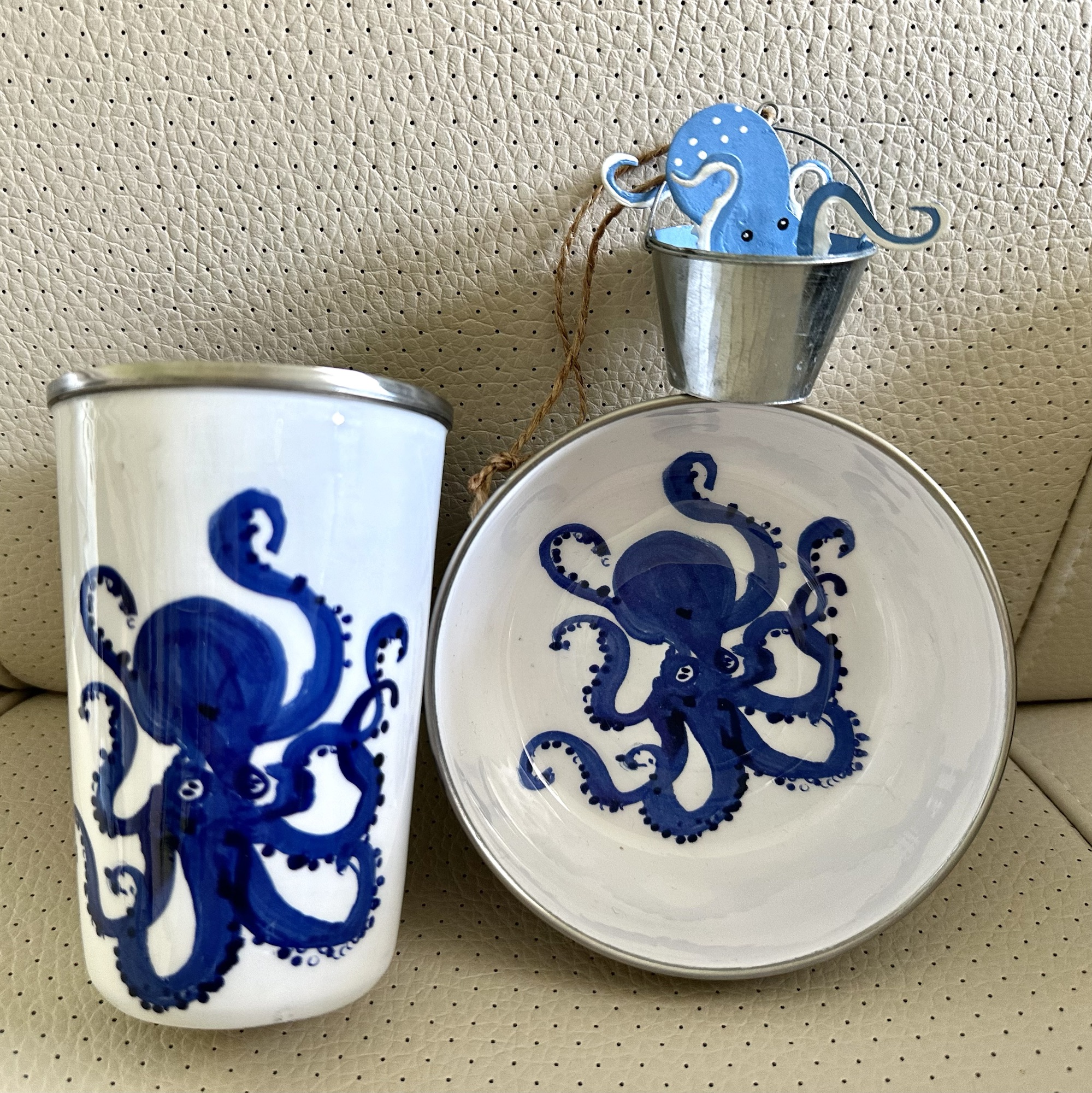
Andrea brought along a beautiful, tall and very heavy paperweight of an octopus and Tracy brought in a cup, bowl and Christmas decoration all featuring octopus designs. Tracy’s items were bought from George’s in Whitstable High Street, a shop full of ‘stuff’ that you don’t need but want because it’s handy, nifty or just lovely to look at. George’s have a website with some items on, but they have many more items in the actual shop. The shop is worth a trip to Whitstable :o) www.georgeswhitstable.com
There were oyster shells from Whitstable to paint too and all those photos will be on a separate post, along with finished Salvador Dali paintings.
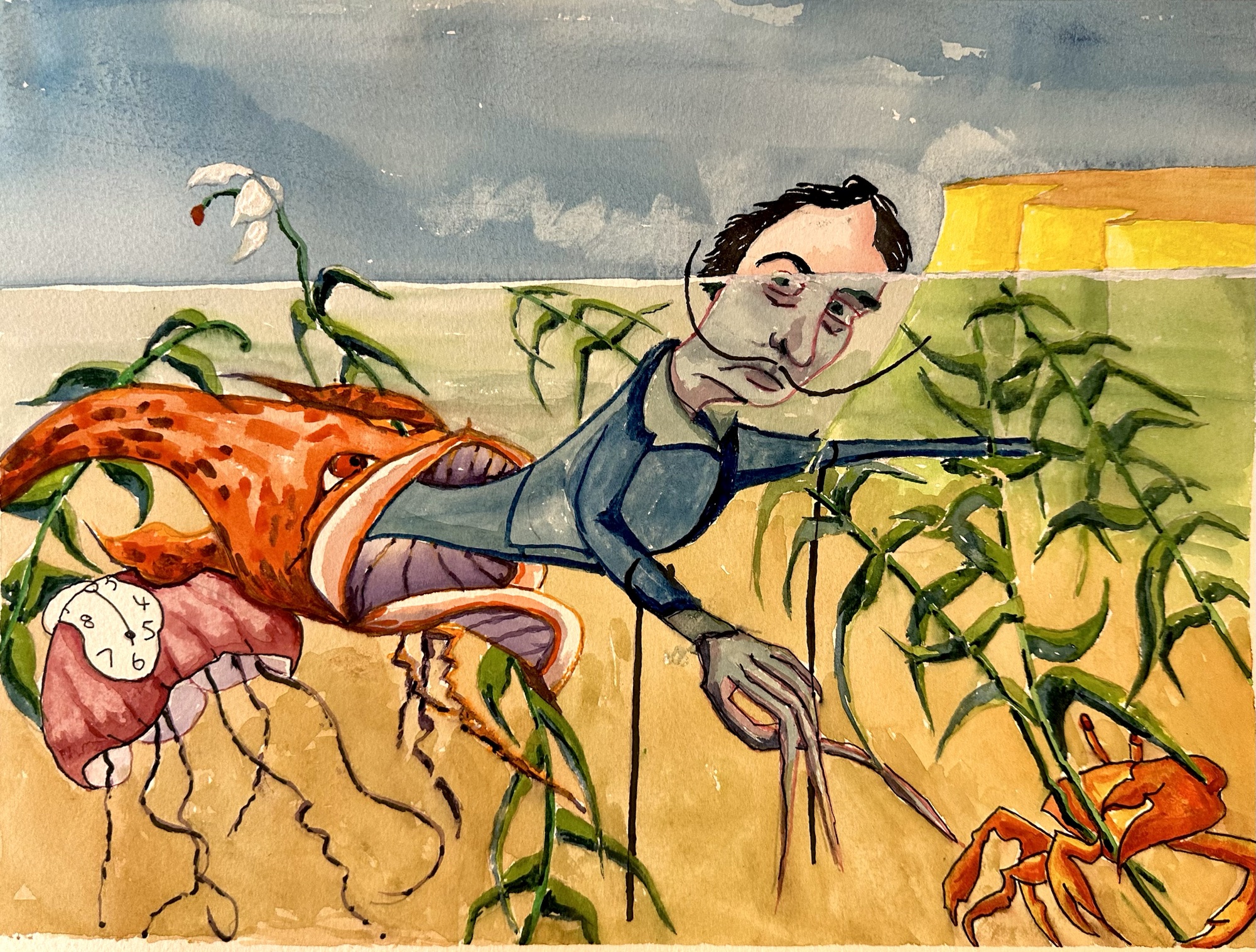
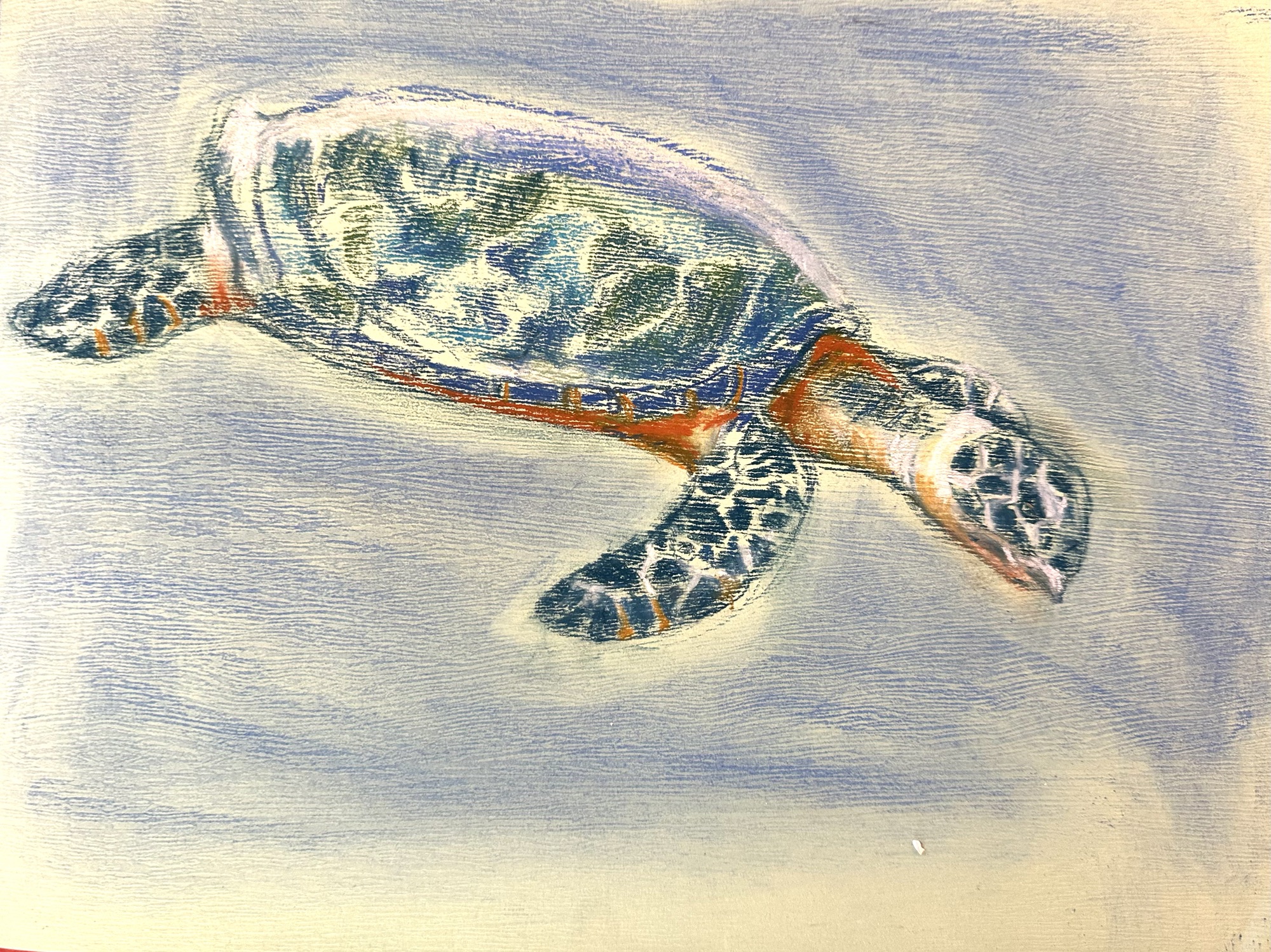
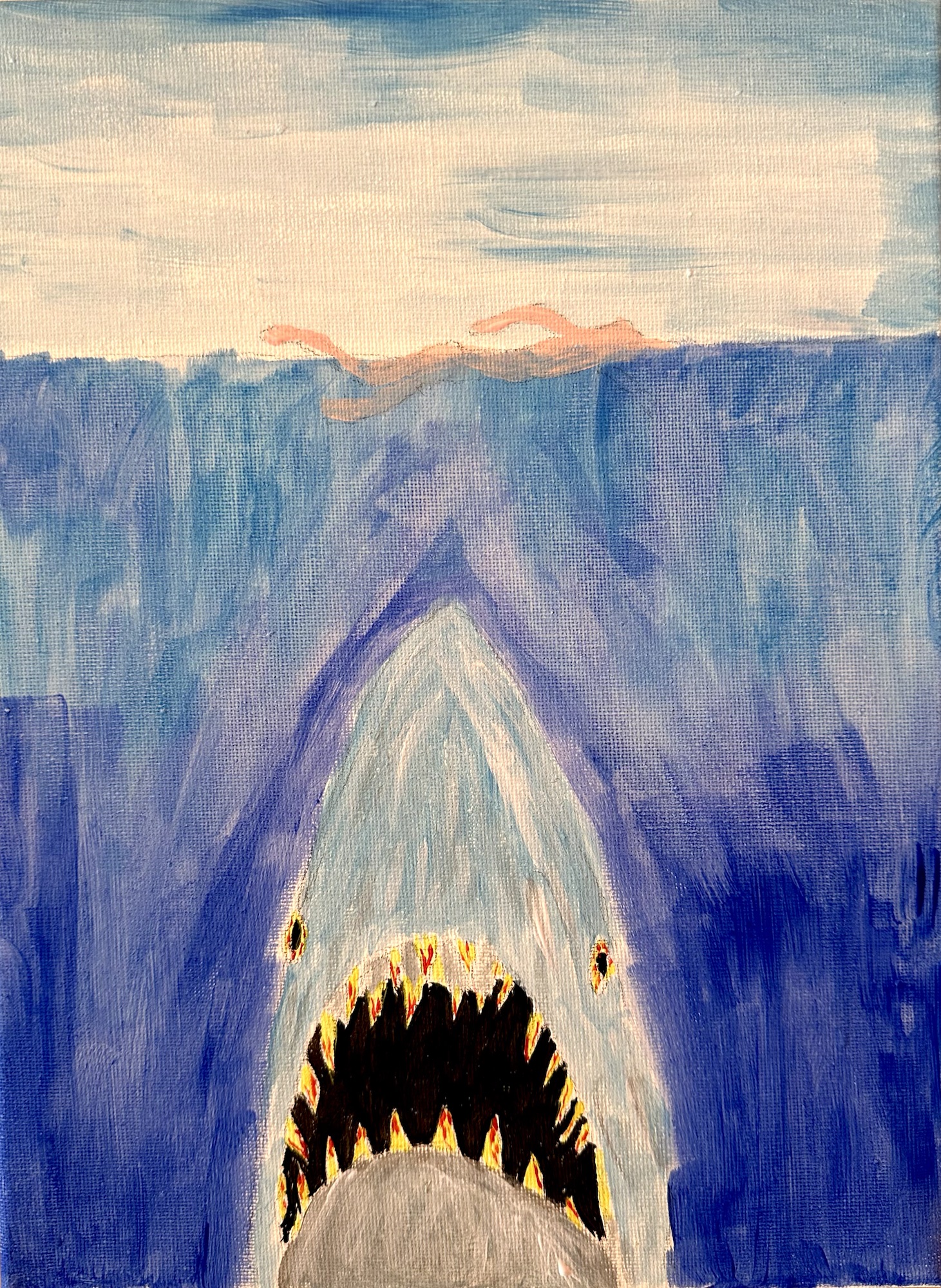
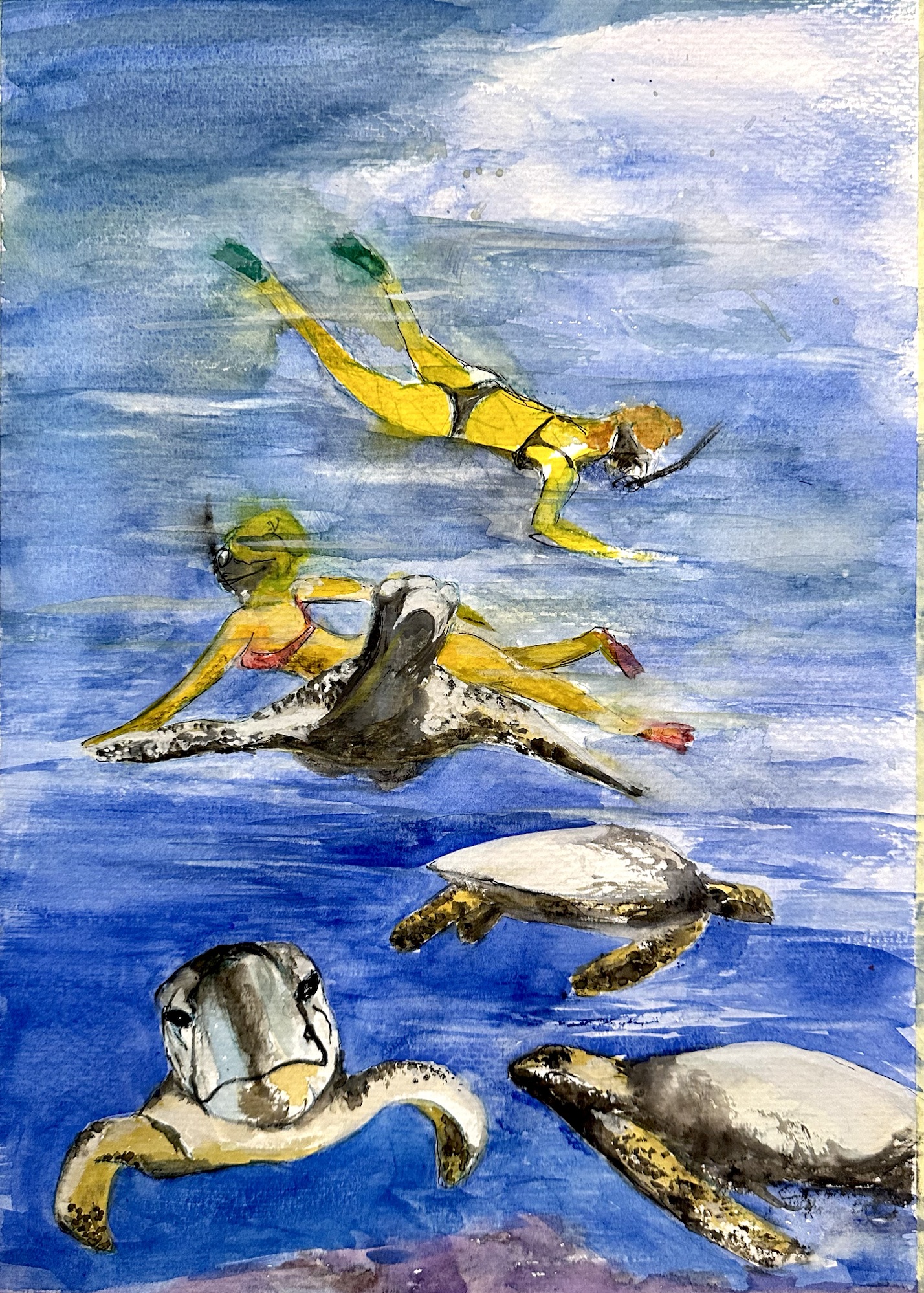
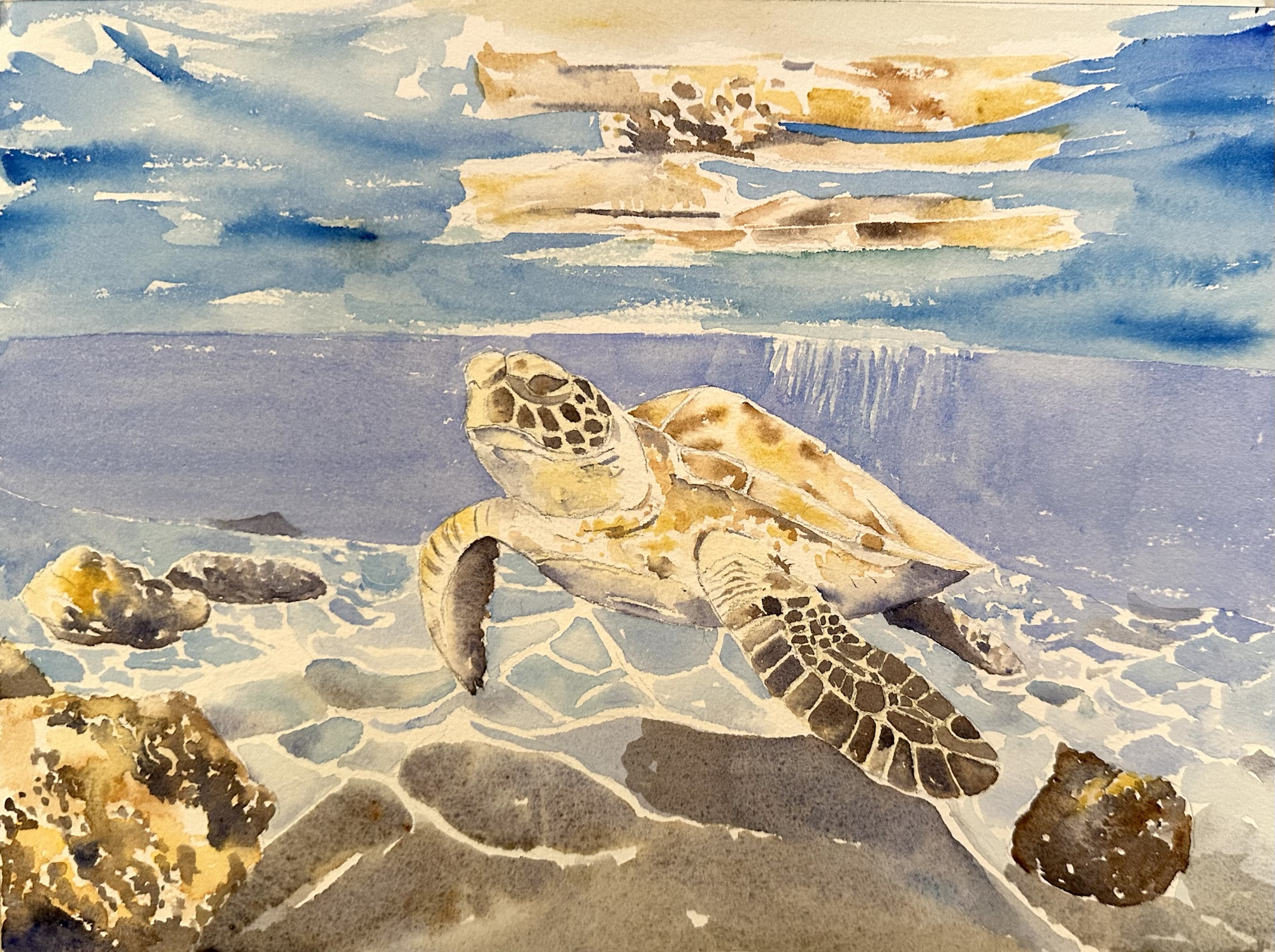
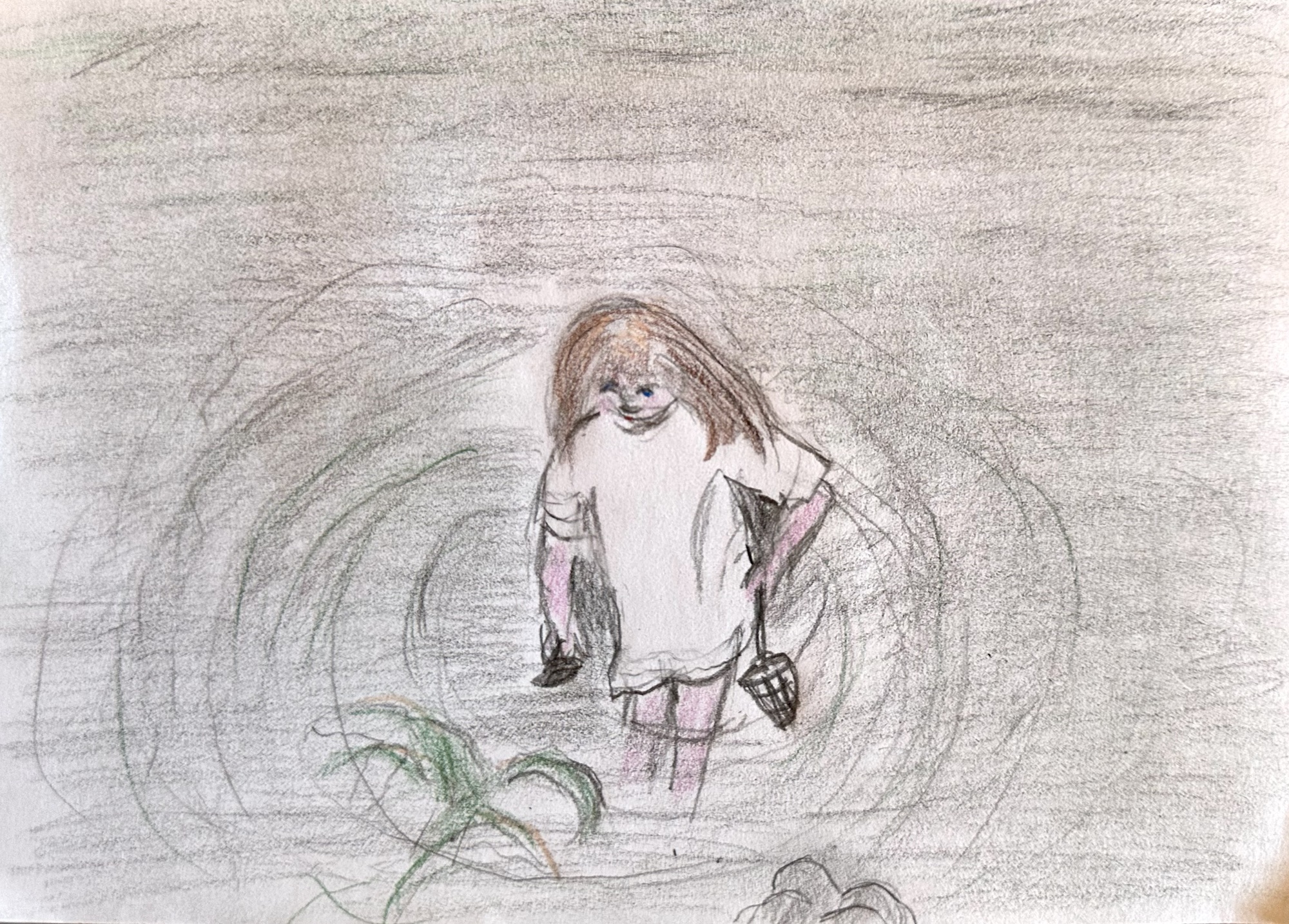
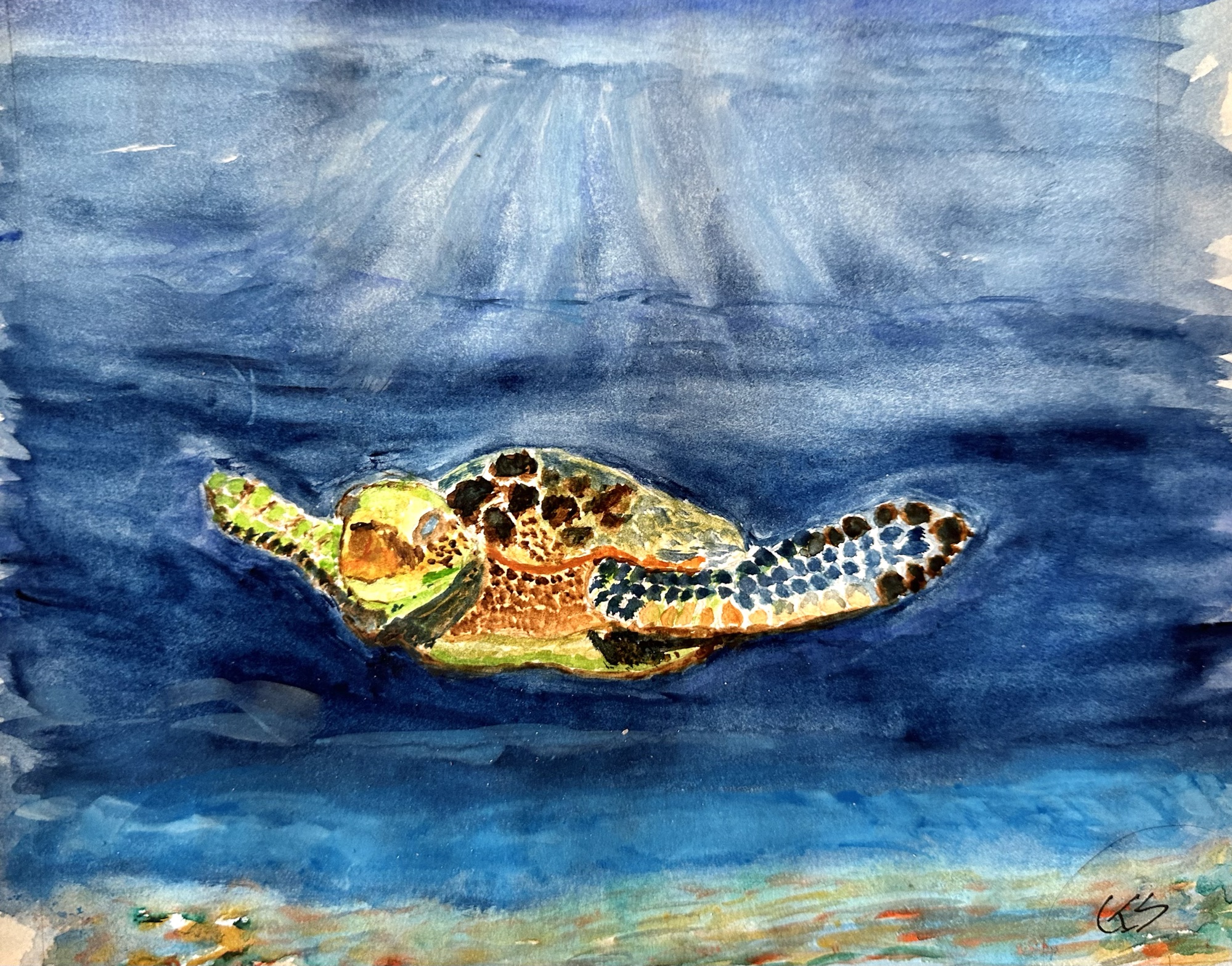
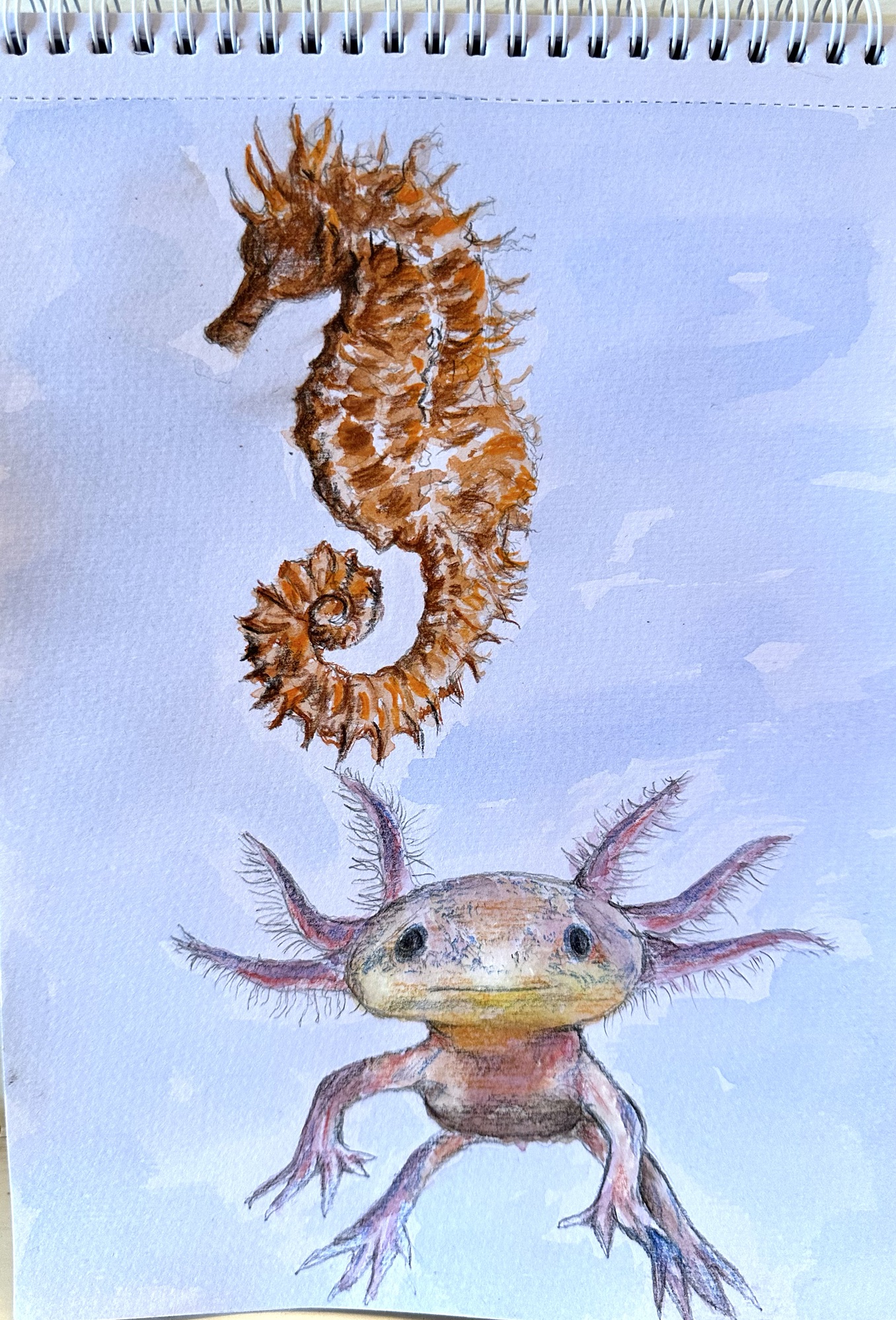
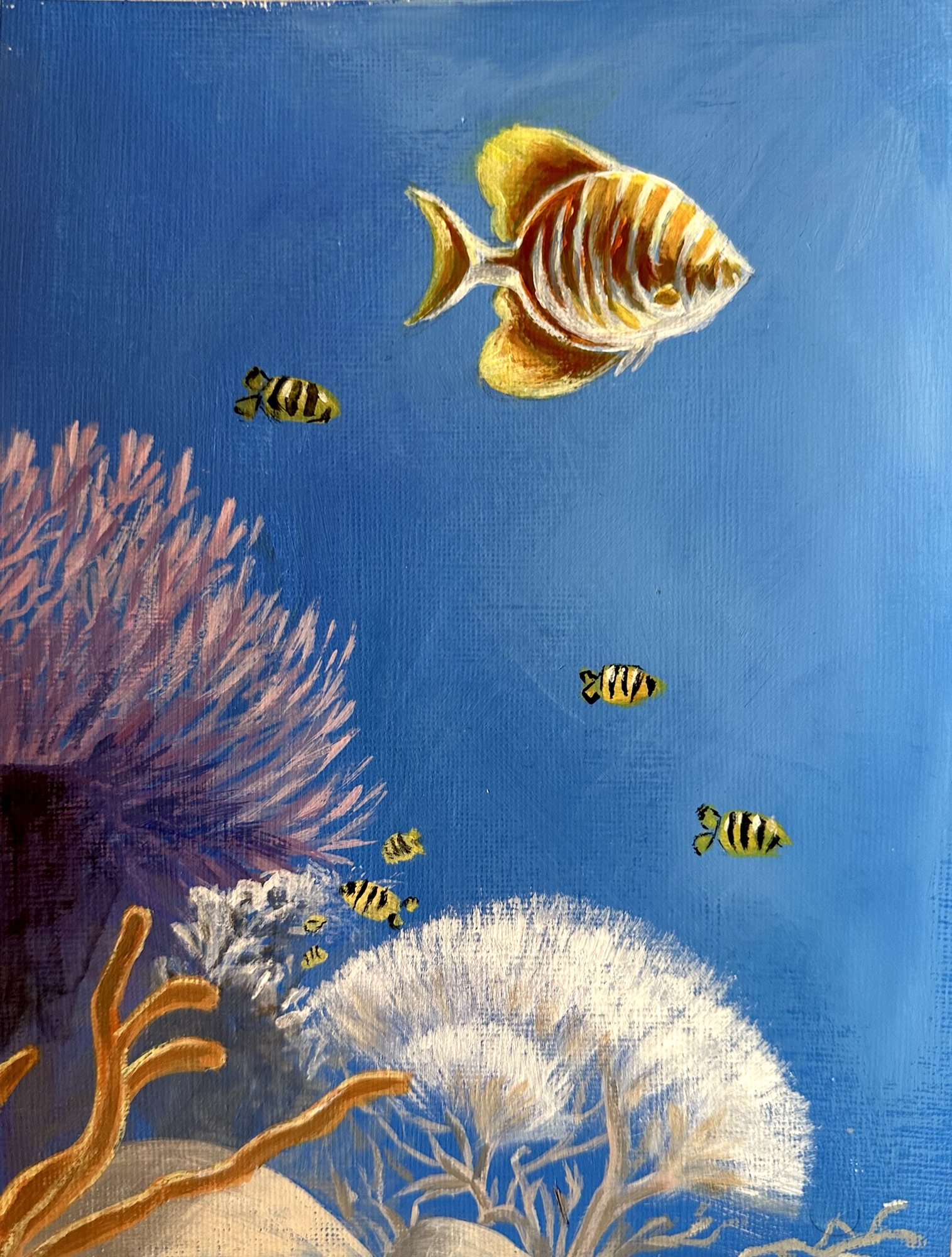
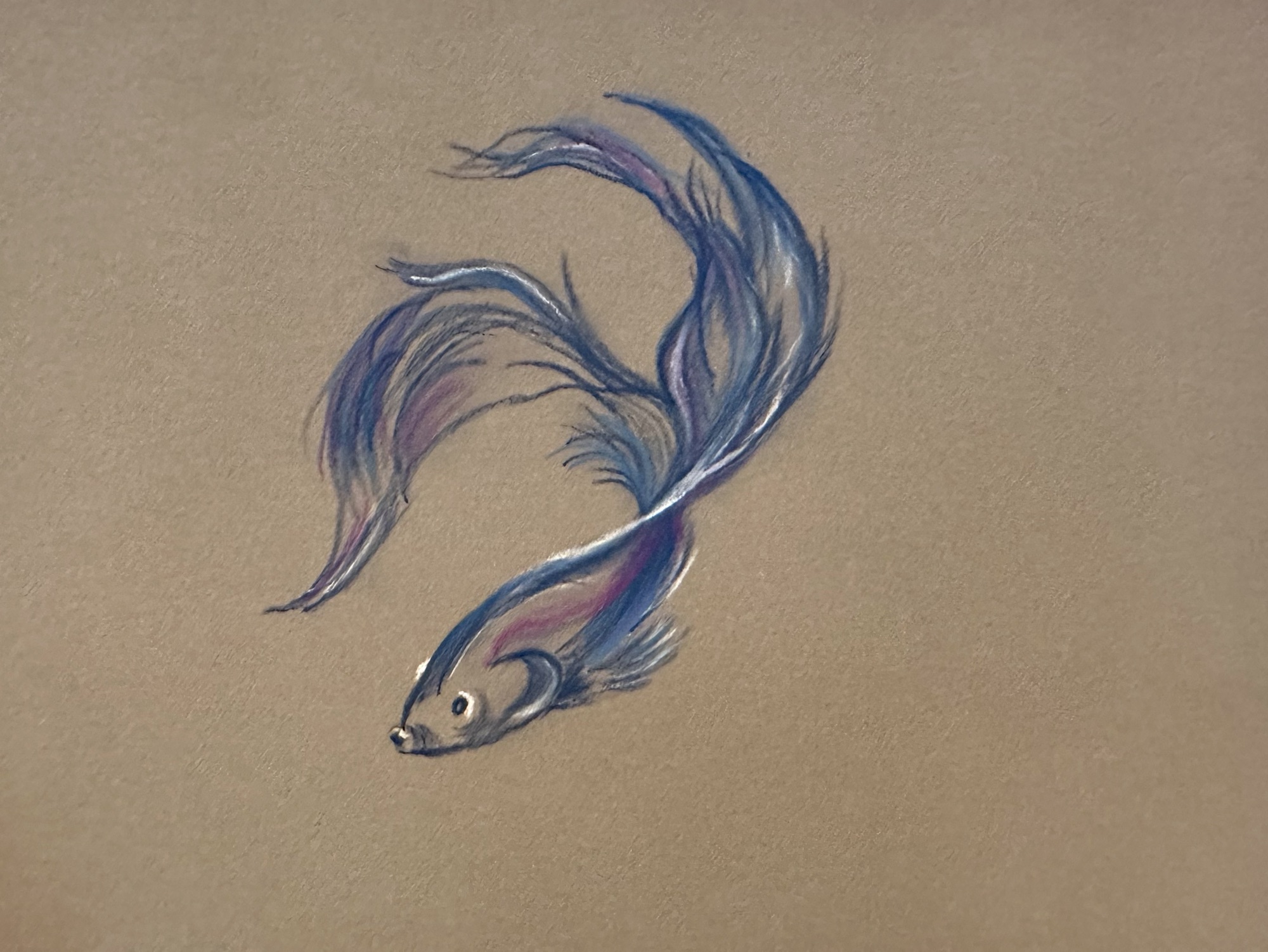
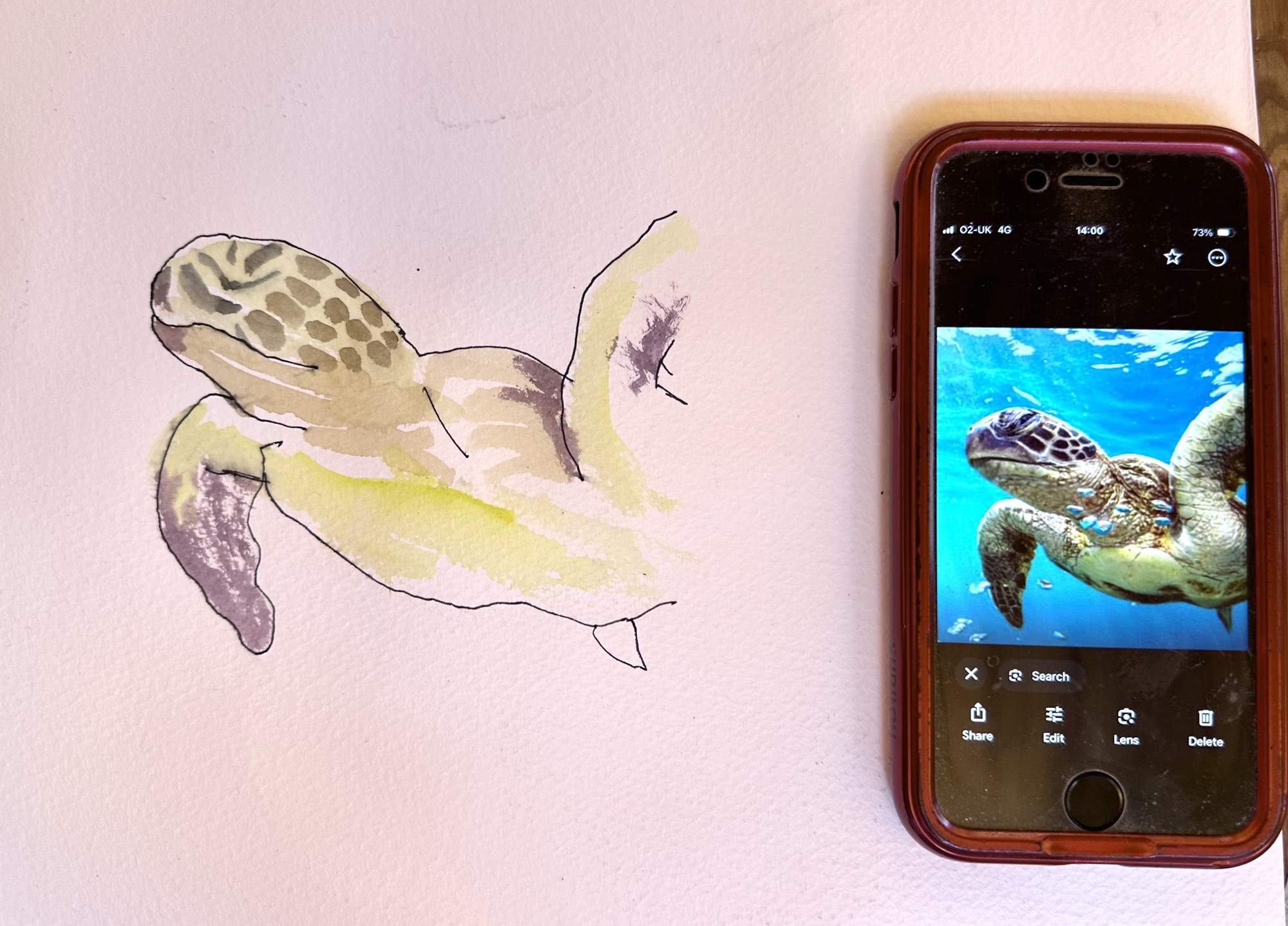
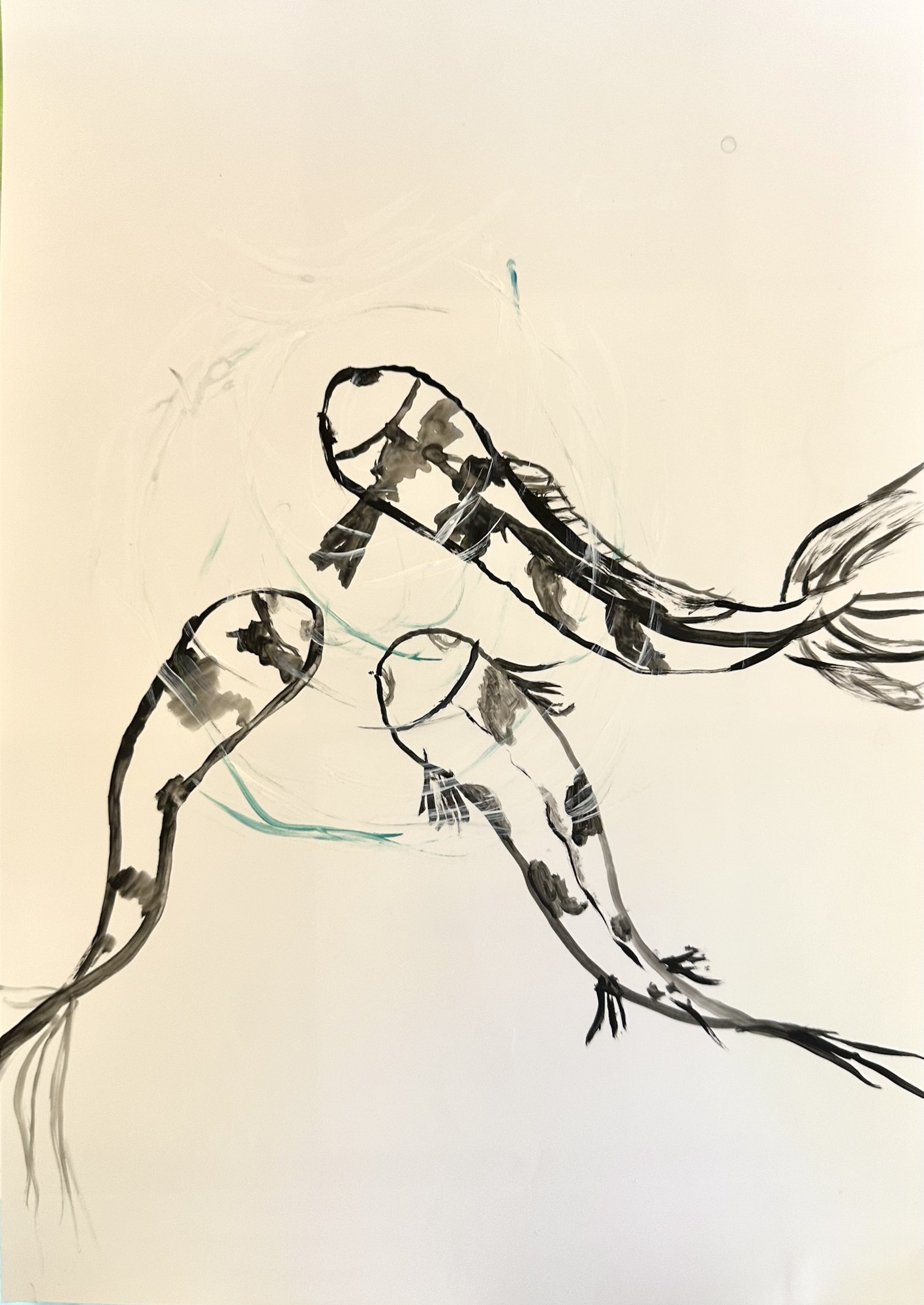
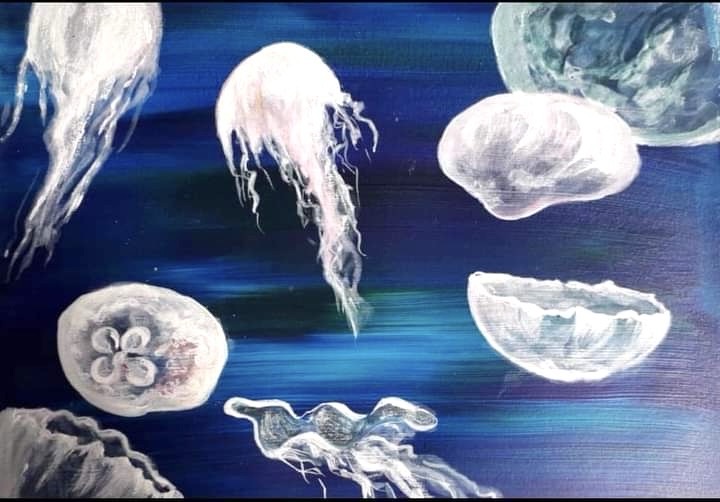
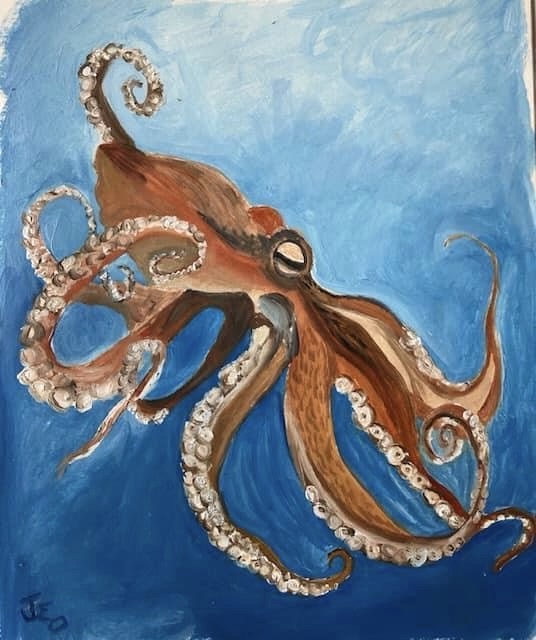
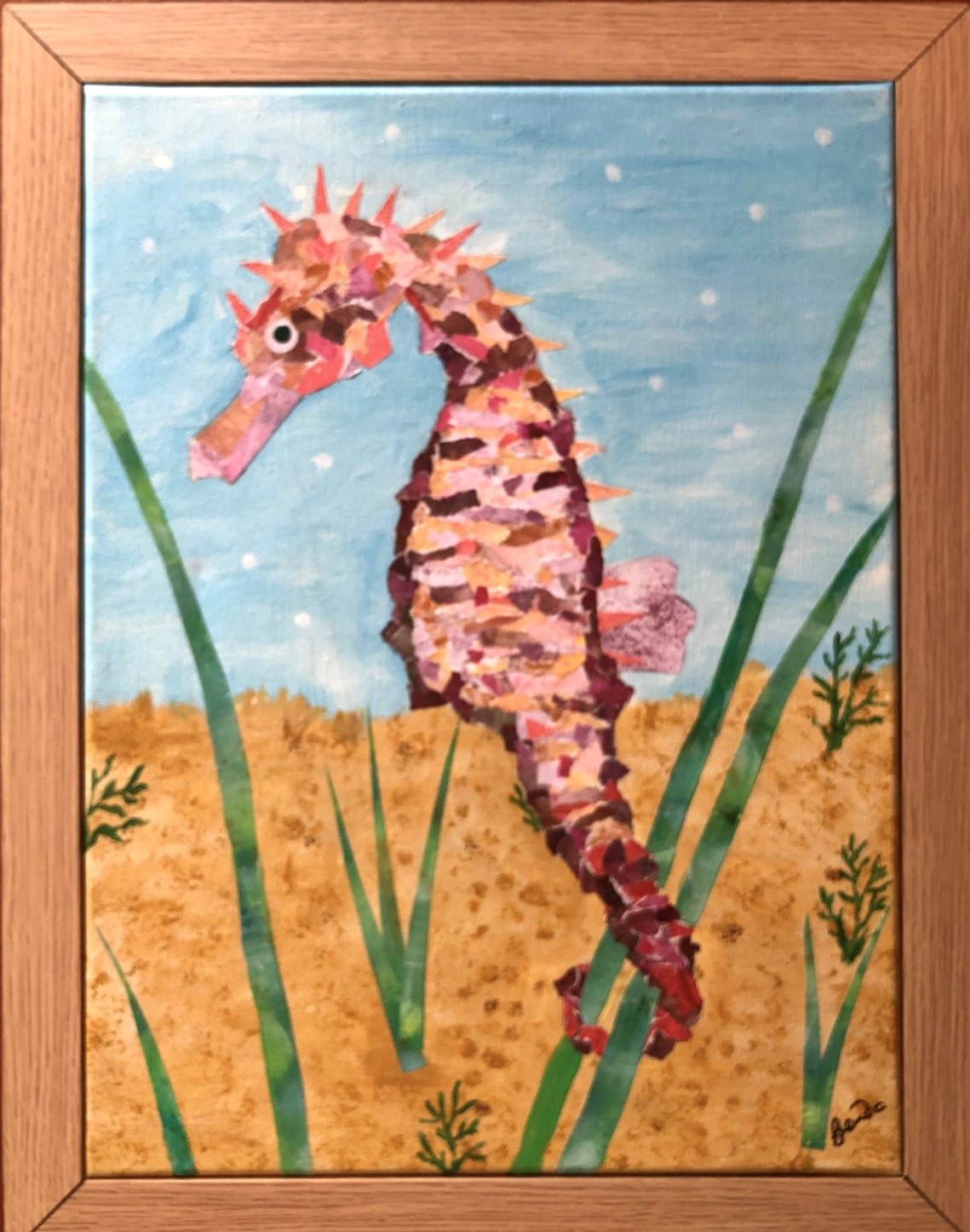
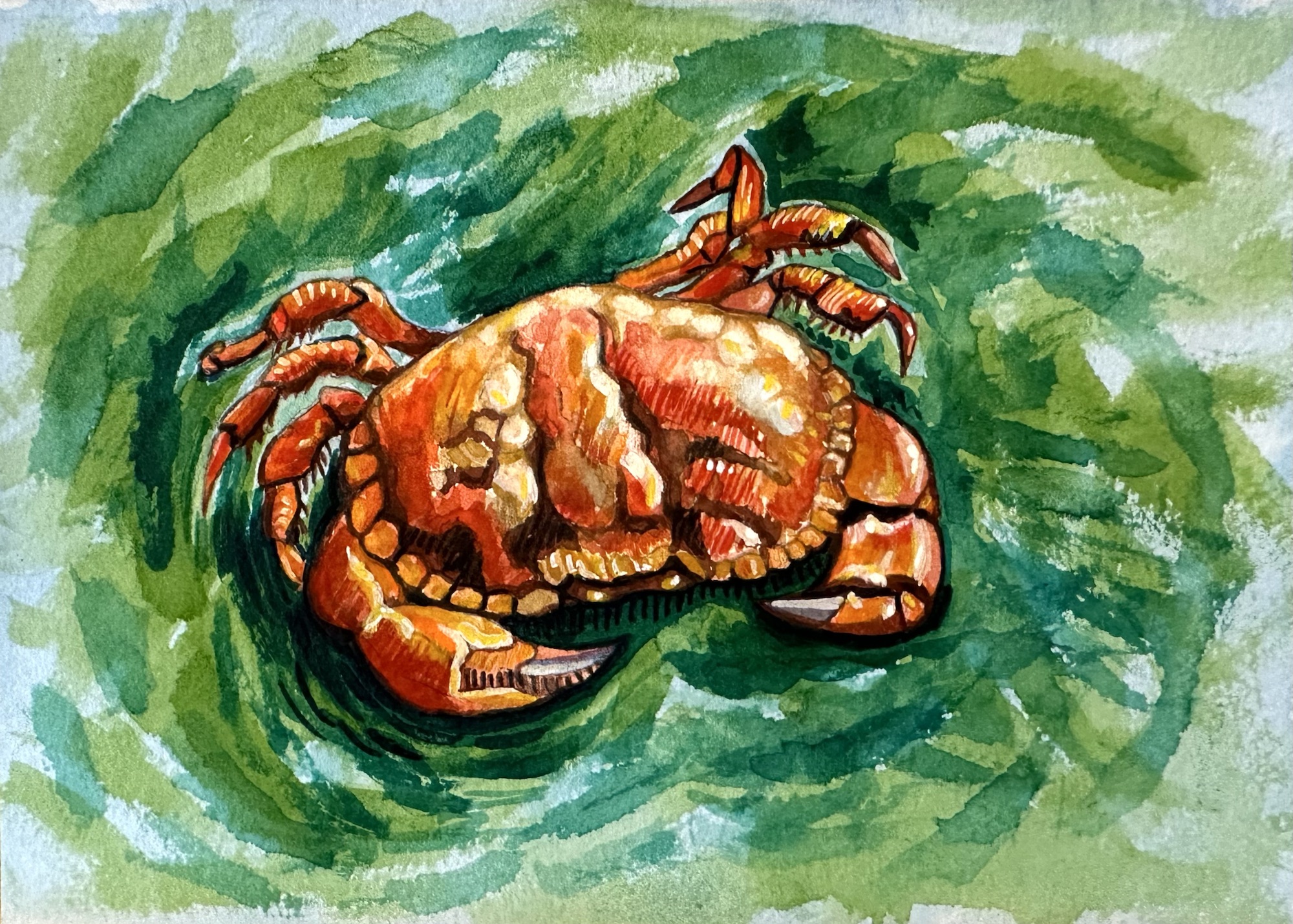
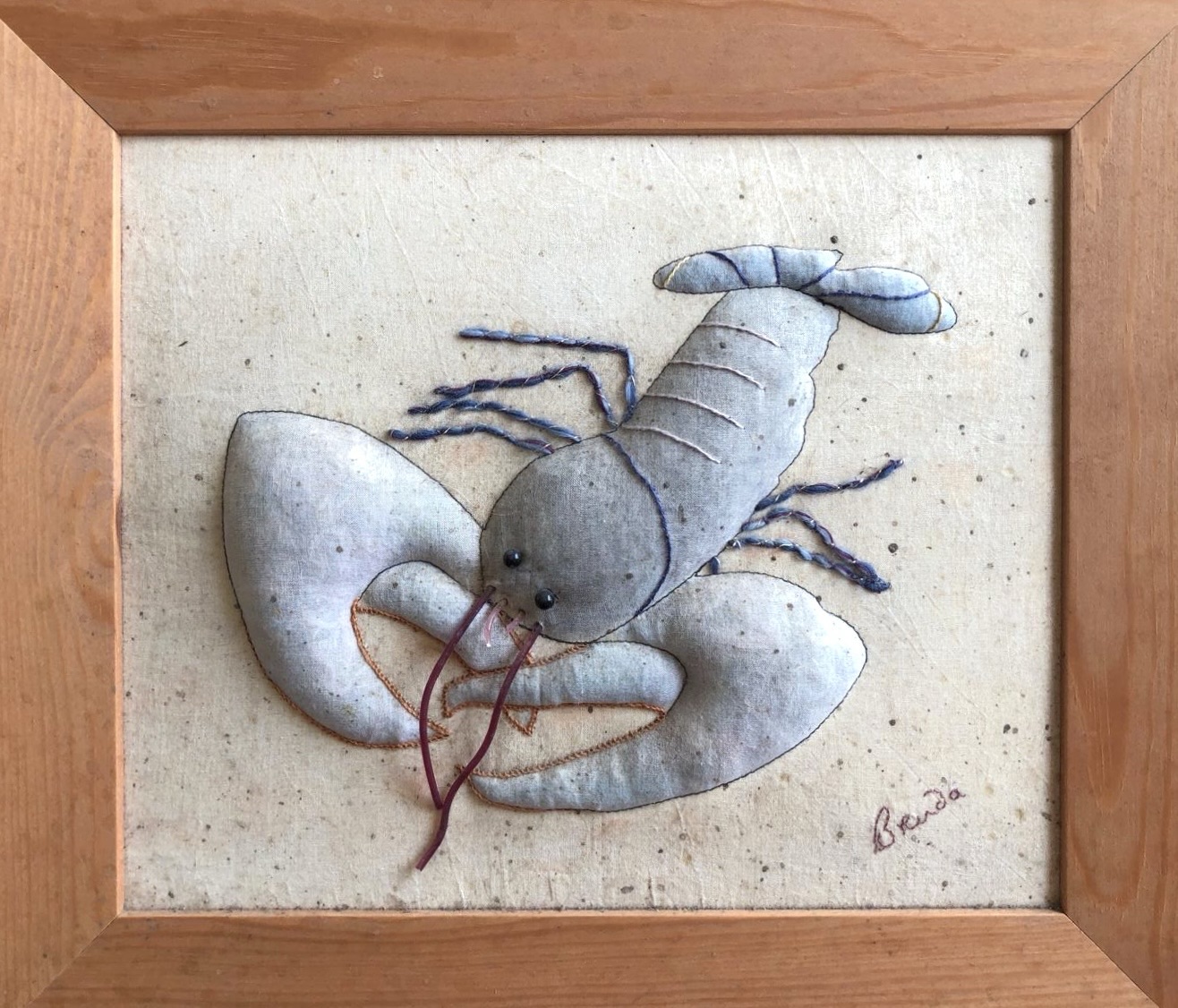
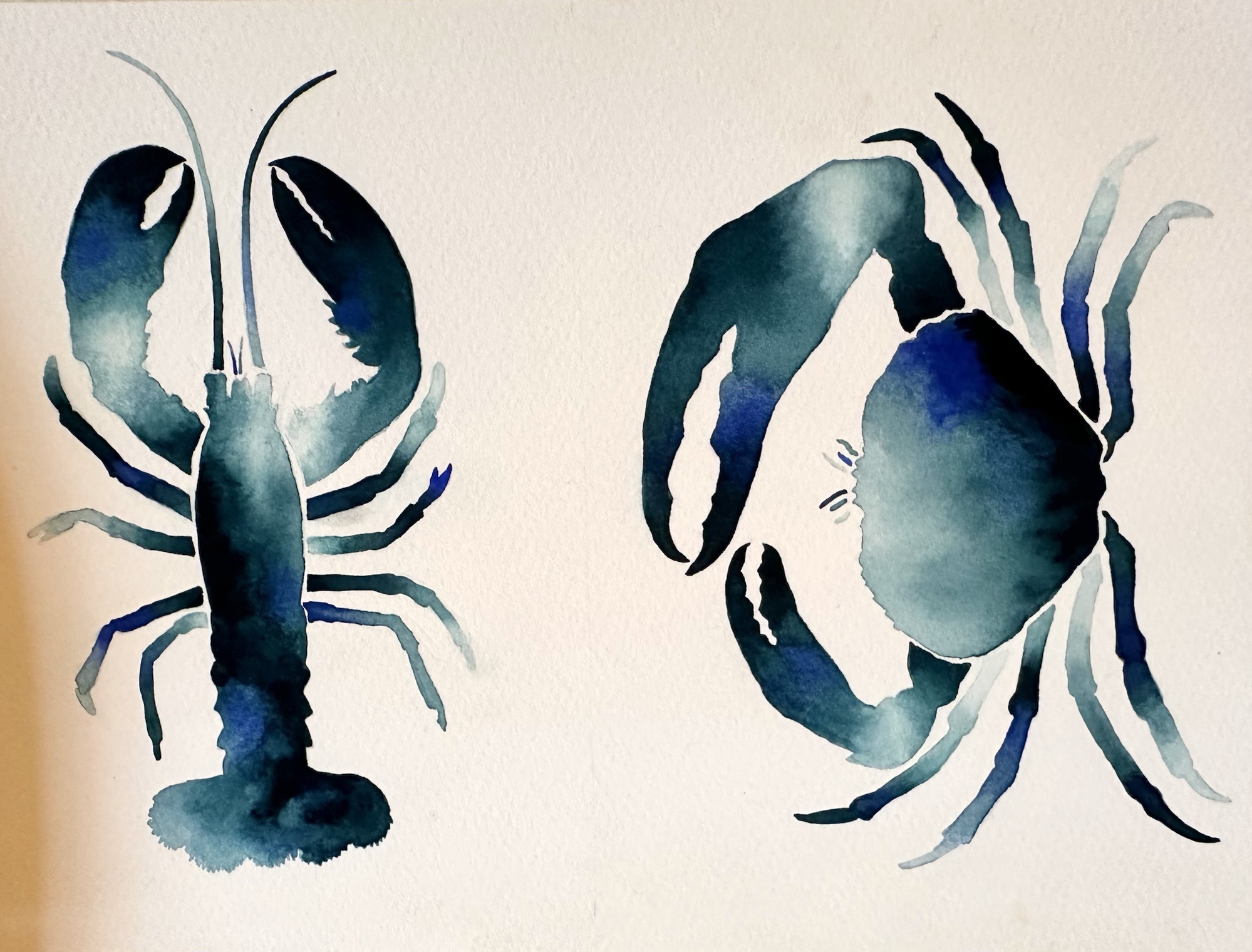
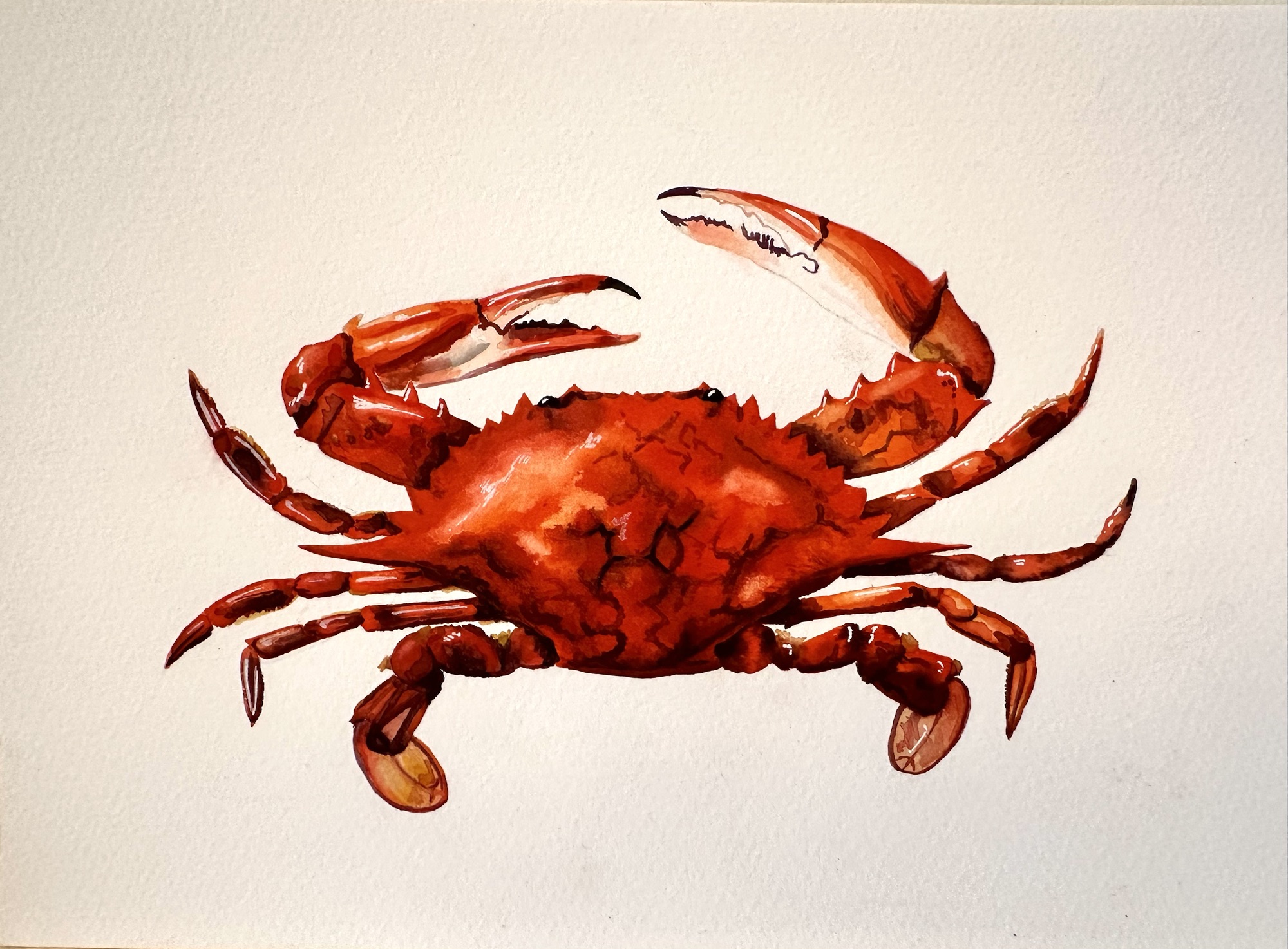
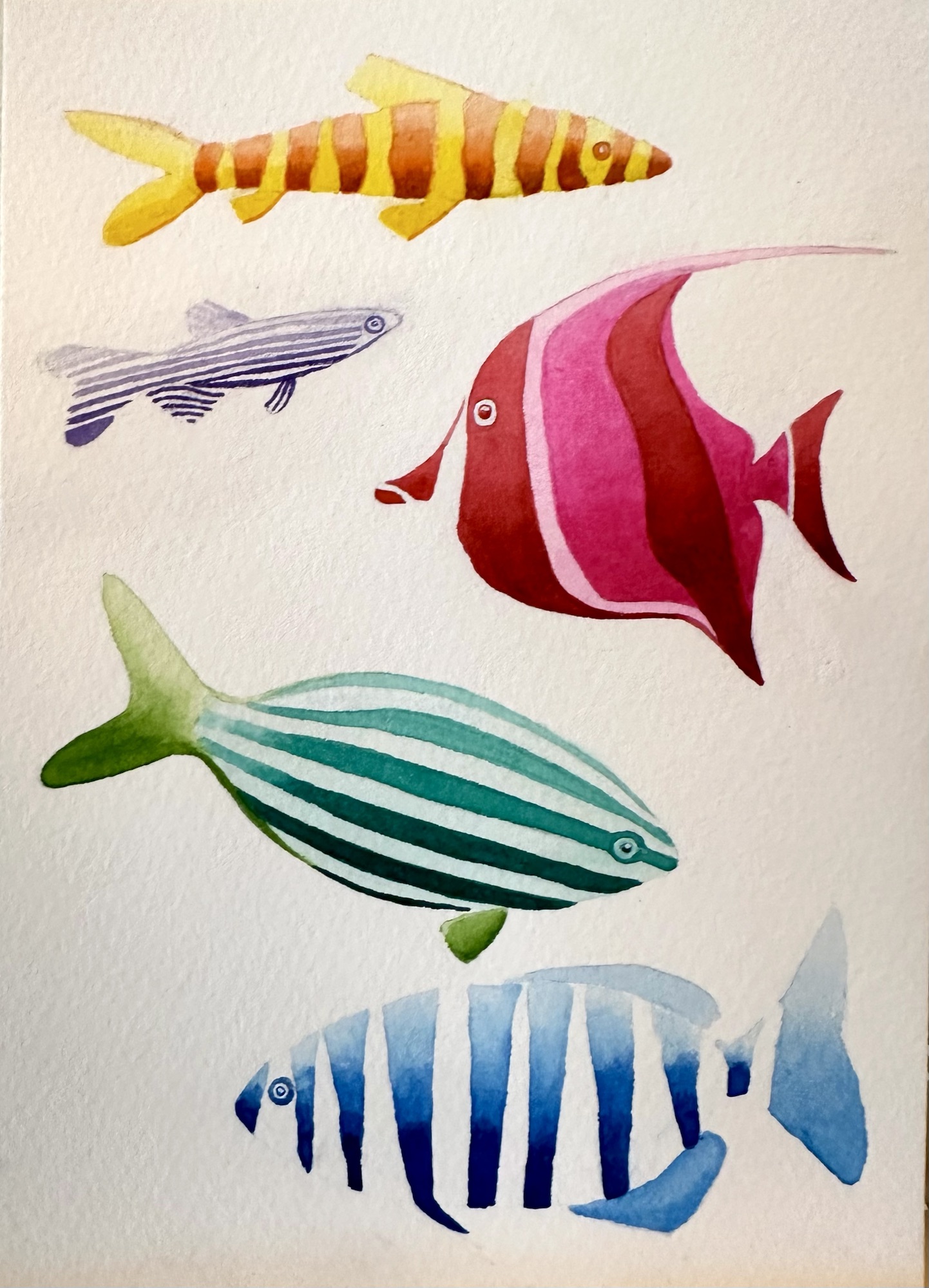
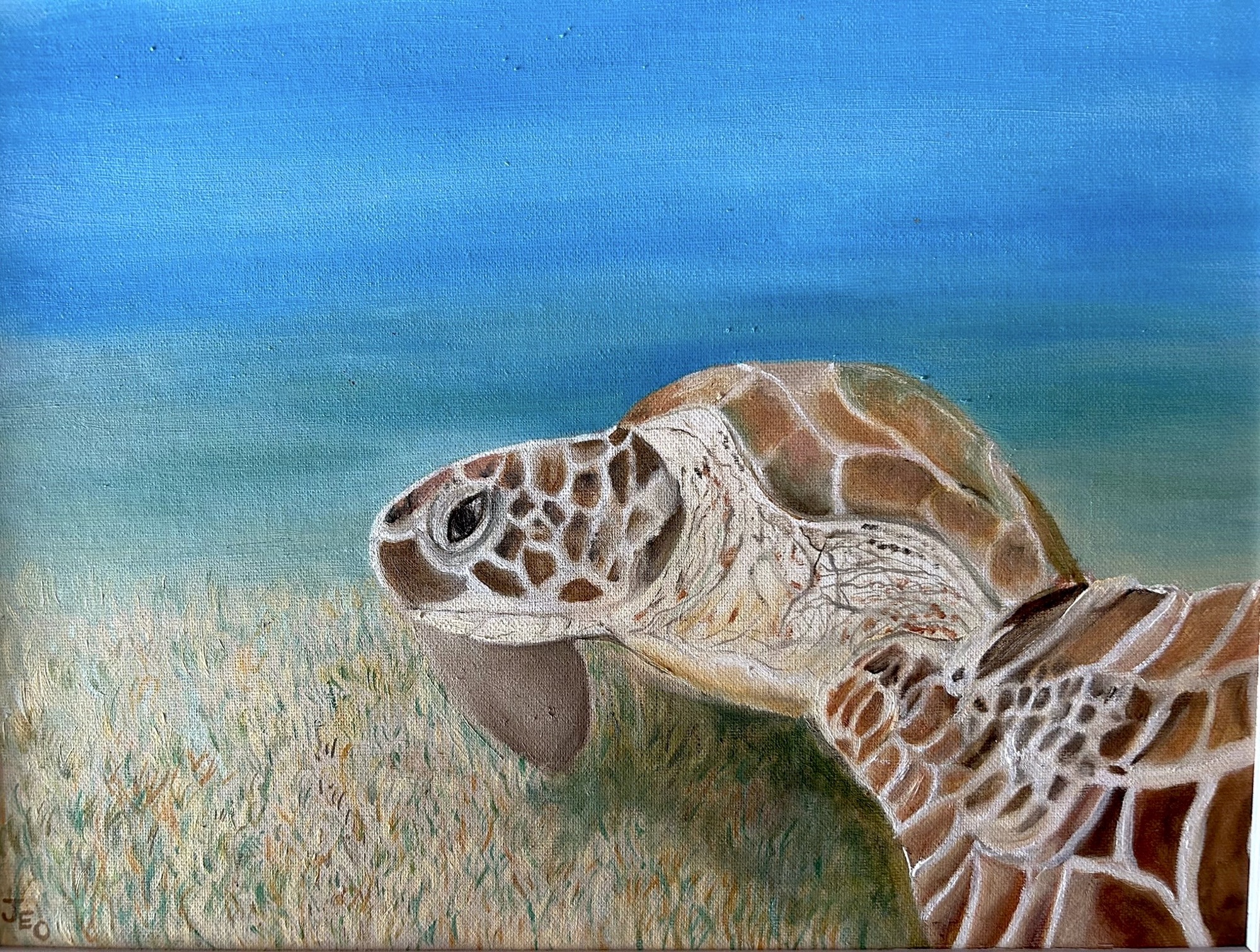
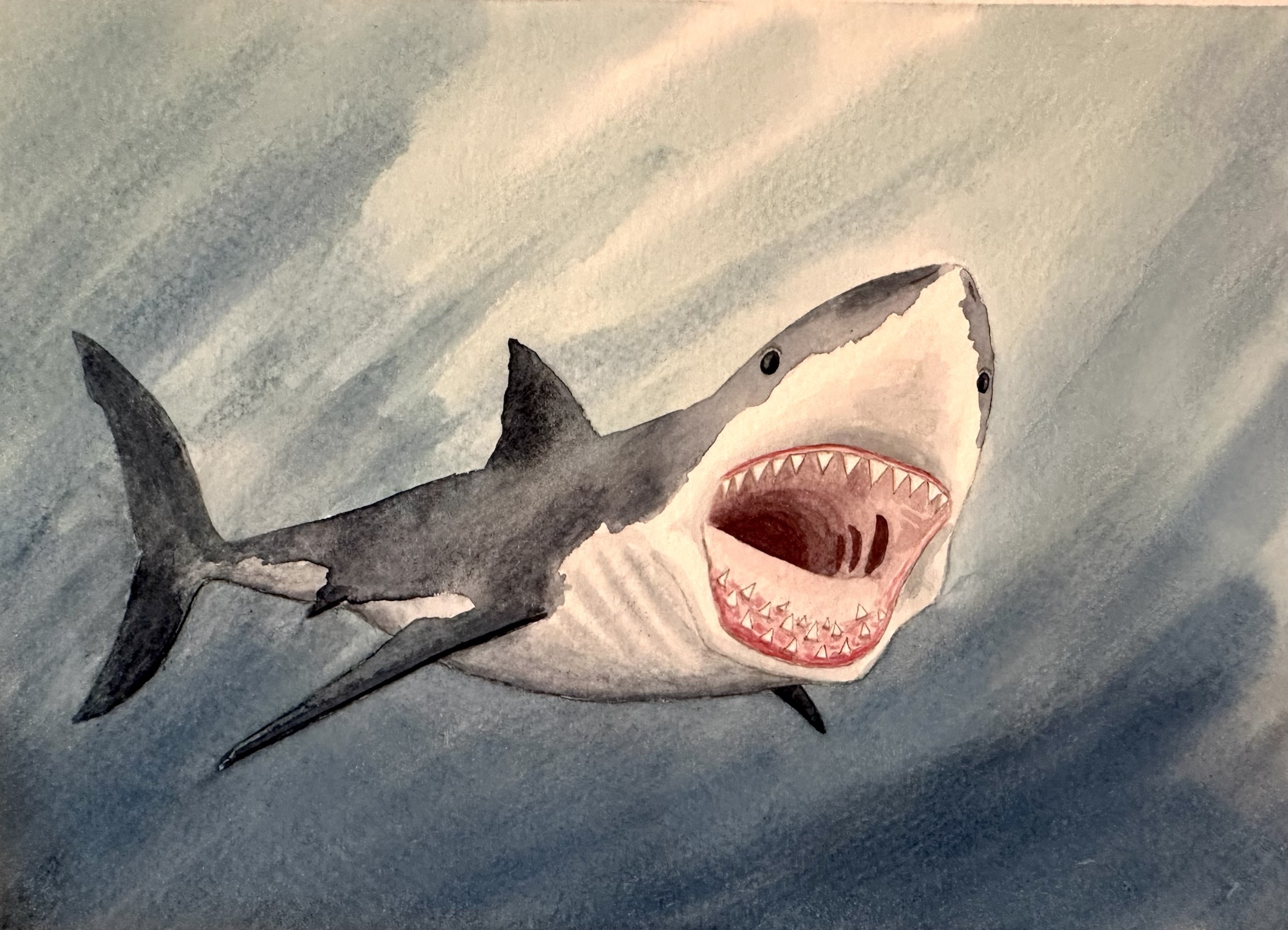
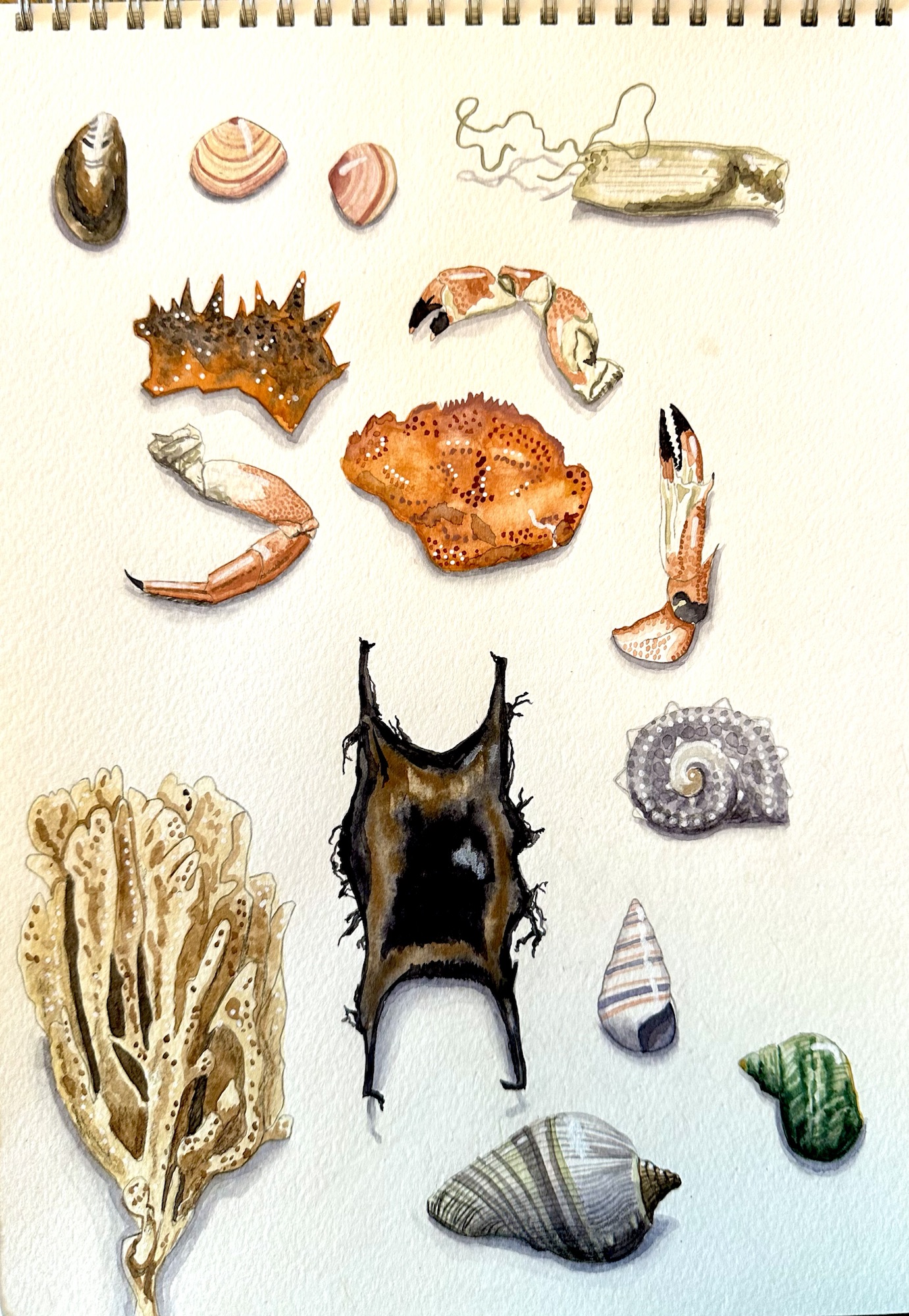
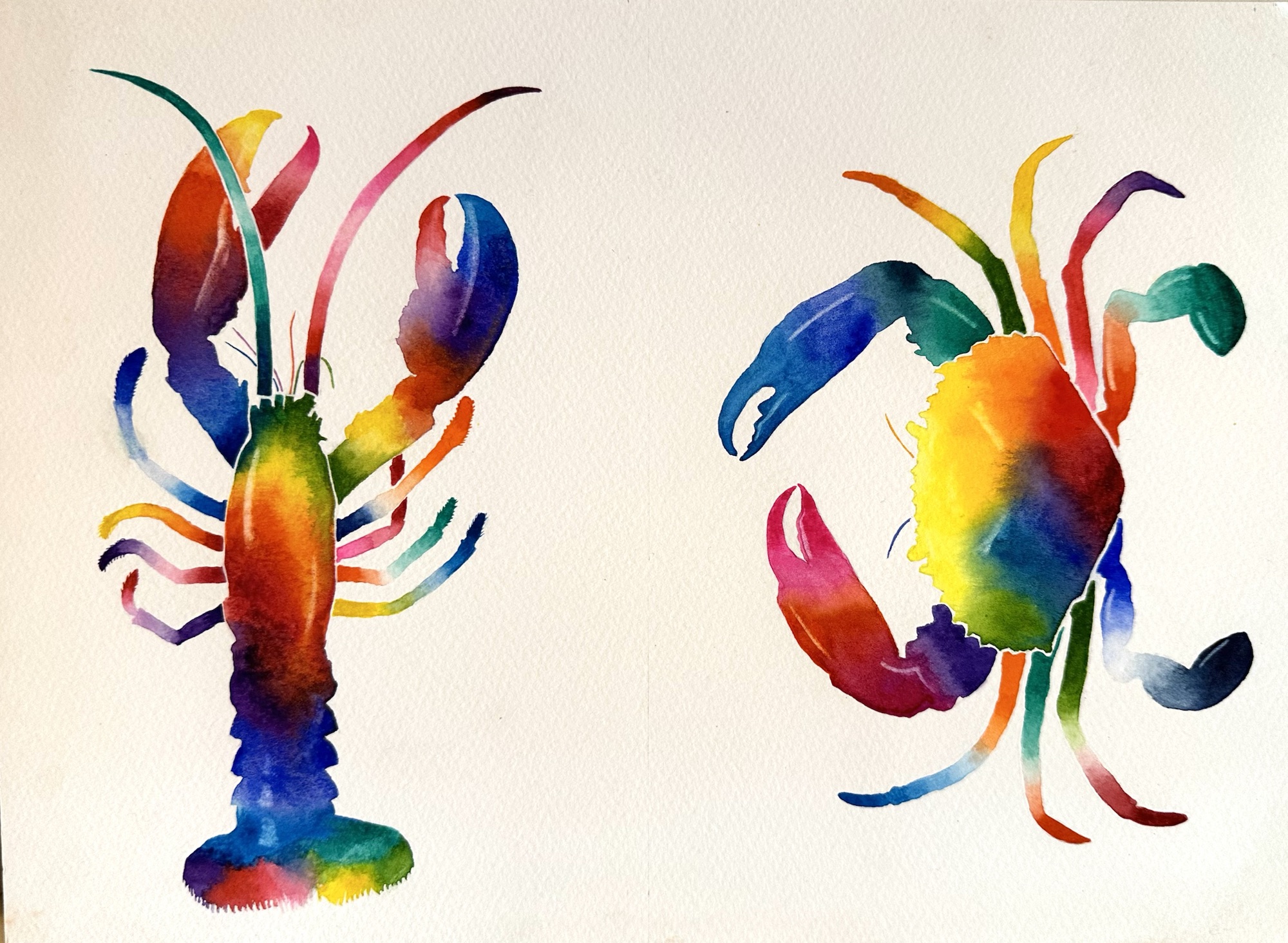
We were very creative on the day and any works in progress will be finished at home. Several members have supplied photos of artwork they painted at other art groups. There were many different underwater animals and divers painted in glorious colours including turtles, tropical fish, jellyfish, octopuses, sharks, shells, seahorses, rays, crabs, lobsters, a mermaid, a little girl looking at life underwater, and an exotically named axolotl. The first painting is Steve’s slightly disturbing Salvador Dali portrait with sea creatures and a melted clock!
Next month’s ideas will be published on 1st June and the next session will be on Wednesday 12th June 7-9pm.


















 Chalk Art Group